
 CasePulse
 In a modern plaintiff personal injury firm, the case manager is the operational heart of every single case. Don't think of them as a simple administrative assistant. They're more like an air traffic controller, expertly guiding communication between clients, attorneys, and outside parties to keep every case moving forward smoothly.
The New Nerve Center of Your Law Firm
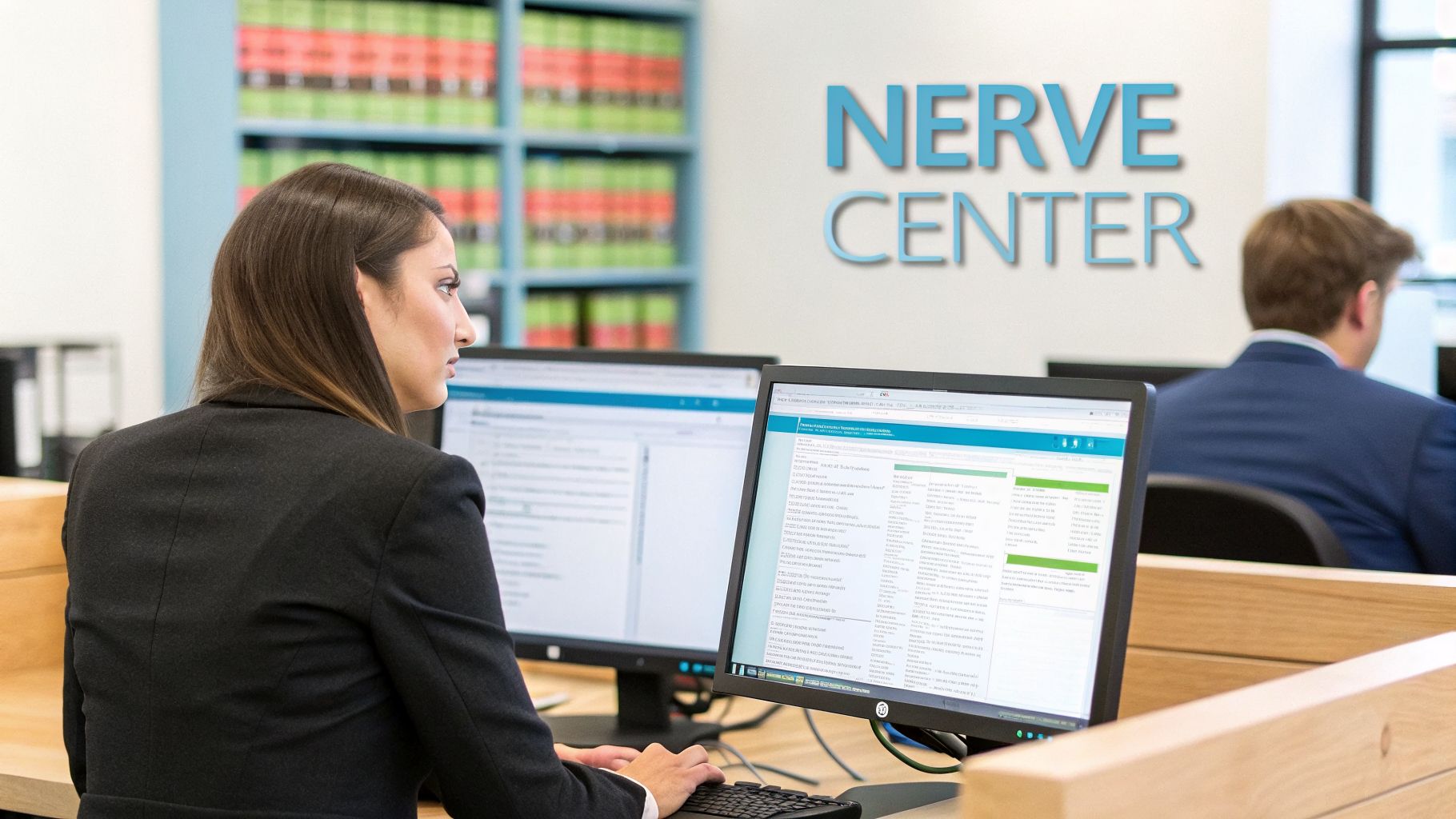
The job description for a law firm case manager has changed a lot over the years. They are the central hub for case logistics, client communication, and administrative oversight. This role is absolutely essential in a busy plaintiff PI firm, where clients are often going through a tough time and caseloads can feel overwhelming.
The real challenge for any case manager is the constant balancing act. They need to provide compassionate, high-touch service to clients while managing a mountain of administrative work. They are on the front lines, handling client expectations, juggling deadlines, chasing down paperwork, and coordinating schedules. This intense pressure means efficiency isn't just a nice to have; it's critical for survival and growth.
The Growing Need for Technology
To keep up with these demands, technology has become an absolute necessity. The legal field is quickly turning to software to manage this complexity, and it's no surprise that law firms are leading the charge. In fact, projections show that firms and attorneys will account for 63% of the legal case management software market share by 2026. This isn't a random trend. It’s a direct response to the daily pressures case managers face.
This shift toward tech is especially strong in North America, which makes up 42.2% of the entire global market. For firms that have already adopted established systems, the improvements in efficiency are obvious and immediate. The market's projected 11.8% growth rate points to a simple truth: automation is the only way to get out from under the administrative crush.
The goal here isn't to replace case managers but to empower them. The right tools give them the breathing room to focus on high value work, like building client trust and proactively driving cases toward resolution, instead of getting buried in repetitive tasks.
To build a solid operational foundation, firms have to get their key processes right from the start. That means improving how you bring on new clients with tools like specialized intake forms specifically for law firms. When you smooth out these initial steps, you set your case managers up for success from day one. You can also learn more by checking out our detailed guide on what a case management system is and how it really works.
A Day in the Life of a Case Manager

So, what does a case manager actually do all day? It's a question I hear a lot. Forget the idea of a simple administrative assistant; this role is a dynamic mix of communication, strategic organization, and constant problem solving.
A case manager's day is rarely predictable. It's shaped entirely by the urgent needs of clients and the natural progression of their cases. One minute they're on the phone with a distressed client, and the next they're chasing down a critical piece of evidence.
What Fills a Case Manager's Day?
A huge chunk of their time, often the majority of it, is dedicated to managing client relationships. This is so much more than just answering calls. It's about providing clear, empathetic updates, explaining what to expect next, and carefully managing expectations throughout a long and often stressful legal process.
For instance, a case manager might start their morning by returning a dozen calls from clients, all asking for the same thing: an update on their medical record requests. This highlights a major operational challenge. The constant need to answer routine questions consumes an enormous amount of time that could be better spent on work that actually moves a case forward.
To give you a clearer picture, here's a quick breakdown of the kinds of tasks that typically fill a case manager's schedule.
Case Manager Daily Task Breakdown
This table summarizes the main activities a case manager juggles, showcasing the balance between client facing work and the administrative tasks that keep a case on track.
| Task Category | Specific Examples | Primary Challenge |
|---|---|---|
| Client Communication | Providing status updates, answering questions, managing client expectations, scheduling appointments. | Repetitive inquiries and high emotional stakes. |
| Document & Evidence Gathering | Requesting and tracking medical records, police reports, and wage loss information; organizing digital files. | Chasing down unresponsive third parties (e.g., medical facilities). |
| Case Administration | Monitoring deadlines, coordinating with attorneys, preparing files for demand letters or litigation. | Juggling multiple critical deadlines across dozens of cases. |
| Internal Collaboration | Briefing attorneys on case developments, coordinating with paralegals, updating the case management system. | Ensuring seamless information flow within the legal team. |
As you can see, the role demands an incredible ability to multitask. They are the central hub of communication and information for every case they handle.
The Four Pillars of the Role
While no two days are exactly alike, a case manager's work is built on four key pillars. Mastering these areas is what separates a good case manager from a great one.
- Client Communication: They are the primary point of contact, the reassuring voice on the other end of the line who provides regular updates and answers the tough questions.
- Document Organization: This involves the methodical collection and tracking of every critical piece of paper and data, from medical bills to employment records.
- Deadline Management: They are the keepers of the calendar, tracking every statute and deadline, scheduling key events, and coordinating with attorneys to ensure nothing ever falls through the cracks.
- Team Collaboration: A case manager is the vital link between the client and the attorney, constantly briefing the legal team on case movements and client concerns.
Imagine a typical afternoon: a case manager might start by reviewing their calendar for urgent deadlines, then pivot to calling a stubborn medical provider to follow up on a long overdue records request. Later, they could be scheduling a client for an independent medical examination before briefing the managing attorney on the latest developments in a high value case.
The core of the job is managing flow. A case manager ensures that information, documents, and tasks move smoothly between the client, the legal team, and external parties like doctors and insurance companies.
The sheer volume of these duties shows how the case manager law firm role is built on expert multitasking. They are constantly shifting gears between high level strategy and detailed, hands on work. And more often than not, the biggest drain on their efficiency is the predictable, repetitive nature of answering client status inquiries, a problem that modern client portals are perfectly suited to solve.
What Makes a Great Case Manager? The Essential Skills
When you're looking to hire, it’s easy to get lost in a long list of qualifications. But what truly separates a good case manager from an exceptional one? After years of working with law firms, I’ve seen that it really boils down to a specific mix of practical know how and natural people skills.
You can think of these as two sides of the same coin: the teachable, technical abilities (hard skills) and the inherent, interpersonal traits (soft skills).
First, let's talk about the technical side. A high performing case manager has to be grounded in the firm's core operations and the fundamental mechanics of a legal case.
- Technology Proficiency: Your best candidates will be completely at home in your case management software, whether it’s Needles, Neos, LawBase, or Litify. They don't just see it as a place for data entry; they see it as their command center for managing deadlines, organizing documents, and keeping the case file pristine.
- Knowledge of Legal Processes: They don't need a paralegal certificate, but they absolutely must understand the lifecycle of a case. They should know what a statute of limitations is and why it's so critical, the key steps in gathering evidence, and the general timeline from a client's first call to their final settlement check.
The Soft Skills That Can’t Be Taught
While the hard skills are the price of admission, the soft skills are what make a case manager invaluable, especially in a client facing role. Personal injury law is deeply human, and these abilities are what allow a case manager to navigate that side of the job successfully.
Empathy is, without a doubt, the most important trait. Your clients are often hurt, scared, and overwhelmed. A great case manager doesn't just process their paperwork; they listen with genuine compassion, provide steady reassurance, and build the trust that is essential for a healthy attorney client relationship.
Empathy isn’t just about being nice, it's a strategic tool. A case manager who truly connects with a client can manage their expectations more effectively, gather difficult to discuss information, and guide them through a confusing process. This leads directly to smoother cases and happier clients.
Beyond empathy, a few other soft skills are non negotiable:
- Exceptional Organization: A case manager is a juggler, plain and simple. They're handling dozens of cases, each with its own mountain of documents and a minefield of critical deadlines. Without an ironclad organizational system (supported by automated reminders and other tools), it's only a matter of time before a catastrophic error, like a missed filing, occurs.
- Clear Communication: This is a two way street. They need the ability to break down complex legal jargon into simple, understandable terms for clients. At the same time, they must be able to deliver concise, accurate, and relevant updates to the attorneys, who don't have time to sift through fluff.
- Resourceful Problem Solving: What happens when a medical provider won't return calls or a crucial document goes missing? A top tier case manager doesn't just flag the problem and wait. They get creative and persistent, finding another way to get what the case needs to keep moving forward. They own the problem until it's solved.
Work Smarter, Not Harder: Equipping Your Case Managers for Success
If you've ever watched a case manager's day unfold, you know it's a constant balancing act. They're buried under a mountain of routine phone calls for case updates while trying to chase down information and keep everything moving forward. It’s not just frustrating for them; it’s a bottleneck that slows down your entire firm.
The answer isn't piling on more work. It’s about giving them the right tools to work smarter, freeing them up to focus on what truly matters.
A great case manager needs a unique blend of technical knowledge, people skills, and genuine empathy. They have to be organized and analytical but also patient and compassionate. This is a tough combination to find.

As you can see, the role is incredibly dynamic. The right technology doesn't replace these skills, it amplifies them. By automating the repetitive, low value tasks, you allow your case managers to apply their most valuable human skills where they have the biggest impact.
From Manual Busywork to Strategic Client Care
Think of a secure client portal like CasePulse as your case manager's most valuable assistant. Its primary job is to handle one of the most time consuming tasks they face: routine client communication.
When you give clients a secure, 24/7 portal to check their case status, send messages, or upload documents, you drastically cut down on the "just checking in" phone calls and emails. This isn't about creating distance; it's about giving clients the instant answers they want, exactly when they want them.
This simple shift allows your case managers to move from a reactive mode to a proactive one. Instead of just answering questions, they have the time to anticipate client needs and focus on the strategic work that pushes cases toward a resolution.
Technology should empower, not replace. The goal is to elevate your case manager from a reactive administrator to a strategic partner who can deliver an even better client experience.
This isn't just a nice idea; it's where the legal industry is heading. According to a recent survey on litigation support trends, 77% of legal professionals expect to see more AI integrated into their work over the next five years. Yet, only 25% of firms are currently using a comprehensive practice management solution. That gap represents a massive opportunity for firms ready to adopt modern, integrated systems. You can dig into more of the findings in the full 2026 litigation support trends survey.
Connecting Your Systems for a Seamless Workflow
One of the biggest wins from a tool like CasePulse is its ability to plug directly into the case management systems (CMS) your team already relies on.
- Plays Well with Others: It’s built to integrate with top platforms like Needles, Neos, LawBase, and Litify.
- No Double Entry: Your staff keeps working in their familiar CMS. There’s no new software to learn or separate inbox to manage. All communication and updates happen where they already live.
- Smart Automation: The portal can automate tasks like appointment reminders and follow up requests, which acts as a safety net to ensure nothing falls through the cracks. For a deeper dive, you can learn more about workflow automation in our guide.
By linking these tools, you build a connected ecosystem that runs more smoothly. This gives every case manager in your firm the leverage they need to handle their caseload more effectively, which leads to better client outcomes and higher job satisfaction.
How to Hire and Onboard Your Next Star Case Manager
Hiring the right case manager is one of the single most impactful decisions you'll make for your firm. This isn't just about filling a seat. It's about finding the person who will become the compassionate, organized backbone of your client relationships. The whole process starts way before you ever sit down for an interview. It begins with a job description that paints a realistic picture of the day to day, attracting people who are genuinely up for the challenge.
Once the applications start rolling in, the interview is where you separate the good candidates from the great ones. Forget just running through their resume. You need to dig deeper with situational questions that reveal the soft skills that truly define a top tier case manager. These questions show you how someone actually thinks and acts when things get tough.
Targeted Interview Questions to Find Top Talent
Anyone can say they’re organized. You need to find out how a candidate handles the real, often messy, situations they'll face every single day.
Here are a few questions I’ve found to be incredibly revealing:
- "Tell me about a time you had to give a client some bad news. How did you get ready for that conversation, and what was the result?"
- "Describe your system for keeping track of your tasks when you have several urgent deadlines looming. How do you decide what gets your attention first?"
- "Picture this: a client calls, completely frustrated that their case feels stalled. Walk me through exactly how you would handle that call."
Questions like these are powerful because they test for empathy, organization, and problem solving skills all at once. The answers will tell you far more than any list of past job duties ever could. Pay close attention to their comfort level with technology, too, since today’s firms run on integrated systems.
A strong candidate won't just tell you they're organized; they'll describe the exact methods and tools they use. They won't just claim to be empathetic; they'll share a real story of how they put that empathy into action.
A Simple Onboarding Checklist for Success
You’ve found your person. Congratulations! Now, their long term success hinges on a solid onboarding plan. The goal is to get them ramped up and contributing quickly by setting clear expectations from the very beginning. This is also your chance to reinforce the importance of efficient processes, especially around client intake. For perspective, firms that use customized intake forms have seen lead conversion rates hit 17.6%, blowing the industry average out of the water. If you want to dig into the numbers, the data in these law firm marketing statistics is eye opening.
Here’s a straightforward checklist to get you started:
- Systems Training: Don't just point them to a manual. Provide hands on training for your specific software, whether it's your case management system (like Needles, Neos, LawBase, or Litify) or your client portal.
- Process Review: Personally walk them through your firm’s established workflows. Cover everything from client intake and medical record requests to how you handle case status updates.
- Client Communication Standards: Be explicit about your expectations. Define standards for response times, the tone to use in emails, and how to document every client interaction.
- Team Introductions: Make sure they meet the attorneys and paralegals they'll be supporting. Strong internal relationships are just as important as client facing ones.
A well planned hiring and onboarding process ensures your new case manager can start making a real difference from day one.
Measuring What Matters for Case Manager Performance
How do you know if your case manager is actually doing a great job? For any law firm with dedicated case managers, the old school approach of just counting closed cases doesn't cut it anymore. That tells you what happened, but not how it happened.
A truly valuable case manager does more than just push files from "open" to "closed." They are the face of your firm, shaping the client's entire journey and building a reputation that brings in future referrals. To see their real impact, you have to look beyond the obvious.
Looking Beyond Closed Cases
The best performance metrics dig into the quality of the client experience and the efficiency of your internal processes. These numbers give you a much clearer picture of how well a case manager is juggling their two most important duties: keeping clients happy and moving cases forward.
When it comes to evaluating your team, it helps to adopt some clear and actionable project manager performance metrics that you can tailor to your firm’s specific goals.
Here are a few key metrics we see successful firms tracking:
- Client Satisfaction Scores: Don't wait until the case is over. Use your client portal to send short, simple satisfaction polls after major case milestones. A high score is a direct reflection of your case manager's ability to communicate with empathy and clarity.
- Inquiry Response Times: You need to know how quickly your team is getting back to clients. Fast, reliable responses are the bedrock of client trust. If a client feels ignored, their confidence in your firm plummets.
- Proactive vs. Reactive Updates: This one is huge. Track the number of updates your case manager sends out on their own initiative versus how many are simply replies to a client's question. A high ratio of proactive updates means they are in control and setting client expectations, not just putting out fires.
How Technology Improves Performance Metrics
These metrics aren't just for an awkward annual review; they're a real time health check for your firm's operations. This is where a tool like CasePulse can make a direct and measurable difference. When you give clients 24/7 access to their case status through a secure portal, you instantly cut down on the "just checking in" calls and emails.
This simple shift frees up your case manager from answering the same questions over and over. Instead, they can focus their time on sending meaningful, proactive updates and tackling the complex issues that actually require their expertise.
Because every interaction is logged, you suddenly have a clean, undeniable record. Tracking response times and communication frequency becomes automatic. This gives you a powerful way to see the return on your investment, in both your people and your technology. You can learn more about how to measure the metrics that matter and understand why this is so critical for growing your firm.
Common Questions About the Case Manager Role
It’s easy to get wires crossed when talking about different roles inside a law firm. Let's clear up some of the most common questions that pop up for firm leaders and legal professionals alike.
What Is the Difference Between a Paralegal and a Case Manager?
This is probably the biggest point of confusion, and it's a fair question because their duties can definitely overlap. The real difference comes down to focus.
Think of it this way: a paralegal is focused on the legal substance of a case. They're the ones digging into legal research, drafting motions and discovery requests, and helping the attorney prepare for trial. Their world is the law itself.
A case manager, on the other hand, is focused on client service and case logistics. They are the client's primary point of contact, acting as the firm's friendly, organized face. They manage the client relationship, coordinate appointments, chase down medical records, and make sure the case is always moving forward. They’re the project managers of the legal world.
Can a Case Manager Work Remotely?
Absolutely. In fact, the case manager role is a natural fit for remote work. With cloud based case management software like Neos, Litify, LawBase, or Needles, almost every part of their job can be done from anywhere.
As long as a case manager has a secure connection to the firm’s systems for messaging, document sharing, and checking case progress, they can be just as effective, if not more so, from a home office. This flexibility is a huge recruiting advantage for firms looking to hire the best talent, no matter where they live.
A client portal like CasePulse is a total game changer for remote case managers. It creates a central hub for all client communication and document sharing, so nothing ever falls through the cracks. It untethers them from a physical office for good.
How Does a Client Portal Improve a Case Manager's Job?
A client portal solves the single most time consuming part of a case manager’s day: the endless phone calls and emails from clients asking, "What's going on with my case?"
By giving clients a secure place to get answers themselves 24/7, the portal flips the script. Instead of constantly reacting to status update requests, the case manager is freed up to do more valuable work. They can spend their time actually pushing cases forward, solving complex problems, and building stronger client relationships.
This isn't just a small tweak. It's a major shift that boosts firm efficiency, cuts down on case manager burnout, and leads to much higher job satisfaction.
Are you ready to empower your case managers and improve client satisfaction? CasePulse provides a secure client portal that integrates with your existing case management system, reducing inbound calls and manual tasks. Learn more about how CasePulse can help your firm.