
 CasePulse
 Let's be honest, "digital transformation" is one of those buzzwords that can sound complicated and expensive, especially for a small business. But at its core, it’s really just about using technology to solve everyday problems, make your clients happier, and run a more efficient firm. It’s the shift from paper files and manual chores to smarter, more automated ways of working that actually help you grow.
Why Going Digital Is No Longer Optional For Your Law Firm
Does your office still run on paper stacks, endless games of phone tag, and mind numbing manual data entry? You’re definitely not alone. Many small and mid sized law firms are built on these tried and true (but incredibly dated) methods. The trouble is, sticking with these old habits creates a massive administrative drag that slows your team down and, frankly, irritates your clients.
The whole idea of a "digital transformation" can feel overwhelming. It conjures up images of a massive, costly project that rips out every system you currently use. But that's not how smart change happens. It’s not about flipping a switch overnight. It’s about making strategic, targeted upgrades that fix your biggest headaches first.

From Paper Piles to Digital Power
Just think about the hours your staff burns answering the same routine phone calls for case updates. Or the time wasted hunting for one specific document buried in a mountain of filing cabinets. Every one of those moments is a productivity killer.
Now, picture a better way.
A modern, digitally enabled firm gives your team and your clients instant access to the right information, right when they need it. This shift isn't about fancy tech for its own sake; it's about solving real world problems.
- Crushing Administrative Overload: Imagine slashing the time spent on repetitive tasks like follow up calls, sending reminders, or manually updating case files.
- Fixing Outdated Communication: It's time to move past messy voicemail boxes and endless email chains to a secure, centralized hub for every client interaction.
- Ending Client Frustration: Your clients shouldn't have to call during a narrow window of business hours just to ask for a simple status update on their case.
This isn't a revolution; it's an evolution. The goal is to integrate tools that enhance the systems your team already knows, making the transition feel natural and genuinely helpful.
Meeting Modern Client Expectations
Let's face it, today's clients expect a certain level of convenience. They can track a pizza delivery from their phone and get real time shipping updates for a package. When their law firm can't offer that same basic transparency, it feels jarring.
Introducing even a simple digital tool shows clients you respect their time and are committed to keeping them in the loop. We explore this further in our article on the importance of technology in law firms.
This kind of practical approach to technology is what makes a firm more efficient, responsive, and ultimately, more competitive. It frees up your brilliant legal minds to stop shuffling paper and focus on what they do best: practicing law.
The Real Payoff of Going Digital in a Law Practice
Let's be clear: adopting new technology isn't about chasing trends or looking modern for the sake of it. For a small law firm, the real driver behind "going digital" is about solving the frustrating, expensive problems that drain your team's energy and test your clients' patience. It's about seeing real, measurable gains that hit your bottom line and boost your firm’s reputation.
Think about a typical day for your best paralegal. It’s a blur of phone calls from clients asking for simple updates, time spent digging through emails to find a specific document, and the manual grind of sending out appointment reminders. This constant administrative churn kills the deep focus needed for actual legal work, creating a frustrating cycle of inefficiency for everyone involved.
A Better Way of Working for Your Staff and Clients
Now, imagine that same paralegal’s day, but with a secure client portal tied directly into your case management software. The phone is suddenly quiet. Why? Because clients can log in whenever they want, day or night, to see the latest status on their case. Instead of the risky back and forth of emailing sensitive documents, they just upload them directly to their file from a phone or computer.
This one change sends a positive ripple effect through your entire practice:
- Fewer Interruptions, More Deep Work: When clients can self serve for basic information, your team gets back large, uninterrupted blocks of time to focus on the high value legal work that actually moves cases forward.
- A Huge Boost in Client Satisfaction: Giving clients 24/7 access to their own case information doesn't just feel modern; it meets their expectations for transparency and control. This simple act builds trust and leads to much happier clients.
- A More Efficient Firm: Automating routine updates and document intake frees up a surprising amount of staff time. This means you can manage your caseload more effectively without immediately needing to hire more people.
A major, often overlooked, benefit is the power of small business data analytics. When your processes are digital, you can finally track what's working and what isn't, giving you a serious competitive edge. We dive deep into this topic in our guide on why law firms can't improve what they don't measure.
The Small Firm Advantage
You might think big firms with deep pockets have a leg up on technology, but the data tells a different story. Smaller, nimbler organizations often run circles around them. In fact, research shows that companies with fewer than 100 employees are 2.7 times more likely to have successful digital transformation projects than corporate giants with over 50,000 employees.
This is because a small law firm can act fast. You can pinpoint a problem, like too many update calls, and roll out a focused solution without getting bogged down in red tape. And when it works? The payoff is huge. Companies with high digital maturity see revenue gains of 445%, while their less advanced peers limp along with just 15% growth.
The goal is not just to add technology, but to subtract friction. A well chosen digital tool should remove administrative burdens, not create new ones.
This agility is your superpower. By tackling one critical pain point at a time, you can get quick wins that show immediate value to your team and build momentum for the next step. It's a much smarter approach than attempting a massive, all at once overhaul. Over time, these focused improvements add up, creating a stronger, more resilient, and far more profitable practice.
Your Practical Roadmap To Digital Transformation
The whole idea of a "digital transformation" can sound intimidating, especially for a busy law firm. It brings to mind massive, expensive overhauls that disrupt everything. But that's not how it works in the real world.
The truth is, a successful transformation doesn't happen all at once. It’s a series of small, smart steps that solve real, everyday problems. Forget the giant leap into the unknown; think of this as a targeted renovation, starting with the one part of your practice that causes the most friction.
This approach makes the entire process feel manageable. It gives you a clear path to follow, letting you build momentum with each small win. The key is to start small, prove the value, and then expand.
The flowchart below shows just how powerful a single, well chosen tool can be. It illustrates the shift from a chaotic, manual workflow to a streamlined, automated one that improves both efficiency and client happiness.
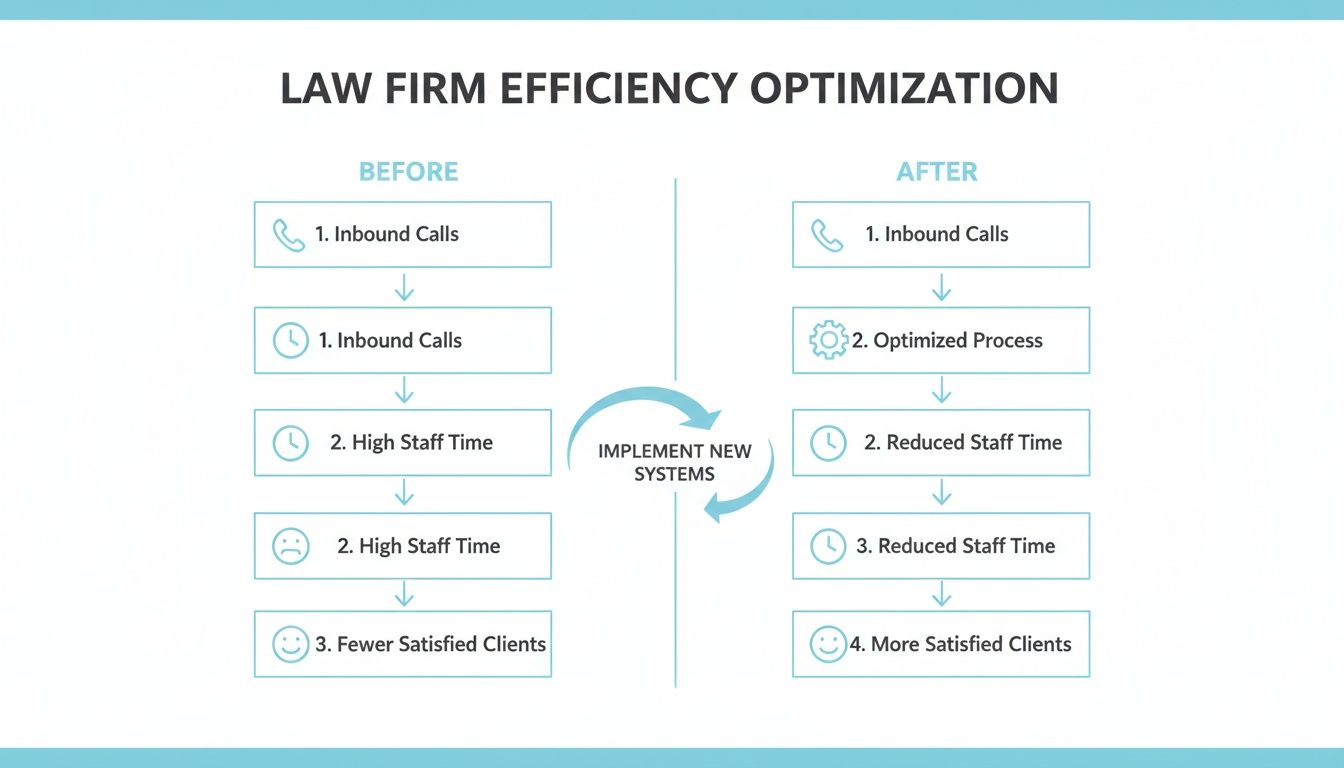
As you can see, simply redirecting routine calls and tasks to a self service portal frees up your staff for more important work and gives clients the instant answers they want.
To make this journey even clearer, we've broken it down into a phased roadmap. This table outlines a logical progression, from identifying your biggest bottleneck to measuring the impact of your new tools.
Digital Transformation Roadmap For Law Firms
| Phase | Key Actions | Focus Area | Example Goal |
|---|---|---|---|
| 1. Strategy | Identify a single, high impact pain point. Define a specific, measurable goal. | Problem First, Not Tech First | "Reduce inbound client update calls by 50% in the next 90 days." |
| 2. People | Communicate the "why" to your team. Involve key staff in the decision making process. | Team Buy In & Adoption | "Get paralegals to actively use the new tool for 80% of client updates." |
| 3. Process | Map out how the new tool will fit into your current daily workflow. Ensure seamless integration. | Workflow Integration | "The new portal must sync directly with our existing case management software." |
| 4. Technology | Select a low friction tool that solves your specific problem. Prioritize ease of use and quick setup. | Targeted Solution | "Implement a client portal with a setup time of less than one week." |
| 5. Measurement | Track your initial KPI. Gather feedback from both your team and your clients. | ROI & Feedback Loop | "Review call logs and client feedback surveys monthly to track progress." |
By following a structured path like this, you can methodically improve your practice without feeling overwhelmed. Each phase builds on the last, ensuring a smooth and successful implementation.
Phase 1: The Strategy
Your journey starts with a problem, not with software. The best digital strategies pinpoint a single, nagging issue that frustrates both your team and your clients. For most firms, that issue is client communication.
Think about it: the endless phone calls for simple status updates, the messy email threads, the back and forth of collecting documents. It all adds up to a massive administrative headache. This is the perfect place to start because fixing it delivers an immediate and very visible payoff.
Your initial strategy should be incredibly focused:
- Find the Core Problem: Name the most repetitive, time wasting task. For example, "Our paralegals are buried under calls just asking for case status."
- Set a Clear Goal: Make it specific and measurable. Something like, "We want to cut inbound client update calls by 50% within three months."
- Focus on One Solution: Don't try to solve everything at once. Concentrate on the one tool that directly fixes this problem.
This targeted approach ensures your first step is a confident one. You aren't overhauling your entire firm; you're just making one smart, strategic upgrade.
Phase 2: The People
A new tool is useless if no one wants to use it. The number one reason new tech fails in a law firm is a lack of team buy in. If your staff views it as just another complex system they're being forced to learn, they'll find a way to work around it.
This phase is all about communication. You have to frame this change as a solution designed to make their lives easier, not a top down mandate. Show your paralegals and case managers how this tool will get rid of the constant, frustrating interruptions that kill their productivity.
When your team sees that the goal is to eliminate their biggest daily headaches, they stop being resistant and start being champions for the change.
Getting this buy in from the start is non negotiable. Bring your key team members into the conversation, listen to their input, and show them exactly how this benefits their day to day work. A tool that frees them from repetitive tasks lets them focus on the higher value legal work they were actually hired to do.
Phase 3: The Process
This is where the rubber meets the road, where your new tool has to fit into your existing workflow. A genuinely low friction solution shouldn't force you to completely change how you operate. It should slide right into the processes and systems your team already uses every single day.
For instance, if your firm lives inside a specific case management system, any new tool absolutely must work with it. Your team shouldn't have to juggle logins for another platform or monitor a separate inbox. This integration is what makes or breaks adoption. If the tech complements the natural flow of work, it becomes a welcome upgrade, not a clumsy disruption. To see how this works in practice, it helps to understand what workflow automation is and how it’s designed to eliminate manual steps.
Phase 4: The Technology
Finally, we're at the tech. Once you have your strategy, people, and processes figured out, choosing the right tool becomes much easier. You're no longer looking for the software with the longest feature list; you're looking for the one that solves your specific problem with the least amount of hassle.
Seek out solutions that offer:
- Quick Adoption: Can you be up and running in a few days, not a few months?
- Minimal Training: Is it intuitive enough for your team and your clients to use without needing a manual?
- Flexible Terms: Can you get started with a month to month plan instead of being locked into a long, risky contract?
This approach dramatically lowers your risk. By starting with a targeted, easy to use tool, you can score a quick win that proves the value of this new approach and builds the confidence to tackle your next operational challenge.
Choosing The Right Technology Without The Headache
Picking the right tech for your firm feels like a huge decision, and frankly, it can be paralyzing. The goal isn't to buy the flashiest new tool; it's to solve real problems without creating new ones. A lot of firms get stuck right here, overwhelmed by the endless options and the fear of a costly misstep.
The most common trap? Adopting a powerful looking standalone app that operates on its own island, completely disconnected from your core systems. This is a recipe for disaster. It forces your staff to constantly jump between programs, creating messy data silos where client info gets duplicated, lost, or just plain confusing. Instead of making life easier, you've just added another password to remember and another inbox to check. Nobody needs that.
For a small firm, a truly effective technology shift is all about finding tools that snap right into your existing workflow.
Prioritize Integration and Ease of Use
Here’s the golden rule for new tech in a law firm: if it's not easy, it won't get used. Period. A low friction solution is one that works directly inside the Case Management System your team already uses every single day. This is the secret sauce because it meets your staff where they already are, cutting out the painful learning curve that kills momentum.
When your client portal is simply an extension of your case management platform, there’s no new process to learn. Your team keeps managing cases and communicating just like they always have, but now they’re supercharged with automation and a secure channel for talking with clients. That seamless integration is the key to getting your team on board and seeing real, long term efficiency gains.
Essential Features for Modern Client Communication
As you look at different options, focus on the core features that deliver immediate, tangible value to both your firm and your clients. Any modern client communication platform should have these non negotiables:
- Secure Client Portals: Give clients one safe place to check their case status 24/7. This dramatically reduces their anxiety and the number of "just checking in" calls your office gets.
- Automated Messaging: Set up automatic reminders for appointments, deadlines, or document requests. This frees up your team from the soul crushing task of manual follow ups.
- Simple File Sharing: Let clients upload documents straight from their phone or computer, finally ending the nightmare of insecure, oversized email attachments.
The pandemic wasn't just a disruption; it was a permanent shift in client expectations. It fast forwarded digital adoption in professional services by years. Today, over 90% of organizations are using cloud technologies, and a staggering 95% of professional services firms have a digital strategy in place.
This massive change means that tools offering secure, remote access aren't a luxury anymore, they're a fundamental requirement to stay competitive.
Look For a Low-Friction Approach
As a small firm, your biggest advantage is agility. You can't afford to get bogged down in expensive, multi year contracts for software that might not be the right fit a year from now. A low friction approach to technology means prioritizing flexibility and minimizing risk, so you can innovate without a massive upfront gamble.
Look for providers that offer a quick and painless setup. You should be able to get started and invite your first clients in about a week, not months. This way, you start seeing a return on your investment almost immediately.
Flexible, month to month terms are also crucial. This model lets you adapt as your firm’s needs evolve, ensuring the technology serves you, not the other way around. This approach takes the financial headache out of the equation and lets you focus on what really matters: improving your client service and making your firm more efficient. To simplify the process even further, exploring the best client intake software for law firms can automate and refine those crucial first interactions, helping you land more clients. By choosing tools that are easy to start and flexible to use, you can make real progress without the usual stress and risk.
How a Client Portal Can Reshape Your Firm's Day-to-Day
Think of a client portal as more than just another piece of software. It’s a complete shift in how your firm operates, communicates, and manages client relationships. It creates a single, secure space that solves some of the most persistent headaches that drain your team's time and energy.
We’ve all been there. It’s Sunday night, and a client is stressing about their personal injury case. Instead of stewing in anxiety until Monday morning, they can just log into their portal. In seconds, they see a clear, up to the minute status update, which immediately puts their mind at ease, and no one on your team had to lift a finger.

Here's another common scenario. A client gets a medical bill in the mail. Instead of wrestling with a scanner and email attachments, they just snap a photo on their phone and upload it directly into their case file via the portal. That document is now instantly and securely available to your paralegal.
Seamlessly Connecting to Your Current Workflow
The real magic happens when a client portal integrates directly with your firm’s case management system. It doesn't just add another tool to the pile; it becomes an invisible extension of the software your team already uses all day long.
There's no new inbox to monitor or a separate platform to learn. Every message, document, or form a client submits through the portal lands exactly where it belongs, in the right case file inside your existing system. This seamless connection is what makes the whole thing work so smoothly from day one.
This kind of practical tech adoption is taking off. Small and mid sized businesses are now bringing on new digital tools at a remarkable 20.62% compound annual growth rate. Why the surge? Because specialized software has become far more affordable and accessible, and firms are finally seeing the clear benefits of these investments. You can explore more on this trend in a detailed industry report on the U.S. digital transformation market.
The Bottom-Line Benefits of a Client Portal
Putting a client portal in place delivers tangible returns that you can see and measure, and they go well beyond simple convenience.
By giving clients a self serve option for status checks and document uploads, you eliminate a huge source of administrative interruptions.
The goal is to automate the routine so your team can focus on the critical. When your paralegals aren't constantly fielding "just checking in" calls, they can dedicate their expertise to higher value work that actually moves cases forward.
This shift delivers some very real financial and operational wins:
- Reduced Administrative Costs: Fewer phone calls and automated follow ups mean your staff is spending less time on repetitive tasks, which directly lowers your overhead.
- Increased Paralegal Capacity: Freeing up your paralegals from chasing down documents empowers them to take on more substantive legal work, boosting your firm’s capacity without adding to your payroll.
- Improved Client Satisfaction: Clients who feel informed and in control are the ones who leave great reviews and refer their friends. This isn't just a "nice to have"; it’s a direct driver of firm growth.
Ultimately, a client portal solves the communication bottleneck that holds so many firms back. It transforms a reactive, interruption based process into a proactive, efficient system that keeps clients happy and gives you a serious edge over the competition.
Have Questions About Going Digital? We've Got Answers.
Stepping into a digital first approach for your law firm is a big move, and it's bound to bring up some questions. That’s a good thing. It means you’re thinking critically about what's best for your practice.
We hear a lot of the same concerns from firms just like yours. Below, we’ve tackled the big ones head on with straightforward, practical answers to help you see a clear path forward.
Our Firm Isn't Very Tech-Savvy. Is This Going to Be Too Complicated?
This is probably the number one worry we hear, and the answer is a firm "no." The whole point of modern legal tech isn't to force your team to learn a dozen complex new systems. It's about finding smart, simple tools that solve one specific problem really, really well.
Think of it this way: you're not trying to rebuild your entire office from the ground up overnight. Instead, you're adding a single, high impact tool, like a client portal, that plugs right into the case management software your staff already uses every single day.
There’s no new inbox to check or a separate platform to manage. The learning curve is practically flat. With a little hands on help, most firms we work with are inviting their first clients to their new portal in about a week. The secret is choosing tools built for simplicity from day one.
What's the Real Cost of a Tool Like a Client Portal?
The good news is that the days of six figure software price tags and iron clad annual contracts are over, at least for small and mid sized firms. The best tools today run on a simple subscription model that makes powerful technology accessible.
Typically, you'll find pricing is based on the size of your firm, with a straightforward month to month commitment. No long term lock in required. This model usually includes unlimited cases, messages, and files, so you aren't nickel and dimed as your firm grows.
But when you think about cost, don't just look at the monthly fee. The real story is the return on that investment. Imagine what you could do with the hundreds of hours your team gets back when they aren't fielding "just checking in" phone calls or manually sending case updates. That reclaimed time often pays for the tool several times over.
How Do We Get Clients to Actually Use a New Portal?
Client adoption is everything. The key is making the portal incredibly easy and genuinely useful for them. If it saves them time and calms their nerves, they’ll use it. That means it has to work flawlessly on their phone, tablet, or desktop computer.
When you roll it out, position it as a new benefit, a complimentary upgrade to their client experience. Explain that it gives them 24/7 access to their case status and a secure, private channel to message your team directly.
Because the portal connects to your case management system, your team can push out automated reminders and updates. Every notification is a gentle nudge for the client to log in and see what's new. We’ve found that once clients realize they can get an answer instantly without picking up the phone, they're hooked.
Will Our Client Data Be Secure in the Cloud?
Security is non negotiable, especially in the legal world. Any platform worth its salt is built with bank level security from the ground up. You should look for tools that use industry standard encryption to protect every message and document.
It’s also crucial to confirm that all data is hosted securely right here in the United States. Here’s the thing: by moving communications into a dedicated portal, you are dramatically improving your firm's security.
Standard email is often unencrypted and incredibly easy to intercept, making it a huge liability for sensitive client information. A client portal creates a locked, protected environment for your most important conversations.
This isn't just about adding a layer of technology; it's about demonstrating to your clients that you take protecting their privacy seriously. It gives everyone peace of mind.
Ready to cut down on phone calls, boost client satisfaction, and free up your team for more important work? At CasePulse, we provide a low friction client portal that integrates directly into your existing case management system, so you can modernize your firm without blowing up your workflow. See how CasePulse can work for you.