
 CasePulse
 A case closes. The outcome is good. The client got updates, or at least your team thought they did. Then a week later, someone spots a public review that says the firm was hard to reach, the process felt confusing, and no one seemed to explain what came next.
That disconnect is common in plaintiff firms. Legal success and client satisfaction overlap, but they are not the same thing. A client can appreciate the result and still feel frustrated by intake, document requests, silence between milestones, or the effort it took to get a straight answer.
That's why firms that want to measure client satisfaction need to stop treating feedback as an end of case formality. Used well, it becomes an operating signal. It shows where communication breaks down, where staff create confidence, and where unnecessary friction drives calls, complaints, and lost referrals.
Why Guess When You Can Measure
Managing partners usually don't lack opinions about client experience. They hear what intake says, what paralegals report, and what a few vocal clients mention on calls. The problem is that anecdote favors whatever happened last and whoever complained loudest.
A more reliable system starts with the assumption that clients experience your firm in moments, not in org charts. They remember whether they knew the case status, whether forms were easy to complete, and whether someone responded when they were anxious. If you don't measure those moments, you end up inferring satisfaction from outcomes alone.
That's risky. A client may never complain directly and still decide not to refer anyone. Another may praise the attorney but privately resent the handoff process or the back and forth required to submit documents. Firms that rely on instinct usually learn about these issues too late.
Practical rule: If feedback only shows up after a bad review, you don't have a feedback system. You have a damage control process.
The better view is operational. Satisfaction measurement helps firms spot patterns that affect day to day workload. When clients feel informed, they tend to ask fewer repetitive status questions. When forms and requests are clear, staff spend less time chasing basic information. When communication is timely, trust holds up better during slow stretches in the matter.
That is why client feedback belongs next to your other management numbers, not in a folder someone checks twice a year. If your team already tracks case progress, intake conversion, and staff workload, satisfaction should sit in the same discussion. The core idea is simple, and why law firms can't improve what they don't measure is a useful framing for that shift.
Choosing What to Measure KPIs for Law Firms
A firm sends a year-end survey, gets a handful of polite responses, and still has no idea why clients kept calling for status checks or why intake staff spent hours chasing documents. The problem usually starts earlier. The firm picked familiar survey acronyms instead of deciding which client moments were worth measuring inside the workflow.
Start with the operational question. What exactly needs to improve? If the goal is to reduce friction in intake or document collection, measure effort. If the goal is to confirm whether a specific interaction worked, measure satisfaction at that touchpoint. If the goal is to understand long-term loyalty after a matter closes, measure recommendation intent.
Give each metric one clear purpose
In practice, CSAT, CES, and NPS do different jobs.
CSAT fits a single event. Use it after a retainer is signed, a portal message is delivered, a billing question is resolved, or a document request is completed. It answers a narrow question: was that interaction satisfactory?
CES is often the more useful metric for firms trying to modernize operations. Clients may be satisfied with the attorney and still feel irritated by the process. If uploading records through the portal takes too many steps, or if the client has to enter the same information twice, effort rises and staff workload usually rises with it. Measuring effort helps firms find process problems they can fix.
NPS belongs at a broader relationship milestone. It is best used after a major case phase or after resolution, when the client has enough experience with the firm to judge whether they would recommend it.
If the firm wants consistency over time, the scoring method matters too. SurveyMonkey's overview of customer satisfaction KPIs and common formulas is a useful reference for setting up score tracking across matters and practice groups.
Measure moments that connect to workload
This is the point many firms miss. Good feedback programs do not measure sentiment in the abstract. They measure the parts of the client experience that create extra work when they break.
For most law firms, that means tracking feedback around:
- intake completion
- document upload and request handling
- response time after client questions
- clarity of case updates
- billing explanations
- handoffs between attorney, paralegal, and support staff
Those are operational events, not marketing events. If a client portal is already handling updates, forms, and file exchange, feedback should sit in the same system. A portal-based survey tied to a completed task produces cleaner data than a generic email blast sent weeks later. It also gives the firm a way to compare satisfaction by case stage, staff member, or workflow step.
| Metric | What It Measures | When to Ask | Example Law Firm Question |
|---|---|---|---|
| CSAT | Satisfaction with a specific interaction | After a portal update, signed form, or support interaction | How satisfied were you with this update from our firm? |
| CES | How easy or difficult a task felt | After intake, document upload, or completing a requested action | How easy was it to complete the document request today? |
| NPS | Overall loyalty and willingness to recommend | After resolution or a major relationship milestone | How likely are you to recommend our firm to a friend or family member? |
One open text field is usually enough.
Scores show where friction exists. Comments show whether the issue was timing, unclear instructions, duplicate requests, or a gap in communication.
Build a KPI set your team will actually use
Managing partners do not need ten satisfaction metrics on a dashboard. They need a short set that maps to real decisions. I usually recommend one interaction metric, one effort metric, and one relationship metric, then tie each one to a case milestone inside the case management process.
That approach also avoids a common reporting failure. Firms collect broad feedback, but no one can tell which team or workflow caused the score. A tighter setup makes the result usable. If CES drops after document requests, operations can review the portal flow. If CSAT falls after status updates, the issue may be message timing or clarity. If NPS is strong at close but intake scores are weak, the firm is winning despite a process that is costing staff time.
If you are comparing systems, this guide to client survey tools for law firms is a practical place to evaluate how feedback can plug into existing legal workflows. For firms running lighter web properties alongside a portal, a form backend solution for static sites can also support simple feedback capture without adding much overhead.
Designing Your Client Feedback Program
A client finishes intake through your portal, gets three follow up emails from staff, then receives a ten question survey two weeks later. Response rates drop. Comments are vague. No one knows whether the problem was the intake form, the document request, or the handoff between teams.
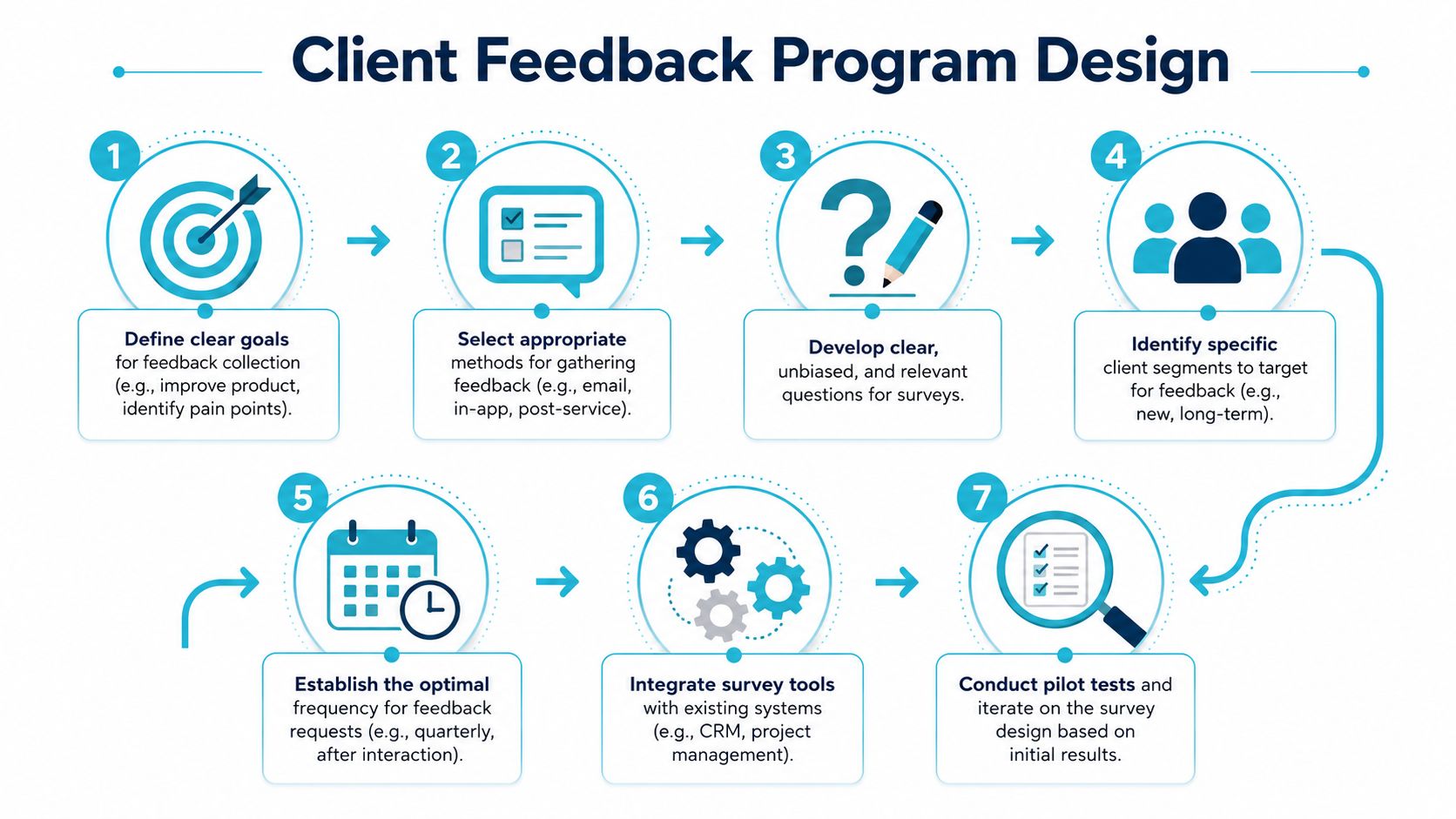
A feedback program should prevent that kind of guesswork. In a law firm, the design goal is simple. Ask for feedback at moments that matter, keep the ask small, and tie each response to a specific stage in the matter so operations can fix the right process.
Keep it short and tied to real events
Survey design fails when firms treat feedback like a quarterly marketing exercise instead of part of service delivery. Clients do not want to complete a long questionnaire after every interaction. Lawyers and staff do not want another manual task. The practical answer is a short prompt triggered by a defined case event, usually inside the client portal or case management workflow.
For most law firms, one scored question and one optional comment field is enough.
Use this structure:
- Map the client journey. Mark the points where clients are likely to feel friction, relief, confusion, or confidence.
- Match one metric to one moment. Use CES for effort-heavy steps, CSAT for service interactions, and NPS at the end of the matter.
- Scale the survey to the event. A document upload request needs a lighter ask than matter closure.
- Write in client language. Questions should reflect what the client just did, not your internal workflow labels.
- Add suppression rules. If someone answered recently, pause the next request unless the next milestone is materially different.
- Start with one practice group. You will spot bad timing, duplicate triggers, and weak wording quickly.
- Review comments with operations, not just marketing. The point is to improve workflows, not collect vanity scores.
The strongest programs feel built into the service experience. Clients answer more often when the request appears in the same channel they already use to review updates, upload documents, or message the firm.
A simple sequence for a plaintiff matter
For an intake-heavy plaintiff practice, I usually set up three feedback points and stop there. That gives the firm coverage across the matter without over-surveying clients.
After intake paperwork
Ask a CES question about ease. If this score drops, the firm can check whether instructions were unclear, the portal asked for too much at once, or staff had to chase missing information.After a meaningful status update
Use CSAT to measure whether the client felt informed. This is often where communication problems surface, especially if updates are technically accurate but hard for clients to follow.After case closure
Use NPS with one comment prompt. This helps separate clients who were satisfied with the legal outcome from clients who would actively refer the firm.
Example prompts can stay plain:
- CES prompt: How easy was it to complete the requested intake steps?
- CSAT prompt: How satisfied were you with the clarity of this case update?
- NPS prompt: How likely are you to recommend our firm based on your experience?
If your team wants to connect these touchpoints to matter milestones instead of relying on staff memory, this guide on automating legal workflows inside your case process is a useful planning reference. If you are building lightweight intake or feedback forms outside a heavier application stack, a resource like this form backend solution for static sites can help your team think through simple collection patterns without overengineering the workflow.
Automating Collection Within Your Workflow
Manual feedback collection fails for the same reason manual follow up fails. It depends on memory, spare time, and someone deciding the moment is right.
In most firms, that means surveys go out inconsistently. One paralegal remembers after a call. Another sends a generic email at the end of the month. A third never sends anything because the case moved on and the inbox got crowded. The result is thin data, biased timing, and no way to compare one stage of the client journey to another.

Trigger feedback from actual case events
The strongest systems combine survey based and behavioral metrics, and in context surveys sent right after the experience capture more reliable feedback. They also track repeated touchpoints and outcomes over time, as noted in Formbricks' guide to measuring customer satisfaction.
That matters in a law firm because your case management system already knows when something happened. It knows when intake is completed, when a document request is fulfilled, when a milestone is marked done, and when a matter closes. Those events should trigger the feedback flow.
A practical setup looks like this:
Milestone completed in case management
Trigger a CSAT survey through the client portal.Client finishes a form or upload
Trigger a CES question about effort.Matter closed
Send an NPS survey after the closing communication lands.
This is the difference between feedback as admin work and feedback as infrastructure.
Use the portal instead of creating another inbox problem
A client portal is the right place for this because it already sits inside the communication path. Clients are checking status, sending messages, uploading files, and completing forms there. You're not asking them to jump to a separate survey process that feels detached from their matter.
Distribution can vary by firm and client preference:
- Email works when you need a clean record and broader reach.
- SMS fits short prompts after a simple task.
- In app prompts inside the portal are useful when the client is already engaged in the workflow.
One option in this category is CasePulse, which provides a secure client portal for law firms and integrates with systems such as Needles, Neos, LawBase, and Litify so staff can work inside their existing workflow while clients receive updates, messages, forms, and other requests through the portal. That same workflow logic can support automated client feedback collection at specific points in the case journey. If your team is evaluating where automation fits more broadly, this page on how to automate workflows is relevant.
When staff have to remember to ask for feedback, response collection becomes uneven. When the system asks at the right moment, the data gets cleaner.
Connect survey data to the rest of your operations
Automation also makes analysis easier. If survey responses live in one system and matter data lives in another, your team will spend too much time reconciling records. You want the feedback tied to case stage, practice area, and responsible team members from the start.
That same principle applies to document heavy environments. If your firm still pulls information manually from files before routing it into reporting tools, a technical reference like this guide for PDF to Sheets API can help operations teams think more clearly about structured data movement across systems.
Turning Data into Actionable Insights
Collecting scores is easy. Interpreting them well is where firms usually stall.
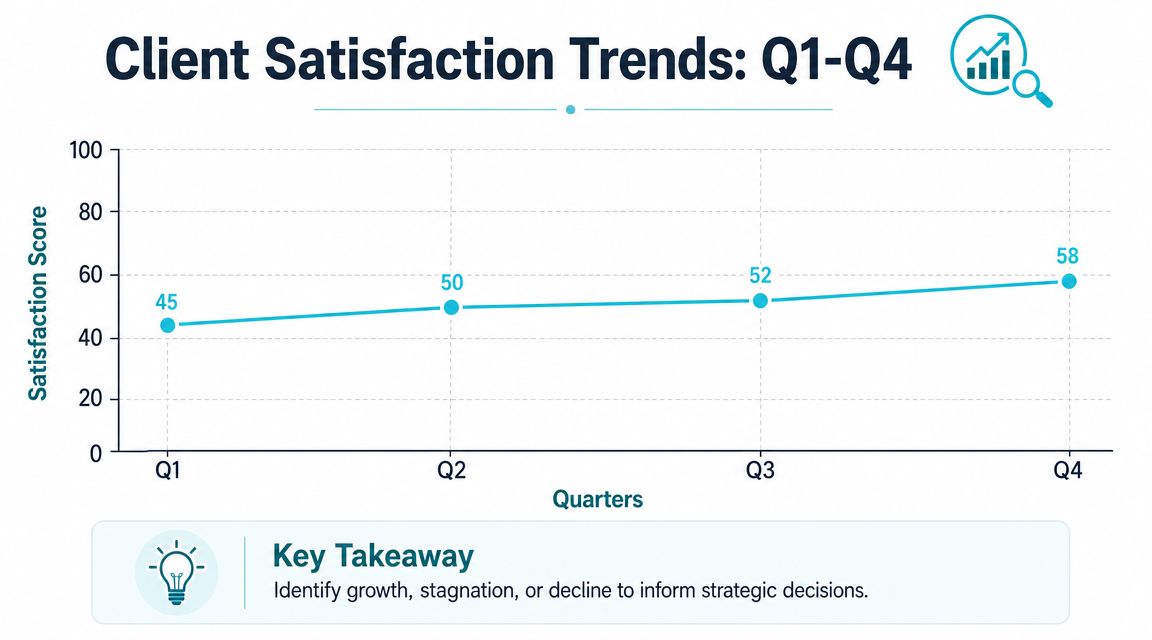
The first trap is overreacting to one bad response. The second is staring at an average and assuming it describes the whole client experience. Neither works. A managing partner needs trend lines, segments, and context.
Read patterns, not isolated scores
A dashboard should help you answer practical questions.
By case stage
Are clients calm during intake but frustrated during document collection?By matter type
Does one practice area produce more confusion around next steps?By team or office
Are some groups better at setting expectations and closing loops?By channel
Do clients respond better when updates arrive through the portal instead of email?
The chart above illustrates the basic idea. What matters is not one quarter in isolation, but whether the direction is rising, flat, or slipping.
Trust behavior as much as surveys
Legal services have a special measurement problem. Clients may hesitate to criticize the firm while the matter is still active. Social desirability bias and fear of affecting outcomes can distort the data, and a high score can hide unresolved friction. A better approach is to combine periodic satisfaction scores with behavior based proxies such as repeat contact or complaint rates, then segment results by case stage, as explained in MeasuringU's discussion of CSAT scales and validity.
That changes how you read the dashboard. If CSAT looks fine but one case stage generates repeated status requests, duplicate document submissions, or recurring complaints about responsiveness, don't let the survey score talk you out of the operational evidence.
A high score is useful. A high score plus low friction is trustworthy.
What to look for each week
A simple weekly review often beats a large monthly presentation. Focus on questions like these:
Where are comments clustering
Look for repeated language such as “confusing,” “unclear,” or “had to call.”Which touchpoints create extra work
If one portal request leads to repeated follow ups, the issue may be process design, not staff attitude.Who recovers well after friction
Some team members keep satisfaction steady because they explain delays clearly. That's a training asset.What changed operationally
If scores shift after a form change or communication update, tie the trend back to that process change.
When firms do this well, feedback stops being a reputation metric and becomes a management tool.
From Feedback to Firm Growth
The point of measuring satisfaction isn't to chase a perfect score. It's to build a system that catches friction early and helps the firm respond on purpose.
That starts with closing the loop. If a client leaves negative feedback, someone should review it quickly and decide whether the issue needs follow up, clarification, or a service recovery call. If a client leaves positive feedback, that response can guide testimonial outreach, referral conversations, or simple internal recognition for the team member who handled the matter well.
The bigger payoff comes from process changes. A steady pattern of low effort scores during intake might justify rewriting forms or changing when staff request documents. Weak satisfaction after status updates might point to unclear messaging or inconsistent communication habits. Strong scores in one team can become the model for training another.
The firms that improve fastest don't treat feedback as a marketing asset. They treat it as operational evidence. That's the mindset shift. Once you measure client satisfaction inside the same workflow where clients already receive updates, share files, and ask questions, the data becomes easier to collect, easier to trust, and far easier to act on.
If your firm wants to build a client feedback process inside the systems your team already uses, CasePulse is worth a look. It gives law firms a secure client portal tied to existing case management workflows, which makes it practical to collect feedback at meaningful case milestones without adding another disconnected tool for staff to manage.