
 CasePulse
 A paralegal has the divorce packet ready, the court deadline is close, and everyone assumes the last signature is a formality. Then the file comes back with a problem. The affidavit of consent was signed too early, notarization is missing, or the client says they didn't understand what they were approving. What looked routine turns into delay, rework, and a very uncomfortable client call.
That scenario shows up more often than firms like to admit. The affidavit of consent sits in the category of documents people think they understand until a judge, clerk, or opposing party tests the details. When the process is loose, the document becomes a point of failure. When the process is tight, it becomes a reliable control.
The Critical Document You Cannot Ignore
In practice, the trouble rarely starts with the legal theory. It starts with operations.
A staff member sends a draft by email, the client prints the wrong version, someone forgets to confirm whether notarization is required, and the signed copy lands in the wrong matter folder. By the time anyone spots the mistake, the team is trying to fix execution problems instead of moving the case forward. Firms that already have disciplined legal documents review workflows usually catch these errors earlier. Firms without that discipline end up cleaning up preventable messes.
Why this document causes outsized problems
An affidavit of consent looks simple because it's short. That's exactly why teams underestimate it. Short documents often carry dense legal effect.
Common failure points include:
- Wrong form for the matter: Staff use a generic template when the court or local office expects a specific version.
- Bad timing: The affidavit is signed before the applicable waiting period or filed too late.
- Weak execution records: No one can later show when the client received the draft, what instructions were given, or how identity was confirmed.
- Disconnected storage: The final notarized version exists, but the case team can't find it quickly.
Practical rule: Treat every affidavit of consent as both a legal document and a workflow event.
That mindset changes how firms handle it. The question stops being, “Did we get the signature?” and becomes, “Can we prove valid consent, proper execution, and correct filing if someone challenges this later?”
What works and what doesn't
What works is boring on purpose. Standardized intake. Matter-specific templates. Clear signer instructions. Review before execution. Immediate storage in the right file.
What doesn't work is improvisation. The more a firm relies on ad hoc email chains, verbal instructions, and staff memory, the more likely the affidavit becomes the reason a matter stalls.
What an Affidavit of Consent Actually Is
A client approves a document over the phone, the matter moves ahead, and a week later someone asks for proof of that approval in sworn form. That is the point at which firms learn the difference between ordinary permission and an affidavit of consent.
An affidavit of consent is a sworn written statement in which a person confirms voluntary permission for a specific act, filing, transaction, or legal step. The affidavit matters because it turns consent into evidence that another party can review, file, and rely on. Courts, agencies, carriers, and counterparties do not all ask for it in the same situations, but they ask for the same thing underneath: a record that the signer gave informed consent and can be tied to that statement later.
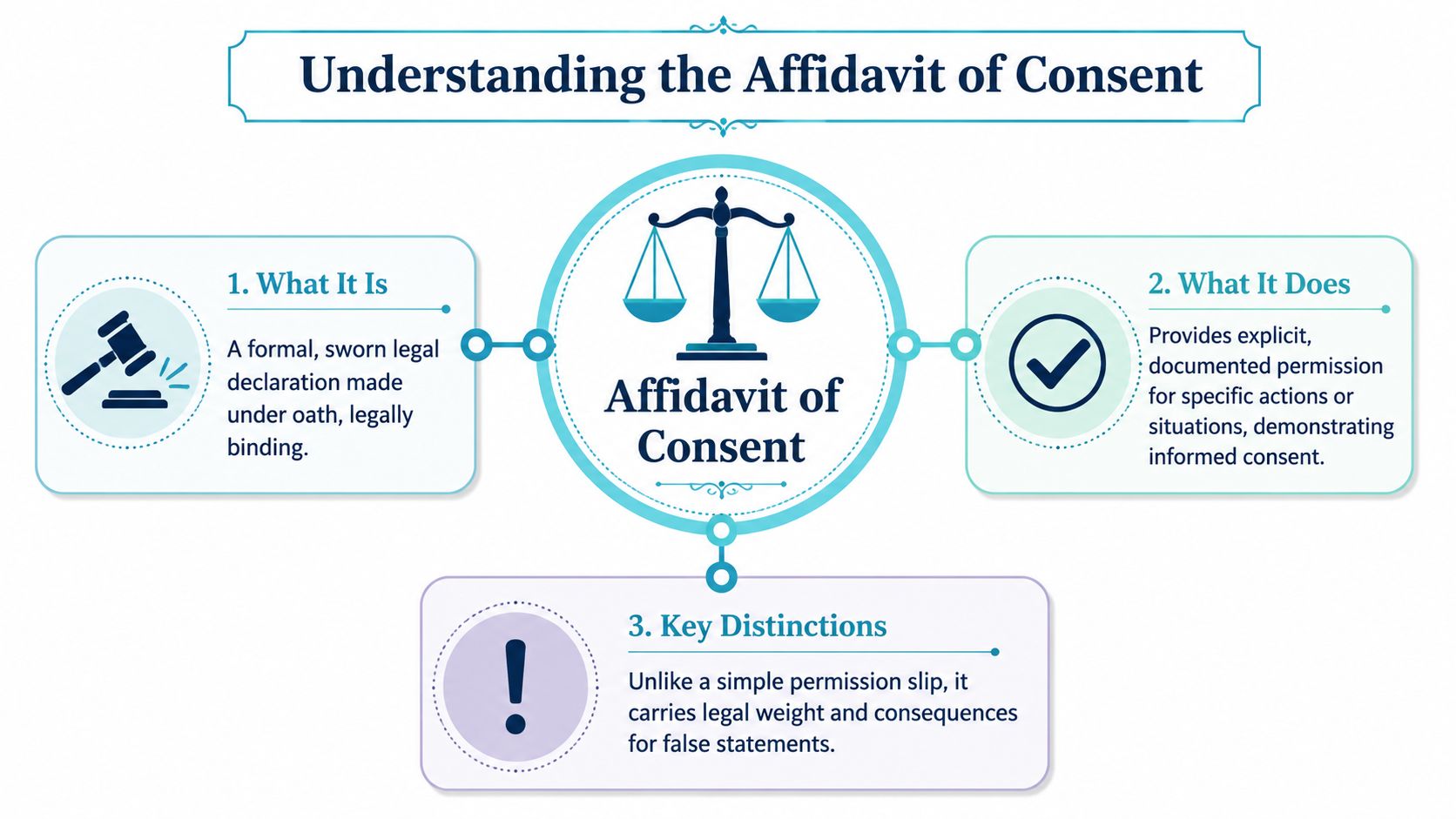
The document does more than show agreement
The word affidavit carries the legal weight. A person signing an affidavit is making a statement under oath or affirmation. That changes how the document is treated in a file and how seriously false statements are viewed.
The word consent defines the subject of that sworn statement. The signer is not merely identifying themselves or acknowledging receipt of paperwork. The signer is stating, in a form that can be presented later, that they knowingly allow a specific action to occur.
Used together, those two elements serve different operational purposes:
| Function | Why firms care |
|---|---|
| Creates a usable record of permission | The file shows exactly what the signer authorized, instead of relying on a call note or email summary. |
| Supports later verification | Reviewers can check the signer, date, scope of consent, and execution details without reconstructing the history from inboxes. |
That distinction matters in practice. A casual note may satisfy the client relationship in the moment. It usually does not satisfy a court clerk, a border official, or opposing counsel asking what exactly was authorized and when.
What makes it different from a standard consent form
A consent form often documents agreement. An affidavit of consent documents agreement in sworn form, usually with execution formalities that make later challenges harder.
That is why firms should treat it as a controlled document, not a quick attachment sent from someone's desktop. The higher-risk question is rarely whether the client intended to say yes. The real question is whether the file can prove valid consent if timing, identity, voluntariness, or scope gets challenged.
For family law teams, that usually starts well before drafting. A stronger family law client intake form process helps staff identify who must consent, what act requires sworn approval, and whether any court-specific language is needed before the wrong template goes out.
The practical definition staff should use
Staff need a definition they can apply under deadline pressure. Use this one: an affidavit of consent is the sworn record of a person's permission for a specific legal act, prepared in a form that others can rely on.
That framing improves execution. It tells the drafter to define the act precisely, tells the reviewer to check whether oath and notarization requirements apply, and tells the operations team to collect and store the final signed version with a clean audit trail. In firms that handle these documents well, the affidavit is never just drafted. It is requested, verified, executed, and filed through a repeatable process.
A good affidavit does not remove judgment calls. It reduces avoidable ones.
Common Scenarios That Require an Affidavit
Most firms don't struggle with the definition. They struggle with spotting the trigger. The affidavit of consent usually appears when a matter needs more than informal approval and someone needs a reliable record of voluntary authorization.
Family matters where informal consent won't hold
The most familiar example is a child traveling internationally without both parents present. A parent may need to give documented permission for the trip. In that setting, a handwritten note may not satisfy the people reviewing travel documents, and it certainly won't give a firm much comfort if questions arise later.
Uncontested divorce is another recurring example. In Pennsylvania practice, the affidavit functions as part of the consent record tied to the divorce process. That's very different from a spouse telling counsel by phone that settlement terms are acceptable.
A structured intake process helps firms identify these needs early. If your family team is still discovering consent issues late in the file, the problem often starts upstream in the intake questions. A stronger family law client intake form process can surface missing consents before drafting begins.
Property and land record use cases
Real estate and land matters create a different kind of risk. Here, the document may affect title, recording, or development steps.
In some matters, a lender, beneficiary, or other interested party may need to formally consent before a plat dedication, transfer-related step, or recording action moves forward. A general note of approval won't do much if the county recorder or land-use office expects a specific sworn form.
Adoption and care-related situations
Adoption matters often require a higher level of formality around permission because the rights at stake are substantial. The same is true when an adult needs to authorize care or a child's legal custodian needs to document permission for a non-parent to act in a defined situation.
What matters operationally is not the label alone. Teams need to identify:
- Who must consent: Parent, spouse, beneficiary, holder, or another legally relevant person.
- What act is being authorized: Travel, divorce terms, property action, adoption-related step, or another defined event.
- What authority will review it: Court, agency, county office, or opposing counsel.
- What execution standard applies: Oath, notarization, timing, and filing mechanics.
If the rights involved are serious, assume the process for proving consent matters as much as the consent itself.
The internal handoff that often goes wrong
One pattern shows up across practice areas. The attorney knows consent is needed, but the handoff to staff is vague. The note says “get client affidavit,” and the rest is left to memory.
That's where avoidable errors start. Better firms build a simple issue-spotting rule into matter opening and checklist review. If a file involves travel by a minor, adoption, uncontested divorce, or a property step that requires a recorded or sworn approval, the affidavit workflow starts immediately, not at the deadline.
Anatomy of a Legally Defensible Affidavit
A strong affidavit of consent is built, not merely signed. The document itself matters, but the execution process matters just as much.
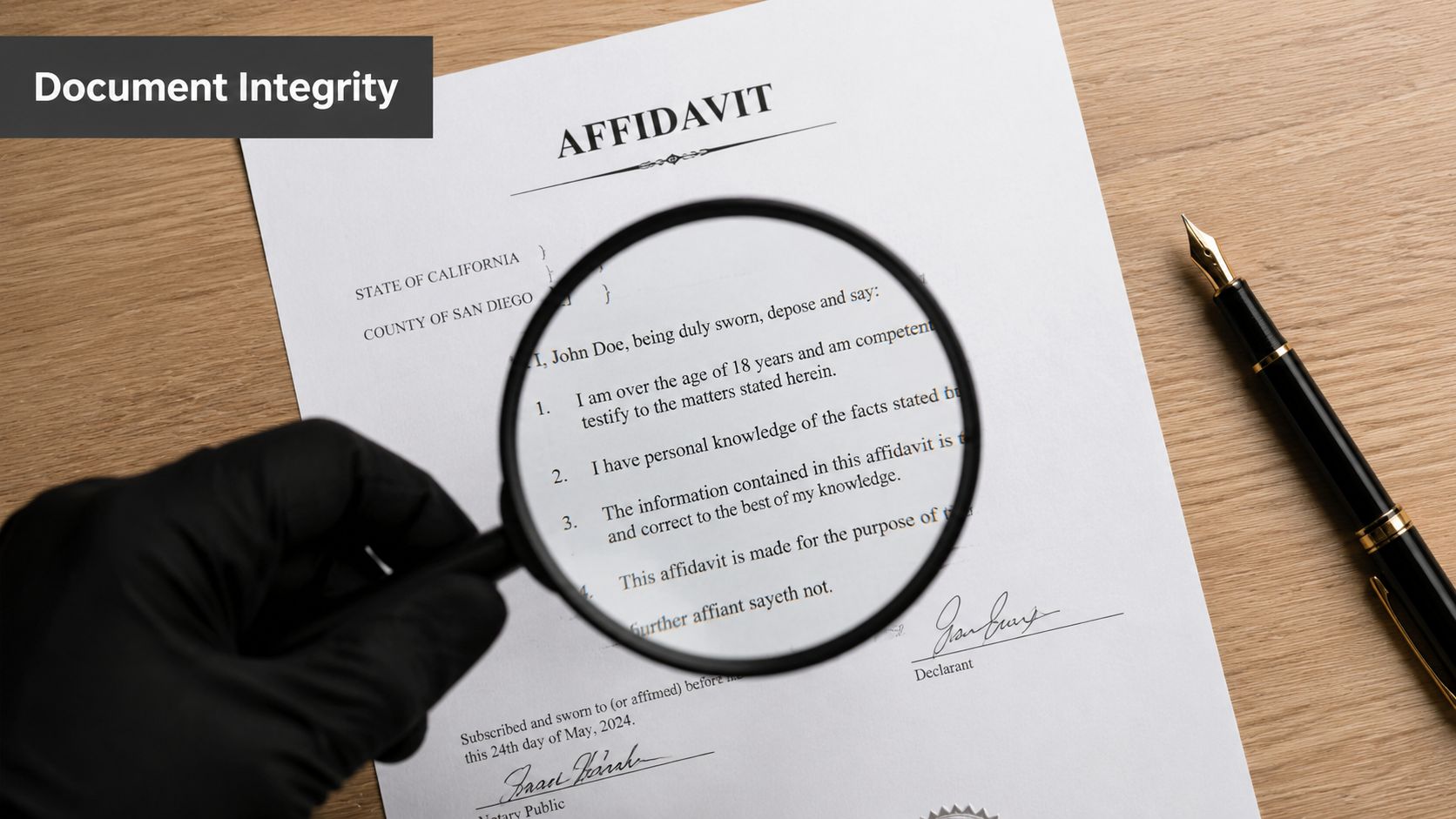
The core parts that need to be right
Every affidavit of consent should answer basic questions clearly. Who is speaking? What exactly are they consenting to? Under what authority is the statement being made? Was the signer properly identified and the signature properly witnessed if notarization applies?
A practical review usually focuses on these elements:
- Affiant identification: Full legal name and enough identifying detail to tie the signer to the matter.
- Specific consent language: The act being authorized must be described plainly. Vague wording causes future arguments.
- Sworn statement: The affidavit needs language showing it is made under oath or affirmation.
- Execution formalities: Signature, date, and notarization if required by the governing form or filing practice.
- Matter connection: The affidavit should clearly connect to the case, transaction, or proceeding it supports.
The signature is not the whole story
Pennsylvania case discussion is useful here because it shows why process control matters. A party may seek withdrawal of consent, and courts evaluate whether the signature was obtained by duress, fraud, or undue influence. The burden for fraud is described as clear and convincing evidence, as discussed in this Pennsylvania affidavit of consent case analysis.
That means a firm can lose time even when it has a signed document in hand. If the surrounding circumstances are sloppy, the affidavit becomes easier to attack.
What firms should document around execution
A defensible file usually includes more than the final PDF. It includes the record of how the firm got there.
Good practice includes:
Client communication records
Keep the message that sent the draft, the explanation of what the client was being asked to approve, and any questions the client asked before signing.Version control
Don't let multiple near-final drafts circulate. One approved execution copy should exist.Identity and notarization handling
The file should show how the signer's identity was confirmed and when the notarization occurred.Staff instructions
Internal notes should make clear who reviewed the affidavit before execution and who was responsible for filing it.
A contested affidavit rarely fails because of one dramatic flaw. It usually fails because several small process mistakes stack up.
A note on supporting exhibits and visual materials
If your firm attaches exhibits, IDs, or related visual materials to support execution or identity, review those files with the same care as the affidavit itself. Teams using image-based records should apply the same due diligence they use elsewhere. This AI Image Detector legal compliance advice is a useful reminder that visual records deserve verification before they become part of a legal file.
What tends to hold up under pressure
The strongest affidavits share a few traits. The language is narrow and specific. The signer had a meaningful chance to review it. Staff didn't rush execution just to clear the task. The final file shows an orderly chain from draft to review to sworn signature.
What doesn't hold up is vague consent, undocumented phone explanations, and an office assumption that notarization alone fixes a weak process. It doesn't.
Navigating Jurisdictional Pitfalls and Variations
A paralegal pulls last month's affidavit of consent, swaps in a new client name, and sends it for signature before lunch. By the time the filing clerk rejects it, the signing window is tighter, the client is frustrated, and the attorney has to decide whether the problem is a bad form, a bad process, or both.
That failure pattern is common because the title sounds generic. It is not. An affidavit of consent can mean very different things depending on the forum, the act being authorized, and the rights touched by the document.
Same name, very different consequences
In Pennsylvania divorce practice, the affidavit is tied to court timing rules and can affect issues related to alimony, property, and attorney's fees. In Oregon local land-use practice, a consent affidavit may relate to plat dedications and signatures by trust deed beneficiaries or mortgage holders, as described in this jurisdictional affidavit of consent discussion.
Those differences are not drafting details. They change what the signer is confirming, what the office must collect, and what can go wrong if staff use the wrong version.
The questions staff need to ask first
Before anyone sends a form for review or signature, the file needs four answers.
| Question | Why the answer matters |
|---|---|
| Which court, agency, or local office is involved | It determines whether a required form, local rule, or recorder instruction controls the document. |
| What legal act is the consent tied to | Divorce, travel, adoption, land-use, and property matters carry different legal consequences and supporting-document needs. |
| Does the document affect substantive rights | Some affidavits do more than record agreement. They can affect claims, waivers, or title-related interests. |
| What filing mechanics apply | A document can be accurate on substance and still be rejected for venue-specific formatting, notarization, or filing defects. |
Firms that answer those questions early waste less attorney time later.
The practical risk of using a generic template
Generic templates create a false sense of safety. The wording looks familiar, so staff assume the file is covered. Then local practice, clerk instructions, or a judge's expectations expose the mismatch.
The better approach is operational, not just editorial. Matter type should determine the starting template. Jurisdiction should determine the final version, execution method, and filing checklist. If your firm collects signatures through a client portal, the portal should route the client to the correct jurisdiction-specific form set, not a general affidavit folder. Teams using secure file sharing with clients should build the jurisdiction check into intake and document delivery so the wrong form never reaches execution.
The question to ask is direct: “Do we have the right affidavit for this forum and this act?”
What experienced teams do differently
Experienced teams keep a small, controlled template library. Each form is tied to a defined use case, a forum, and a short instruction note on when not to use it. That matters because an affidavit labeled “consent” may also carry waiver implications, recording consequences, or timing restrictions that are easy to miss in a busy practice.
They also avoid solving every variation with manual drafting. Fillable forms, matter tags, and jurisdiction-based intake fields cut rework without sacrificing legal review. I have seen firms reduce avoidable redo requests by requiring staff to pick the forum and matter type before a draft can be generated.
That is the trade-off worth making. A little more control at intake prevents a signed document from becoming unusable at filing.
A Modern Workflow for Collecting and Managing Affidavits
Most affidavit problems are workflow problems in disguise. The legal standard may be clear, but the firm's process for collecting, reviewing, notarizing, filing, and retrieving the document is often loose.
Start with timing, not drafting
In Pennsylvania mutual-consent divorce practice, the affidavit ties directly to timing. The court form requires 90 days to elapse after filing and service before a party may consent to entry of a final decree, according to the Pennsylvania court affidavit form. County instructions also state that the affidavit may be signed only after that 90-day waiting period and then filed within 30 days of signing, with notarization and precise filing details required, as noted in these county filing instructions for the affidavit of consent.
That timing rule should drive the workflow calendar. Don't draft and send the execution copy on instinct. Calendar the eligibility date, the signing window, and the filing deadline before anyone asks the client to sign.
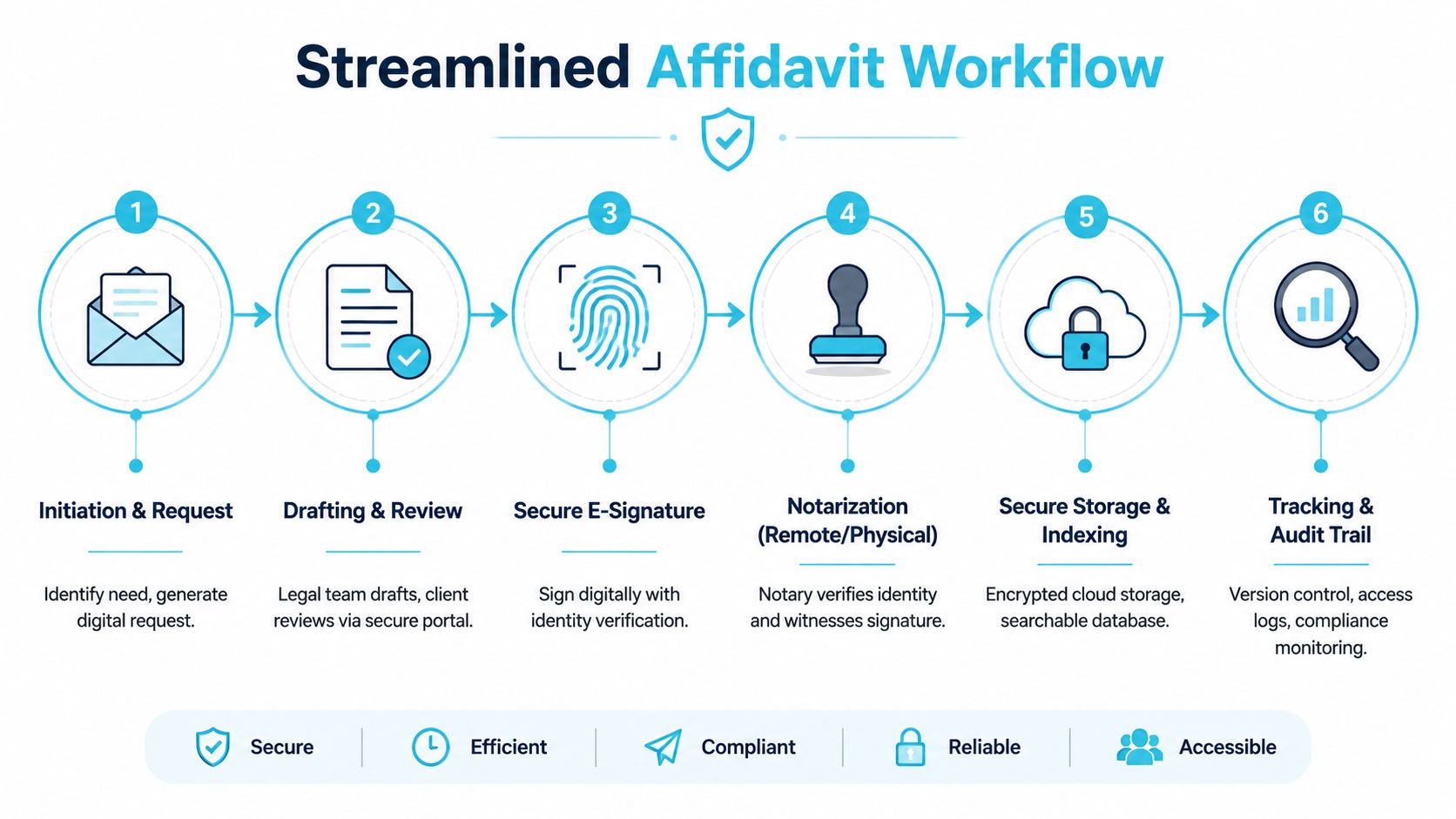
A workable six step process
The best workflow is simple enough that staff will follow it.
Trigger the task at matter opening
Build a matter tag or checklist item that flags when an affidavit of consent may be needed. Don't leave it in someone's memory.Use a fillable draft, not a blank form attachment
Fillable forms reduce omissions and force complete data capture. They also make internal review easier because required fields are visible.Send through a secure client channel
Affidavits often contain sensitive personal facts and need controlled delivery. A secure process for file sharing with clients is a better fit than loose email attachments moving back and forth across multiple inboxes.Review before execution
Someone on the legal team should confirm the right template, right names, right matter details, right dates, and right instructions before the client signs.Coordinate notarization deliberately
Don't assume the client will “take care of notarization.” Give exact instructions, confirm whether remote or physical notarization is acceptable for the matter, and verify the final document when it returns.Store the final version where the case team works
The executed affidavit should be linked to the active matter file immediately, with a filename convention staff can search later.
A short control checklist
Teams do better with a compact checklist than a policy memo. Keep one near the execution stage:
- Correct form selected
- Jurisdiction confirmed
- Signer identity matched to matter
- Execution date checked against timing rules
- Notarization requirement confirmed
- Final signed version filed and indexed
- Deadline for submission or filing calendared
A fast workflow isn't the one with fewer steps. It's the one that removes backtracking.
Client communication that reduces mistakes
Clients sign better when instructions are short and concrete. Don't send a dense paragraph with five different requests buried inside it.
Use a message that tells them:
- what the document is,
- why it matters,
- whether they should sign now or wait,
- whether notarization is required,
- and how to return the completed copy.
That kind of message reduces the most common client-side errors, especially premature signing and incomplete execution.
What to avoid
Avoid circulating drafts by email with filenames like final, final2, and final revised. Avoid asking staff to hunt for the latest notarized copy across shared drives and inboxes. Avoid workflows that depend on one experienced assistant remembering all the exceptions.
The goal is not more software for its own sake. The goal is fewer avoidable errors, cleaner handoffs, and a record the firm can trust when someone asks, months later, “When was this signed, by whom, and under what instructions?”
CasePulse helps law firms handle client-facing affidavit workflows with less friction. Through the CasePulse secure client portal, firms can send fillable forms, collect files, message clients, and keep staff working inside their existing case management systems such as Needles, Neos, LawBase, and Litify. If your team wants a cleaner way to manage consent-related documents without adding another inbox, it's worth a closer look.