
 CasePulse
 Think of a client portal as a secure, private online dashboard for each of your clients. It's a single, centralized place where they can get updates on their case, send you messages, and share important documents, anytime, day or night. This isn't just another piece of software; it's a new way of working that cuts down on the constant back and forth and gives your clients the peace of mind they deserve.
Why Modern Law Firms Need a Better Communication Strategy

Picture one of your personal injury clients, anxiously waiting for an update. Every call that goes to voicemail and every email that sits unanswered only adds to their stress. For them, it feels a lot like a patient waiting on critical test results from a doctor. The uncertainty is the hardest part.
This scenario plays out every single day in law firms. Your highly skilled paralegals and case managers are often stuck in a cycle of reactive communication, fielding the same "any updates on my case?" call over and over. This constant stream of inquiries creates a massive bottleneck, pulling your team away from the strategic work that actually moves cases toward settlement.
It’s an administrative drag that tanks productivity and, frankly, chips away at the client relationship, leaving people feeling neglected and uninformed.
The Problem With Traditional Methods
Let's face it: relying solely on phone calls and emails is an outdated strategy. These old school methods are inefficient, often insecure, and they create frustrating information gaps for both your team and your clients.
The data backs this up. One industry study revealed a shocking 67% of law firms never responded to emails, and 48% couldn't even be reached by phone. Numbers like that are a recipe for poor reviews and non existent referrals.
When clients can't get the simple answers they need, their anxiety skyrockets. That anxiety fuels even more calls and emails, trapping your staff in a vicious cycle of putting out fires instead of preventing them.
To better understand the pitfalls of outdated communication, let's compare the old way with a modern portal based approach.
Traditional Communication vs Client Portal Communication
| Communication Method | Challenges and Inefficiencies | Client Portal Solution |
|---|---|---|
| Phone Calls | Time consuming phone tag, interrupts workflow, no written record, high call volume on staff. | Clients get 24/7 access to case status, reducing inbound calls for routine updates. |
| Disorganized threads, security risks with sensitive attachments, difficult to track conversations. | Secure messaging keeps all communication in one place, tied directly to the client's case file. | |
| In Person Meetings | Scheduling difficulties, travel time for clients, inefficient for simple document exchanges. | Secure document sharing allows for instant, tracked uploads and downloads of key files. |
| Standard Mail | Slow delivery, risk of lost documents, expensive postage and printing costs. | Digital forms and e signatures eliminate the need for paper, speeding up intake and document signing. |
This comparison makes it clear: clinging to traditional methods isn't just inefficient, it's holding your firm back from delivering the kind of service clients now expect.
Introducing a Strategic Solution
This is exactly where a client portal changes the game. It’s more than a fancy tool; it represents a fundamental shift in your service delivery model. By giving clients a single, secure online space to find answers on their own schedule, you move from a reactive to a proactive communication model. You can learn more about how Aonmeetings helps law firms to see these solutions in action.
Providing this kind of 24/7 access transforms a client's anxiety into confidence and trust. It also frees your team from the relentless pressure of routine follow ups, allowing them to focus on what they do best: winning cases.
For a deeper dive into building a stronger client communication framework, check out our guide on client communication best practices. Implementing a portal is the first and most important step toward solving your firm's most persistent communication headaches for good.
How Client Portals Enhance Service and Efficiency
When you bring a dedicated client portal into your firm, two things happen right away, and they're both game changers. You immediately start delivering a better client experience, and at the same time, your team gets a massive efficiency boost. The best part? These two benefits feed each other, creating a powerful cycle that makes your entire practice stronger.
For your clients, the portal is all about empowerment. The legal world can feel like a black box, leaving people stressed and in the dark. Giving them 24/7 access to their own case information completely flips that script. Instead of nervously waiting for you to call back, they can log in whenever they want to see what’s going on. This sense of control is huge for their peace of mind.
This on demand access is also a massive trust builder. It directly tackles the number one reason clients call over and over again: they just want to know what's happening. When they have a reliable place to find answers, the constant calls for simple updates fade away, freeing up your team from a ton of interruptions.
A Better Experience for Every Client
Think about it. We can track a pizza, check our bank balance, and see when a package will arrive, all from our phones. People are just used to having information at their fingertips. They don’t suddenly lower their expectations when they hire a lawyer. If you can't offer that same level of convenience, it can lead to frustration and make them feel like they're getting poor service, even if you’re doing stellar legal work.
A client portal brings your firm up to speed with how people live today. It’s a clear signal that you respect their time and are serious about keeping them in the loop. This one change makes a world of difference in how they feel about working with you.
Imagine the alternative. A client calls for an update, leaves a voicemail, waits, and maybe calls again. That cycle breeds uncertainty. A portal replaces all that with clarity.
By providing a secure, self service channel for real time information, law firms can significantly improve client trust. It's not just a nice to have; industry surveys show that 88% of clients want firms to provide secure collaboration portals for this very reason.
This proactive communication style helps you manage expectations right from the start and sets a professional, organized tone for the entire relationship.
Boosting Your Firm’s Internal Efficiency
The ripple effect on your firm's day to day operations is just as profound. By centralizing communication and automating routine updates, a client portal slashes the number of phone calls and repetitive administrative tasks. This is where you start to see some serious efficiency gains.
Just think about all the time your paralegals and case managers spend playing phone tag every single week. Every minute spent answering "any updates on my case?" is a minute they aren't spending on the high value work that actually moves cases forward.
- Fewer Interruptions: Your staff can finally focus on deep, meaningful work without the constant "ping" of another phone call asking for basic info.
- Centralized Communication: No more digging through endless email chains. Every message and document is tied directly to the case file where it belongs.
- Automated Updates: When you update something in your case management system, that change can automatically appear in the portal, keeping the client informed without anyone lifting a finger.
Here’s a real world example: a client needs to send you accident photos or signed medical releases. Instead of dealing with clunky emails and attachment size limits, they just upload the files securely through the portal. That simple act cuts out a dozen back and forth emails, avoids technical headaches, and puts the documents right where your team needs them. This is how you save time, cut down on errors, and let your team do what they do best.
What a Great Legal Client Portal Actually Does
The clearest test of a portal is whether it removes work instead of adding a second inbox. CasePulse layers onto your existing case management system — updates post from milestones your staff already record in Neos, Needles, LawBase, or Litify, and client messages land back inside that system rather than in a separate tool. The result is automated status updates, secure messaging, forms, and file exchange without new data entry. The full flow is in the walkthrough.
Let's be clear: not all client portals are created equal. A truly effective portal is so much more than a digital filing cabinet. It's a dynamic communication hub, built from the ground up to handle the real world demands of a busy plaintiff's firm. It should feel like a seamless part of your practice, a tool that genuinely makes life easier for your team and gives clients the peace of mind they crave.
So, what separates a game changing portal from a glorified Dropbox folder? Let's break down the must have features, especially for firms that live and breathe in case management systems like Needles, Neos, LawBase, or Litify. These components are designed to work in concert, creating a smooth, secure, and efficient experience for everyone.
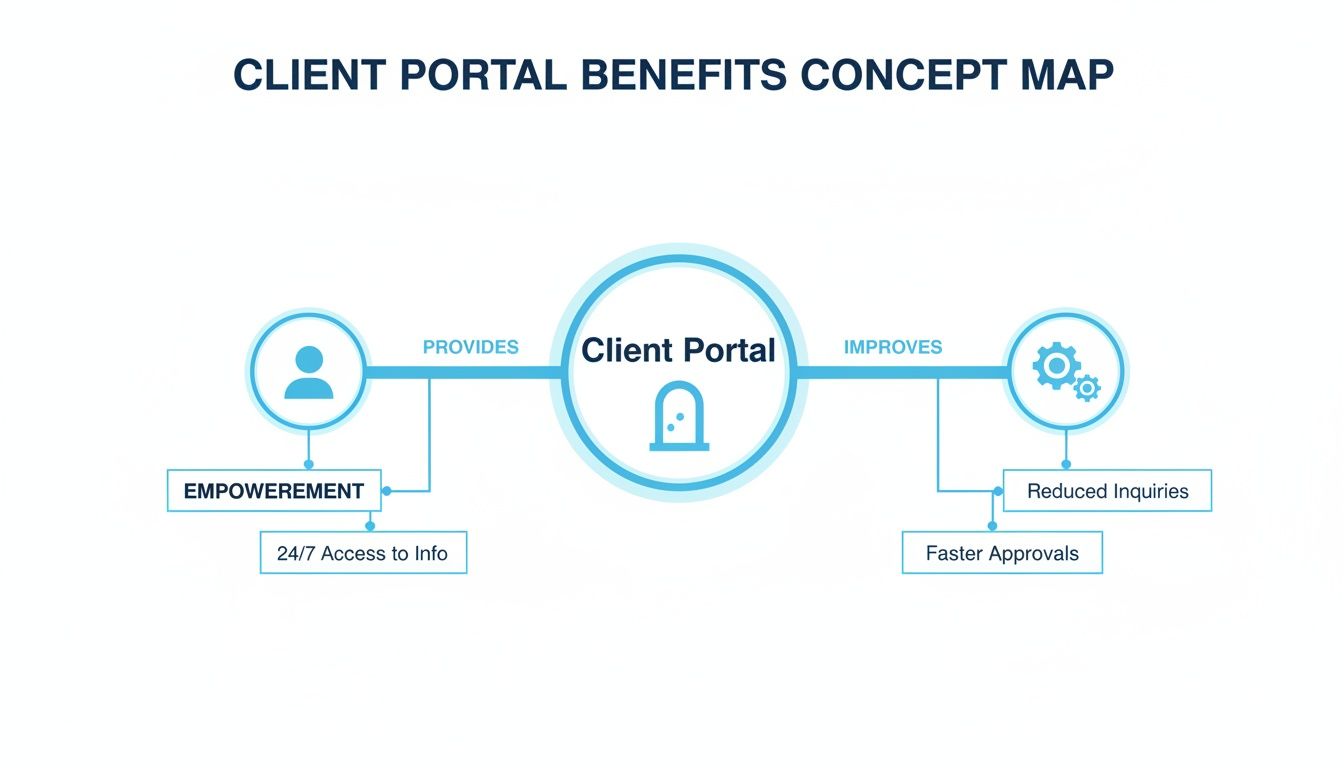
This map nails a key concept: empowering clients directly drives your firm’s efficiency. A feature that makes a client’s life easier almost always frees up your staff’s time. They're two sides of the same coin.
Secure Two Way Messaging
Let's face it, email is a terrible way to manage sensitive client communication. Important messages get buried, attachments get lost, and you’re constantly worried about security. A purpose built portal completely sidesteps that chaos with secure, two way messaging.
Think of it as a private, organized chat room for each case. Every message, question, and update is logged right there in the client's file, creating a single source of truth. No more digging through cluttered inboxes. It’s a clean, permanent record that keeps confidential information locked down.
Seamless Integration with Your Case Management System
This is the big one. If a portal doesn't plug directly into the software your team uses all day, every day, it's dead on arrival. For firms running on systems like Needles, Neos, LawBase, or Litify, this is non negotiable.
Direct integration means your paralegals and case managers never have to leave their familiar system to send a message or share a document. The portal acts as a bridge, automatically pushing and pulling information between your team and the client. This is the secret to getting your staff to actually use it. It becomes an extension of their current workflow, not another password to remember.
Secure File Sharing and Fillable Forms
Exchanging medical records, police reports, and signed retainers over email is a huge security risk. A solid client portal provides a vault for secure file sharing, giving both your team and your clients a safe way to upload and download sensitive documents.
But it gets even better with fillable forms. Imagine ditching the paper intake packets and clunky PDFs for good. You can send digital intake forms, medical release authorizations, and other questionnaires straight through the portal.
The impact here is massive. For example, firms that used customized intake forms in their portal saw a 17.6% lead conversion rate. That blows the typical legal industry average of just 2.6% for inbound calls right out of the water. This efficiency gap is often widened by slow response times, a problem portals solve with automated reminders and instant access. You can dive deeper into these law firm marketing statistics to see the full picture.
Clients fill them out on their phone or computer, and the information flows directly into their case file in your system. No more tedious manual data entry. It’s a simple feature that dramatically speeds up client onboarding.
Custom Branding and Mobile Access
Your client portal should look and feel like your law firm, not some generic software. The ability to add your logo, brand colors, and firm name is crucial for building trust and reinforcing professionalism. It tells the client they are in the right place.
And finally, mobile accessibility is an absolute must. Clients live on their smartphones. The portal has to work flawlessly on any device, from a desktop computer to a tablet or phone. This gives your clients the modern convenience they expect, allowing them to connect with you anytime, anywhere.
Prioritizing Security and Client Confidentiality

The entire attorney client relationship is built on one thing: trust. Clients hand over their most sensitive information, from medical histories to financial records, fully expecting it to stay private. Protecting that data isn't just a technical task. It's a core ethical duty.
Unfortunately, many of the communication tools we use every day are dangerously insecure. Sending case updates via a personal Gmail account or sharing discovery documents through a generic file sharing link is the digital equivalent of mailing a postcard. It’s a massive, unnecessary risk.
These everyday tools were never built for the high stakes, confidential nature of legal work. They leave privileged conversations and critical documents exposed, creating a liability your firm simply can't afford. This is precisely why client portals for law firms exist. They are built from the ground up with legal grade security in mind.
Moving Beyond Unsecured Email
Email is so routine that it’s easy to overlook its glaring security flaws. Most standard emails are unencrypted, meaning they can be intercepted and read by third parties as they bounce across the internet. Every time you attach a medical record or discuss case strategy in an email, you’re gambling with client confidentiality.
A secure client portal sidesteps this risk entirely by creating a private, self contained communication channel. Think of it less like an open mailbox and more like a digital safe deposit box for each case. Every message, document, and update is locked inside this secure environment, protected by multiple layers of security that your Outlook inbox just doesn't have. When considering your firm's communication strategy, it's also worth understanding the nuances of different channels, like the admissibility of text messages in court.
Your ethical obligation to safeguard client data is paramount. A secure portal isn't just a best practice; it's a fundamental component of modern legal practice that demonstrates your commitment to confidentiality and gives clients the peace of mind they deserve.
This shift gives managing partners and IT directors confidence that the firm is meeting its professional obligations and protecting client data from end to end.
The Core Pillars of Portal Security
When you’re looking at different client portals, there are two non negotiable security features you need to focus on: robust data encryption and secure access controls. These two pillars work together to make sure sensitive information is both unreadable to outsiders and completely invisible to unauthorized users.
Data encryption is essentially the process of scrambling information so it can only be unlocked and read by someone with the correct digital key. A proper legal client portal must encrypt data at all times.
- Encryption in Transit: This protects data as it travels between your client's computer and the portal's servers, preventing anyone from eavesdropping on the connection.
- Encryption at Rest: This keeps the data scrambled and secure while it’s stored on the server. Even if someone physically broke in and stole the hard drives, the client files would be nothing but unreadable gibberish.
On top of that, secure access controls ensure the right people see the right information. Each client gets their own unique, password protected login that gives them access only to their own case files. This structure makes it impossible for one client to accidentally stumble upon another's documents, preventing a catastrophic data breach. For a deeper dive, check out our guide on secure file sharing with clients.
A Practical Guide to Portal Implementation and Adoption
Bringing new technology into the firm can feel like a massive undertaking, but getting a client portal live doesn't have to be a month long headache. With the right partner and a clear plan, you can have your portal up and running in about a week, without derailing your team's day to day work. The whole point is a low friction process that makes it simple for your staff and clients to jump right in.
Think of it less like a disruptive software rollout and more like adding a powerful new capability to the tools your team already relies on. It’s a fast, direct path to better communication.
Getting Your Team Onboard Quickly
Let's be honest: your staff's buy in will make or break this. The good news is that the biggest hurdle to adoption is already gone. Because the portal plugs directly into your existing case management software, your team doesn't have to learn a completely new system.
They’ll keep working inside Needles, Neos, LawBase, or Litify just as they do today. Sending a secure message or sharing a document through the portal simply becomes another action within the platform they already know inside and out.
To make the transition feel effortless, we focus on hands on training and real support. A few key steps get your team feeling comfortable right from the start.
- Initial Setup: We handle connecting the portal to your case management system. It’s a quick and painless process on your end.
- Targeted Training: We run focused training sessions showing your paralegals and case managers exactly how to use the portal's features within their current workflow. No fluff, just practical application.
- Ongoing Support: Your team gets access to our US based support team, ready to answer questions as they start interacting with clients through the portal.
This approach makes the portal a helpful tool that genuinely makes their jobs easier, not just another password to forget.
Encouraging Client Adoption
Once your team is comfortable, the focus shifts to your clients. Getting them to actually use the portal is all about making it the easiest, most reliable way to get information about their case. This isn't automatic; it takes a consistent, firm wide effort to gently retrain their communication habits.
The best place to start is at the very beginning of the attorney client relationship. When you set expectations on day one, you establish the portal as the official, primary channel for communication.
The key to high client adoption is consistency. When every single person on your team, from the receptionist to the managing partner, consistently directs clients to the portal for updates, documents, and messages, it quickly becomes the new normal.
Here are a few simple but incredibly effective tactics to get clients logged in and engaged.
- Make it Part of the Welcome Packet: Include a simple, one page guide with the portal invitation right alongside your other intake documents. Make it feel official.
- Clearly State the Benefits: Don’t just tell them to sign up. Explain why it helps them. Use clear, benefit focused language like, "Log in here to get faster case updates and send us secure messages 24/7."
- Redirect All Inquiries: This is the most important step. When a client calls or emails for a status update, have your team politely provide the answer and then say, "For future updates, the fastest way is to check the portal. I just posted the latest information there for you."
By consistently reinforcing the portal as the best source of truth for their case, you’ll naturally guide clients away from the phone and into a much more efficient way of communicating.
Measuring the Real Return on Your Investment
When considering any new technology for the firm, managing partners always ask the same question: What’s the ROI? And they should. It’s not enough to talk about abstract benefits; you need to see real, measurable results that prove a client portal is a genuine asset, not just another line item on the budget.
The quickest and most obvious win? A massive drop in those constant "just checking in" phone calls. This isn't just a small convenience. It's about reclaiming your team's most precious resource: their time.
Quantifying Time and Cost Savings
Think about it. Every minute a paralegal spends on the phone giving a simple status update is a minute they aren't drafting a demand, preparing for a deposition, or doing the actual work that moves cases toward settlement. Those little interruptions add up, creating a huge drag on productivity.
Industry research backs this up. The Legal Client Experience Report found that firms relying on old school phone and email for client updates lose, on average, a staggering 1,329 hours per year. That's time you can't get back. By letting a portal handle the routine updates, you give your team that time back, which translates directly to your bottom line.
So what does this look like in practice?
- Fewer Phone Calls: Clients can log in and see their case status 24/7, so the main reason they call is eliminated.
- No More Manual Follow Ups: The portal can send out automatic reminders and notifications, so your staff doesn't have to chase down clients or send repetitive update emails.
- More Time for High Value Work: Track the hours your paralegals and case managers get back each week. That’s time they can now spend on billable, case progressing activities.
Boosting Client Satisfaction and Referrals
A solid return isn't just about cutting costs. It's also about driving new revenue. Providing a modern, transparent experience fundamentally changes how clients feel about your firm. A happy client who feels informed and in control is far more likely to leave a glowing online review and, more importantly, refer their friends and family.
The competitive edge here is very real. When a potential client is choosing between firms, and they see your five star reviews praising your communication and transparency, you immediately stand out from the competition. That reputation boost is a direct pipeline to more, and better, cases.
You can actually measure this impact by tracking a few key numbers before and after you launch the portal.
- Client Satisfaction Scores: Send out simple post case surveys to get hard data on how client happiness has improved.
- Online Reviews: Keep an eye on the volume and quality of your reviews on Google, Avvo, and other platforms. You should see a noticeable uptick.
- Referral Sources: Make it a habit to ask every new lead, "How did you hear about us?" and track how many are coming from past client referrals.
This approach gives you the concrete data to prove the portal’s value. If you want to dig deeper into this, check out our article on the metrics that matter for law firms.
The best part? You don't need a massive, risky upfront investment to see these results. With a simple month to month subscription, your firm can start seeing a positive return almost immediately, without getting locked into a long term commitment.
Answering Your Top Questions About Client Portals
Even the most promising new tool comes with a healthy dose of skepticism. It’s only natural. Let's tackle some of the most common questions and concerns we hear from firms just like yours when they're thinking about a client portal.
"But Will My Clients Actually Use It?"
This is the big one, isn't it? And the honest answer is: they absolutely will, but you have to show them the way. Think of it less as a new piece of technology and more as a new, better way of communicating that you introduce from day one.
The secret is to make it part of your intake process. Frame the portal as the best and most secure way to stay on top of their case. When a client inevitably calls for an update you’ve already posted, you can say, “I’m happy to go over that, and just so you know, I also posted a detailed summary in your secure portal so you can review it anytime.”
The key is making the portal the path of least resistance. Once clients realize it's the fastest way to get what they need, without playing phone tag, they'll adopt it in a heartbeat.
"How Does This Fit With Our Case Management Software?"
It shouldn't just "fit". It should feel like it was built in from the start. A good client portal isn't another piece of software your team has to learn. It plugs directly into the systems you already live in, whether that’s Needles, Neos, LawBase, or Litify.
This seamless connection is what makes it work. For your paralegals and attorneys, sending a secure message or sharing a document is just another action inside their case management software. No new logins, no toggling between windows. Everything stays perfectly organized within the case file, which means no more hunting through email chains to find a crucial document.
"Is It Really Secure?"
Yes, and it’s almost certainly more secure than what you're using right now. Standard email is like sending a postcard. Anyone can intercept and read it. A purpose built client portal, on the other hand, is like sending a message in a locked box via armored truck.
Security is the entire foundation. Look for platforms that offer end to end encryption, which means the data is scrambled from the moment it leaves your computer until your client unlocks it. Each client gets their own unique, password protected account, giving them a private window into only their case. This isn't just about good tech; it's about upholding your ethical duty to protect client confidentiality.
"How Long Does It Take to Get Set Up?"
You’re probably picturing a months long IT project, but it’s much, much faster than that. Modern, cloud based portals are designed for a quick and painless launch.
Most firms can go from a kickoff call to inviting their first clients in about a week. The process usually involves connecting the portal to your case management system (a simple, behind the scenes task) and a short training session to get your team comfortable. The goal is to get you seeing the benefits right away, not after a quarter of disruptions.
Ready to stop the endless phone calls and give your clients the modern experience they deserve? CasePulse offers a secure, easy-to-use client portal that integrates directly into your existing case management system, letting your team work more efficiently while delighting clients. Learn more and see how CasePulse works.