
 CasePulse
 When lawyers think about email marketing, they often see it as just another form of advertising. But it's so much more than that. It’s a powerful way to build real relationships with potential leads and current clients, all while staying well within ethical lines. The key is shifting your mindset from "advertising" to "communicating" by providing real value that reinforces your expertise and keeps your firm top of mind.
Why Email Marketing Is A Game Changer For Law Firms

I get it. Many attorneys are hesitant to jump into email marketing. Concerns about Bar Association rules, client confidentiality, and finding the time are completely valid. But when you approach it strategically, it stops being a chore and becomes a cornerstone of better client service and a more efficient firm.
The whole idea is to communicate smarter, not just more often. Imagine replacing endless manual follow-ups and time-sucking phone calls with a well-planned email strategy. It’s about delivering the right information to the right person at exactly the right moment. This isn't just marketing; it's a fundamental upgrade to how you manage relationships.
The Overlooked Power of Direct Communication
Here’s something that gets lost in the noise of social media: you own your email list. Unlike social media platforms where algorithms decide who sees your content, your email list is a direct, unfiltered line to people who have explicitly said they want to hear from you.
This direct connection is a huge asset for a few reasons:
- Building Trust: When you consistently share helpful insights or firm news, you’re not just selling. You’re establishing authority and staying visible.
- Nurturing Leads: Not every potential client is ready to hire you on the first call. An automated email sequence can walk them through their decision, answer their questions, and highlight why your firm is the right choice, all without you lifting a finger.
- Improving Client Satisfaction: Think about how much a simple case update or a relevant legal news brief can reduce a client's anxiety. It shows you’re on top of things and makes them feel seen and valued.
A well-executed email strategy does more than generate leads. It strengthens client relationships by demonstrating your firm is organized, communicative, and invested in their well-being.
A Clear Return on Investment
From a purely business standpoint, the numbers speak for themselves. Email marketing consistently delivers an incredible return, with recent data showing an average of $36 to $42 for every dollar spent. And yet, despite this, only about 32% of law firms are actively using it. That’s a massive opportunity for any firm willing to step up.
This high ROI comes from email being incredibly cost-effective. You can reach thousands of contacts for a fraction of what you’d spend on traditional ads. To see this in action, check out success stories like the Carolina Family Estate Planning case study.
Better yet, when you integrate email with the tools you already use, like your client portal, you can automate routine communications. Imagine sending case status updates automatically. This simple step can save countless administrative hours and drastically cut down on those "just checking in" phone calls, freeing up your team to focus on what they do best.
Laying the Right Groundwork for Your Email Strategy
Before we even think about writing subject lines or designing templates, we need to talk about the foundation. For law firms, this isn't just about marketing best practices; it's about our professional and ethical obligations. Get this part wrong, and you not only risk alienating potential clients but could also run into serious compliance issues.
The very first thing to nail down is what you're actually trying to achieve. Are you looking to guide someone who just filled out a contact form toward scheduling a consultation? That’s lead nurturing. Or maybe you're trying to keep current clients in the loop on their case to cut down on those "just checking in" calls. That’s all about client education and retention. You might even want to stay in touch with past clients to encourage referrals. That’s a reactivation play. Each goal demands a completely different conversation.
It All Starts with Compliant List Building
Let’s be crystal clear: building your email list is the most important piece of the puzzle. Every single person on your list must have given you explicit permission to email them. This isn't optional, it's the cornerstone of ethical marketing and legal compliance. Sending emails to people who never asked for them is the fastest way to trash your firm's reputation and break the rules.
Fortunately, collecting emails the right way is straightforward.
- Make it part of your intake. When a new client comes on board, asking for their email address and permission to communicate should be as standard as getting their phone number.
- Use your website forms. Add simple, clear signup forms for your newsletter or for valuable downloads like a free guide on what to do after an accident.
- Include an opt-in on consultation forms. When a potential client requests a meeting through your site, add a simple checkbox asking if they’d like to receive future communications.
The keyword for all of this is permission. You absolutely must have a record of when and how someone opted in. This not only protects your firm but also ensures you're talking to an audience that actually wants to hear from you, which makes a world of difference for your engagement rates.
Why a "One-Size-Fits-All" Approach Fails
Blasting the same generic email to every contact you have is a guaranteed path to the unsubscribe button. A potential client who is still deciding whether to hire you has completely different concerns than a current client anxiously awaiting an update on their case. This is where segmentation comes into play.
Segmentation is just a fancy word for organizing your contacts into smaller, more relevant groups based on who they are and where they are in their journey with your firm. If you start doing this from day one, you'll save yourself a ton of trouble down the road.
The real power of email for a law firm isn't just sending messages; it's sending the right message to the right person at the right time. Thoughtful segmentation is what makes this possible, turning a generic newsletter into a valuable piece of communication.
It's amazing how many firms miss this opportunity right from the start. Research shows that while 90% of law firm websites collect names and 73% get phone numbers, a shocking 42% don't even bother to ask for an email address. This is a massive mistake. An email address is a far more stable, direct line to a person than a phone number. You can find more insights like this in these law firm marketing benchmarks.
At a minimum, you should start with these basic segments:
- Potential Clients: These are people who've reached out but haven't signed on the dotted line. They need content that builds trust and gently answers their biggest questions.
- Active Clients: Your current clients. They need proactive case updates, educational content about their legal process, and a general sense of reassurance.
- Past Clients: An incredible source for future referrals. Keep the relationship warm with firm news, seasonal greetings, and helpful legal tips.
- Referral Partners: Think doctors, chiropractors, or other professionals who send business your way. They need to be kept in the loop to keep your firm top-of-mind.
To truly make this work, you need to think strategically about what each group needs to hear from you. Moving beyond a one-size-fits-all email blast is how you turn your email list into a real asset for your firm.
The table below breaks down how you can approach this for different stages of the client lifecycle, ensuring your communication is always relevant and respectful.
Client Lifecycle Email Segmentation Strategy
| Audience Segment | Primary Goal | Sample Email Content | Ethical Consideration |
|---|---|---|---|
| Potential Clients | Nurture & Convert | "What to Expect in Your Free Consultation," "5 Questions to Ask Before Hiring a PI Attorney," testimonials. | Avoid making promises or guaranteeing outcomes. Content must be informational, not solicitous. |
| Active Clients | Educate & Reassure | Automated case milestone updates, "Understanding the Discovery Process," portal login reminders. | Uphold attorney-client privilege. Never discuss sensitive case details in non-secure emails. |
| Past Clients | Reactivate & Generate Referrals | Firm news, "3 Tips for Staying Safe on the Road This Holiday," requests for reviews or referrals. | Ensure an easy opt-out. Respect their privacy and avoid overly aggressive marketing. |
| Referral Partners | Stay Top-of-Mind | Case-type success stories (anonymized), firm announcements, updates on new service areas. | Maintain professionalism. Content should add value to their practice, not just be self-promotional. |
By thinking through each audience this way, you can craft messages that resonate and build stronger relationships, all while staying well within ethical guidelines. This isn't just good marketing; it's good practice management.
Creating Emails Your Clients Will Actually Open
Once you've handled the compliance and segmented your lists, the real work begins. The goal isn't just to send emails; it's to craft messages your audience finds genuinely valuable. This is where you shift from just another law firm in their inbox to a trusted resource, turning every email into a positive touchpoint.
Let's be clear: your clients and potential clients are not looking for another advertisement. They're looking for guidance, reassurance, and expertise. Drop the sales pitch. Every single email you send should aim to deliver exactly that.
Beyond the Sales Pitch: Email Campaigns That Build Trust
To truly connect, you have to vary your messaging. A constant stream of "schedule a consultation" emails is a fast track to the unsubscribe button. Think instead about the different ways you can provide real value at every stage of their journey with your firm.
I've found these campaign types to be the bedrock of a solid strategy:
- Firm Newsletters: This is your chance to share genuine insight, not just firm updates. A great newsletter could break down a recent change in state law, offer seasonal safety tips that are actually useful, or tell an anonymized client success story. It’s how you position yourself as an authority and stay top-of-mind without being pushy.
- Intake Nurture Sequences: When someone fills out a contact form, they’re often in a vulnerable place. An automated sequence can gently guide them by answering common questions, explaining what the consultation process looks like, and introducing your team. It’s a thoughtful approach that builds comfort and confidence before they even speak to an attorney.
- Client Onboarding Series: The legal process is intimidating for new clients. A simple welcome series can set clear expectations, outline the next steps, and introduce them to their legal team and your client portal. This kind of proactive communication cuts down on early-stage anxiety and a flood of "what's next?" phone calls.
- Case Milestone Updates: While you should never share sensitive details over email, you can use automated messages to inform clients of key progress. Think about simple updates when a document is filed or a hearing gets scheduled. It shows things are moving and reduces the need for them to call your office for routine status checks.
Crafting Subject Lines and Copy for Personal Injury Firms
If you're a personal injury attorney, the tone of your communication is absolutely critical. Your clients are often navigating trauma, stress, and physical pain. Every email has to project empathy and authority, never aggression or sales pressure. The words you choose can make or break their trust.
Here are a few subject line approaches that work well for different PI scenarios:
- For a new lead: "Your Questions About the Accident, Answered" or "What to Expect After a Car Accident"
- For a current client: "An Update on Your Case | [Firm Name]" or "Preparing for Your Upcoming Deposition"
- For a newsletter: "3 Safety Tips for Holiday Travel from [Firm Name]"
Notice a pattern? None of them feel like a sales pitch. They promise value and information. The body of the email must then deliver on that promise concisely.
When writing to a personal injury client, always lead with empathy. Acknowledge their situation before you dive into legal specifics. A simple phrase like, "We hope you are recovering well," can completely change how your message is received.
The copy itself should be clear, simple, and stripped of dense legal jargon. Use short paragraphs and bullet points to make the information scannable. Your goal is to provide clarity, not to write a legal brief. To dive deeper into this, we've put together a detailed guide covering client communication best practices for law firms.
An Example Nurture Email for a New PI Lead
Let's put this into practice. Here’s what a first email in a nurture sequence could look like for someone who just submitted a form about their car accident.
Subject: An Important First Step After Your Accident
Body:
Hi [First Name],
Thank you for reaching out to us. We know this is a difficult and overwhelming time, and we're here to help you understand your options.
One of the most important things you can do for your potential case right now is to document everything. It might seem small, but it can be critical later on.
We've put together a short checklist to help you get started:
- Take photos of your vehicle damage and any visible injuries.
- Write down everything you remember about how the accident happened.
- Keep a simple daily journal of your pain levels and any physical limitations you're experiencing.
Our team is reviewing the information you sent over and will be in touch within one business day to discuss the specifics.
In the meantime, please do not speak to an insurance adjuster without legal guidance.
Sincerely,
The Team at [Your Law Firm]
This email does several things at once. It confirms you got their message, shows empathy, provides immediate and actionable advice, sets a clear expectation for follow-up, and offers a critical piece of protective counsel. It’s all value, no fluff, and that's the foundation of email that actually works for lawyers.
How To Automate Your Client Communication
Efficiency is everything in a busy law firm. In my experience, automation is the single most powerful tool you have to get there. Many lawyers I talk to worry that automation feels impersonal, but when you get it right, it's the exact opposite. Good automation delivers timely, relevant, and consistent information, which frees up your team for the high-value, personal conversations that truly matter.
This is where your email marketing really starts to work for you. We’re not talking about sending robotic, generic messages. We’re building a responsive communication system that runs 24/7, making sure no potential client slips through the cracks and every current client feels like they're in the loop.
Understanding Triggers and Sequences
At its core, automation comes down to two simple ideas: triggers and sequences.
A trigger is just the specific action someone takes that kicks off an automated process. A sequence is the series of pre-written emails that go out automatically after that trigger happens.
Think of it like setting up digital dominoes. A potential client’s action, like filling out your contact form, is the first push. The sequence is the chain of events that follows, all without anyone on your team having to lift a finger.
Here are the most common and effective triggers I see law firms use every day:
- A potential client fills out a contact form on your website. This is your money-maker. The first few minutes after this happens are absolutely critical for making a great first impression.
- A new client signs their fee agreement. This is a huge milestone. It’s the perfect moment to shift the communication from a "lead" to an "active case" and welcome them aboard properly.
- A case reaches a specific milestone. Think about key moments like filing a complaint, scheduling a deposition, or receiving a settlement offer. These can all trigger helpful updates.
- A client hasn’t logged into their portal in over 30 days. This is a great trigger for a gentle nudge, reminding them of the resources available to them and showing you're paying attention.
Once a trigger fires, your automated sequence takes over, delivering the right message at the perfect time.
Building Your First Automated Workflows
Getting started with automation doesn't have to be a massive, complex project. You can build incredibly effective workflows with just a few simple pieces. The trick is to start small by focusing on the biggest communication bottlenecks in your firm right now.
A great way to visualize this is to map out the distinct communication needs for each stage of the client journey, from their first inquiry to their final case update.
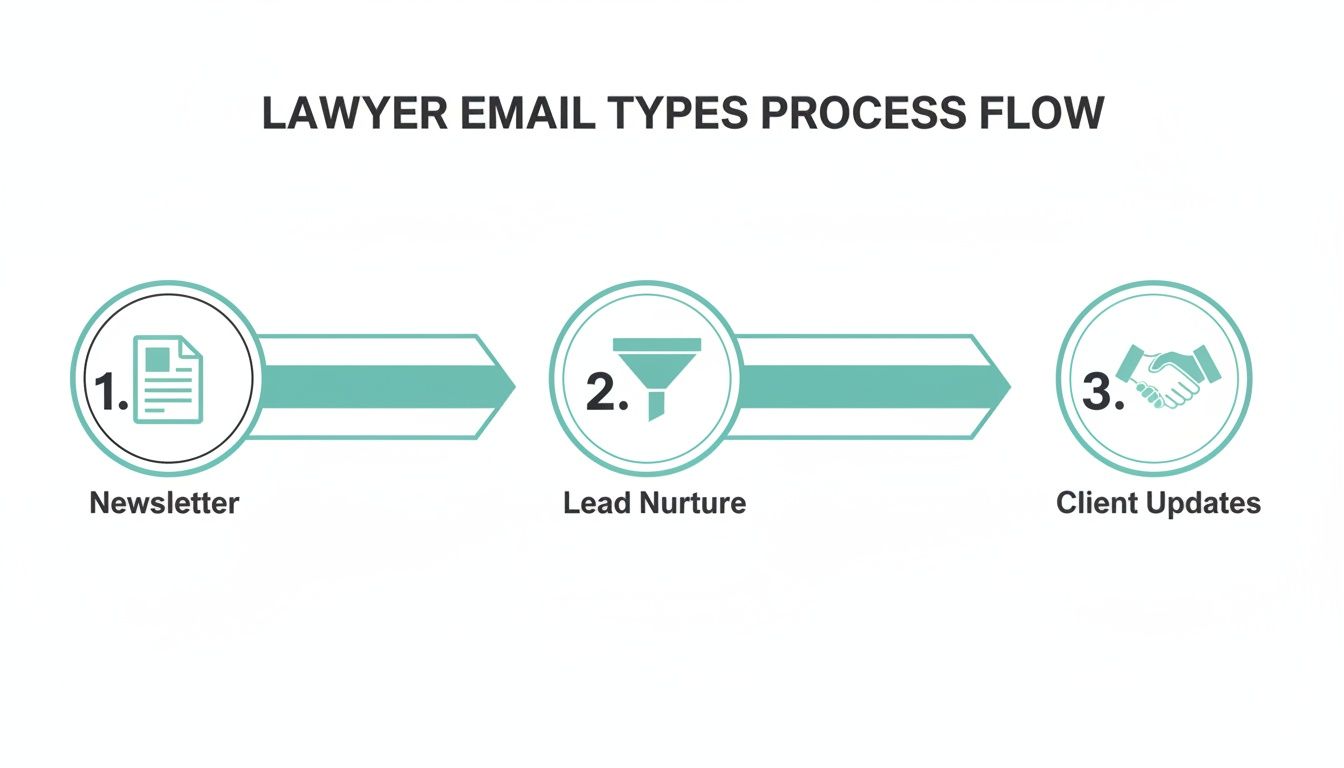
This flow shows how different emails, including newsletters, lead nurturing, and client updates, all have a unique job to do at different times.
Let's walk through a real-world scenario. A potential client in a personal injury case fills out your website's contact form at 10 PM on a Tuesday. Without automation, that lead just sits in an inbox, getting colder by the minute, until someone sees it the next morning. With automation, a completely different story unfolds.
The power of automation is in its immediacy. Research has shown that firms trying to contact potential clients within one hour of an inquiry are nearly seven times more likely to have a meaningful conversation. That speed is your competitive edge.
Here’s what a simple but highly effective lead nurture sequence could look like, all triggered by that late-night form submission:
- Email 1 (Sent Immediately): An instant reply confirming you got their message. It should thank them, set the expectation that your team will be in touch within one business day, and maybe offer a link to a helpful resource, like a blog post on "5 Things to Do After a Car Accident."
- Email 2 (Sent 2 Days Later): If they haven't scheduled a consultation yet, this is a great time to introduce the lead attorney who would handle their case. Including a professional photo and a short, humanizing bio helps build a personal connection before you even speak.
- Email 3 (Sent 4 Days Later): This message could highlight a powerful client testimonial or a short case study about a similar situation. This is all about providing social proof and building trust in your firm's ability to deliver results.
This entire sequence runs on its own. It keeps your firm top-of-mind, provides real value, and gently guides the lead toward taking the next step, all while your team is focused on their active caseload. Automation isn’t a replacement for personal interaction; it’s the tool that makes those interactions more meaningful and timely.
6. Integrating Email With Your Case Management System
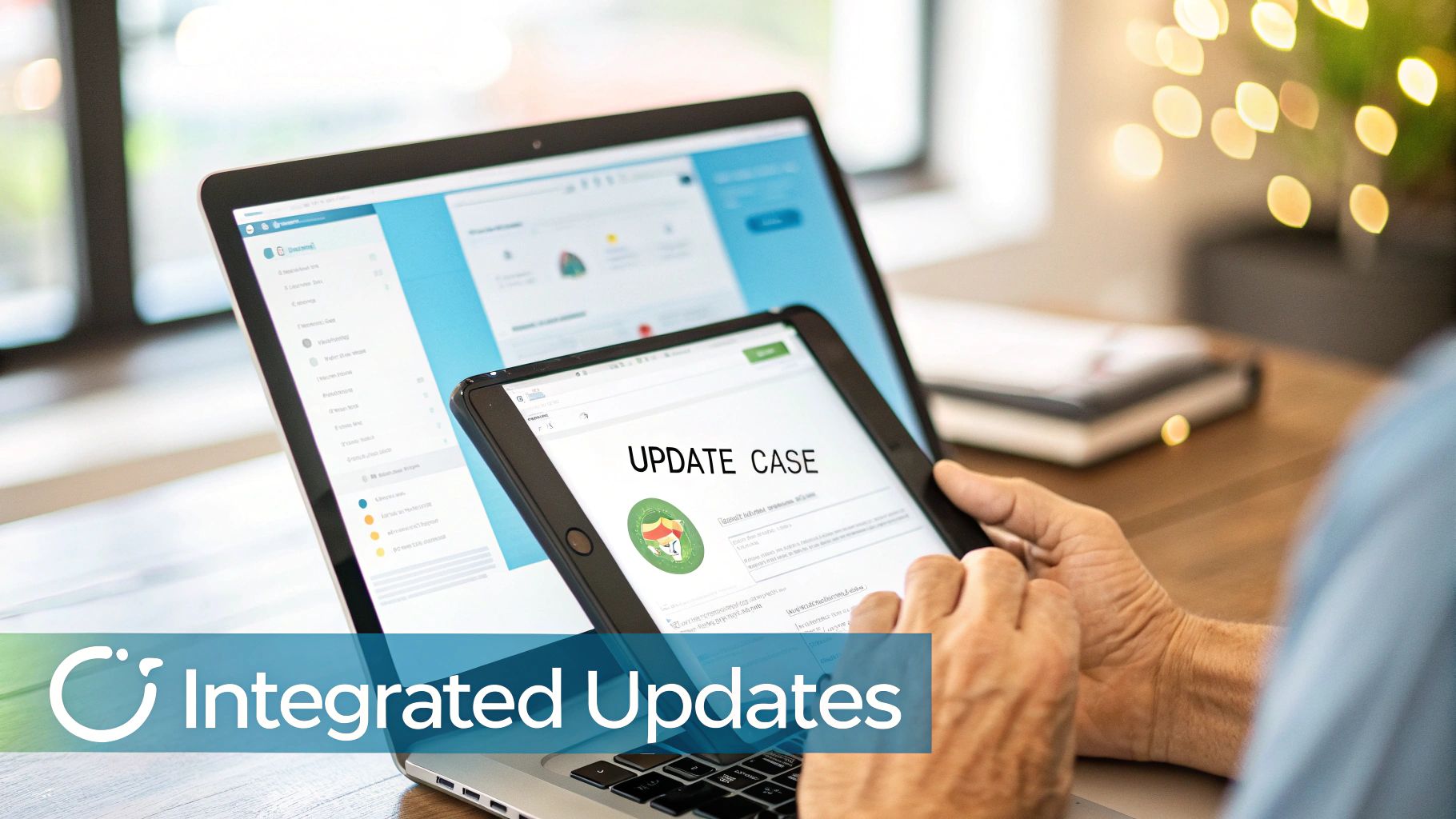
Running your email campaigns and case management in separate worlds is a huge missed opportunity. The real power of email for lawyers comes alive when you connect your communications directly to your firm's core software. This single move can deliver a massive boost in efficiency and fundamentally improve the client experience.
Without that connection, your team is stuck doing double the work. They update a case file in one system, then have to manually draft and send an email from another. This isn’t just slow; it’s a recipe for human error, inconsistent messaging, and important communications getting lost in the shuffle.
Moving Beyond Manual Updates
Let's walk through a common scenario that shows why integration is so critical. Imagine your personal injury firm uses a client portal like CasePulse, which ties directly into your case management system. A client, anxious for an update, calls the office. A paralegal then spends ten minutes on the phone explaining that a key document was just filed with the court.
Now, multiply that one call by the dozens of similar calls your staff handles every single week. It adds up to a staggering amount of administrative time spent on routine, repetitive updates, time that could be spent on substantive legal work that actually moves cases forward.
An integrated system changes this entire dynamic. Instead of fielding that call, the paralegal simply updates the case status within your management software. That one action automatically triggers a personalized email notification to the client. The client gets their update instantly, and your team's time is protected.
The goal here is to create a single source of truth for every client relationship. When your case management system and email platform speak the same language, communication becomes proactive and seamless, not reactive and fragmented.
This approach isn't just about saving time, either. It ensures every piece of communication is tracked and logged directly against the client's file. Nothing gets missed, and you have a clear, auditable record of every interaction. For any law firm, that kind of organized documentation is invaluable.
The Power of a Unified Client View
When your systems are connected, you gain a much clearer picture of each client relationship. You can see not just case milestones but also how and when clients are engaging with your communications. This unified view is essential for delivering better service and making smarter business decisions.
Here’s what that looks like in practice:
- Reduced Inbound Calls: By proactively sending automated updates for common milestones, you answer client questions before they even think to ask them.
- Consistent Messaging: All communications, from automated updates to firm newsletters, are managed from a central hub. This ensures your firm's voice and brand are always consistent.
- Improved Client Satisfaction: Clients feel more informed and in control when they receive timely, predictable updates. This builds trust and reduces the anxiety that so often comes with a legal case.
To truly optimize client communication, email integration should be part of a larger, unified strategy. For a deeper dive into connecting all your client touchpoints, explore comprehensive omnichannel client support strategies.
Making Integration Work for Your Firm
Connecting your email marketing to your core software is a key step in modernizing your firm's operations. It transforms email from a simple marketing tool into an essential part of your client service delivery. Platforms like CasePulse are built specifically for this purpose, designed to work directly with the case management systems law firms already use every day.
By automating routine follow-ups and reminders, your firm can operate more efficiently and provide a superior client experience. This strategic use of technology is what separates growing firms from those stuck in old, manual workflows. Understanding how a specialized CRM for lawyers can centralize this data is a great next step in building a more connected and client-focused practice.
Measuring What Matters to Improve Your Results
An email marketing strategy is only as good as the results it gets. If you’re not tracking performance, you’re essentially flying blind, like walking into a courtroom without having reviewed the case file. To make smart, data-backed decisions that actually move the needle, you have to look past the surface-level numbers and focus on what truly signals client engagement and firm growth.
Open rates are a fine place to start, but they don't paint the full picture. A great open rate means your subject line was compelling enough to earn a click. That's it. It tells you nothing about whether the content inside connected with your reader. The real goal is to measure the actions that align with your firm's bottom line.
Key Metrics for Law Firms
To get a true sense of whether your emails are hitting the mark, you need to track the metrics that reveal genuine interest and action. These are the numbers that tell the story of your ROI.
- Click-Through Rate (CTR): This is the percentage of recipients who clicked on at least one link in your email. A high CTR, especially on a "Schedule a Consultation" button or a link to your client portal, is a powerful indicator that your message resonated.
- Conversion Rate: This is where the rubber meets the road. It measures how many people completed a specific goal, like submitting an intake form or downloading an ebook. This metric directly ties your email efforts to new business.
- Portal Logins: If you use a client portal like CasePulse, this is a goldmine. Tracking how many clients log in right after getting an email update shows they're not just reading, they're actively participating in their case.
A quick note on benchmarks: You'll see stats like the average 22% open rate for the legal industry thrown around. While that's useful context, the only benchmark that truly matters is your own. Your goal should always be to improve on last month's performance.
Using Data to Make Smarter Decisions
Once you start tracking these core metrics, the fun begins. You can start optimizing your campaigns, and one of the simplest and most effective ways to do that is with A/B testing.
It sounds technical, but it’s just a controlled experiment. You create two versions of the same email with one small difference and send them to a small slice of your audience to see which one performs better.
Let's say you're A/B testing a subject line for your firm's newsletter.
- Version A: "Firm Newsletter | [Your Law Firm]"
- Version B: "3 Things You Should Know About Your PI Case This Month"
You send each version to a small, random segment of your list. Whichever one gets more opens and clicks is your winner, and you send that version to everyone else. This simple tactic removes the guesswork and lets your audience tell you what they want.
This data-first mindset is what separates a static email list from a powerful marketing engine. To dig deeper into this approach, you can read more about the metrics that matter for law firms and why you can't improve what you don't measure. It’s this commitment to testing and learning that ensures every email you send is more effective than the last.
Common Questions About Email Marketing for Law Firms
Diving into email marketing always brings up a few key questions, especially around the rules, what actually works, and where to even start. Let's tackle some of the most common ones I hear from other attorneys.
Do I Really Need a Client's Permission to Email Them?
Yes, you absolutely do. This isn't just a courtesy; it's a legal requirement under regulations like the CAN-SPAM Act. You need explicit permission before sending any marketing-focused emails.
Getting consent is straightforward. Just add a simple, clear opt-in checkbox to your intake forms and on your website's contact or newsletter signup page. Every single email you send must also include an obvious, one-click way for people to unsubscribe. No exceptions.
How Often Should My Firm Be Sending Emails?
This is a classic "it depends" situation. The ideal frequency really comes down to your audience and what you're sending them. For most firms, a monthly newsletter is a great place to start. It’s consistent enough to keep your firm on their radar but not so frequent that you become background noise in a crowded inbox.
The real secret to email marketing for lawyers is consistency, not frequency. A well-crafted monthly update with genuine value will always outperform a generic weekly email that says nothing new. Focus on quality, and your clients will actually want to hear from you.
What's a Good Open Rate for a Law Firm's Emails?
While there's always some variation, the legal industry's average email open rate is around 22%. If you're seeing numbers significantly lower than that, it could be a signal that your subject lines aren't grabbing attention or the content inside isn't hitting the mark for that specific audience.
Think of that 22% as a benchmark, not a final grade. Your real goal should be to beat your own numbers month over month. Experiment with different subject lines, send times, and content to see what your clients respond to. When you provide real value, the engagement will follow.
At CasePulse, we're focused on helping personal injury firms bring their client communication into the modern age. Our secure portal connects with the case management system you already use, handling routine updates automatically and cutting down on the administrative grind. Find out how you can boost client satisfaction and make your firm more efficient at https://www.casepulse.com.