
 CasePulse
If you're staring at strong revenue and still wondering why partner distributions feel tight, you're not alone. Many firms aren't losing profitability because lawyers stopped working hard. They're losing it in the cracks between the work, the billing, and the constant stream of client communication that pulls expensive staff into low value tasks all day.
That problem shows up in familiar ways. Paralegals answer the same status question five times before lunch. Case managers chase intake details by phone and email. Lawyers review invoices only to discover time was never captured, scope drifted, or discounts became routine. The firm stays busy, but busy isn't the same as profitable.
The firms that improve margins usually make one shift first. They stop treating profitability as a billing problem alone. They start looking at workflow, staffing, realization, and client communication as one system. That's where the hidden gains sit.
Diagnose Your Firm's Financial Health First
Monday starts with a full calendar, a healthy pipeline, and a team that looks flat-out busy. By Friday, partners are still asking the same question. If the firm is working this hard, why does profit still feel thin?
The answer usually sits below the revenue line. Firms lose margin when high-cost people spend large parts of the week on work that does not strengthen the matter, increase the fee, or speed up collection. Client status calls, intake follow-up, document chasing, and internal handoffs all carry a labor cost. If that work is constant, profitability drops even when gross revenue looks respectable.
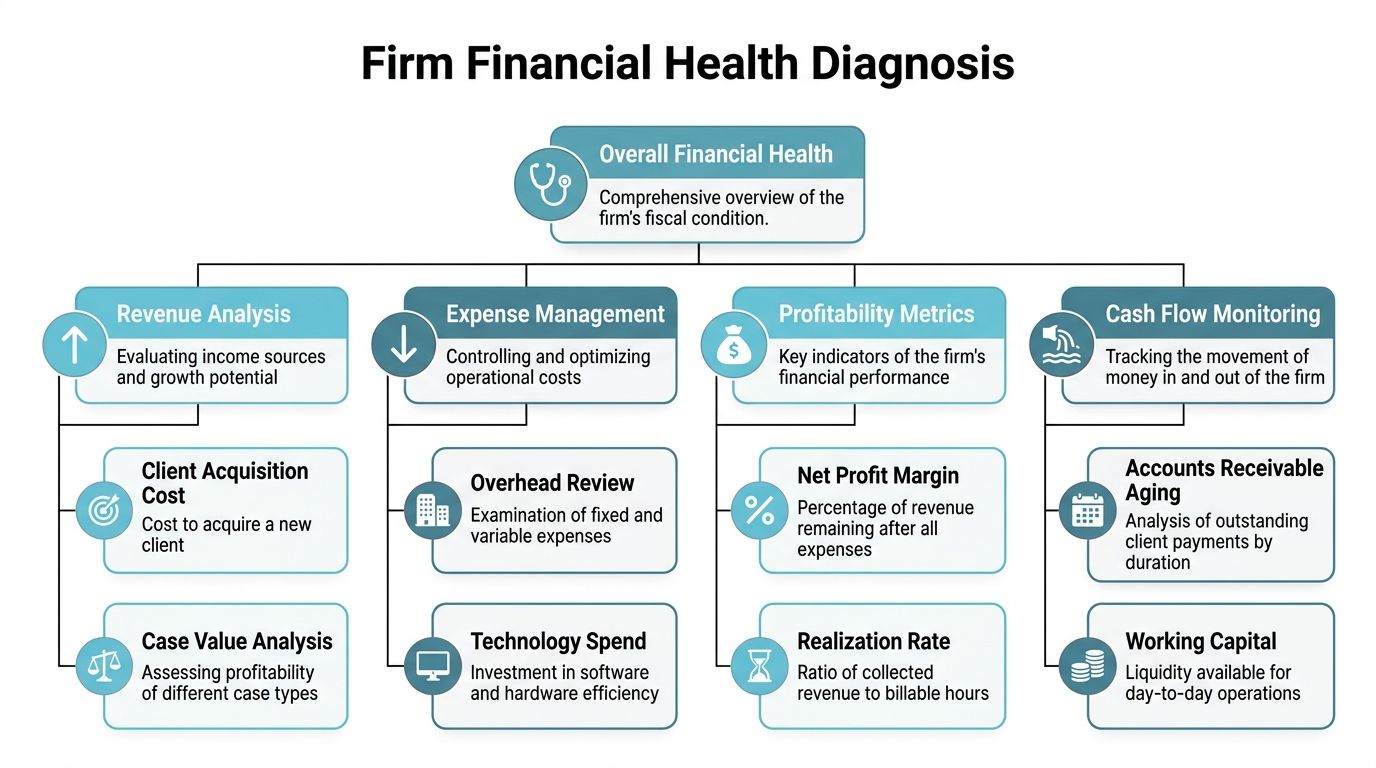
A benchmark helps, but only if it leads to better questions. Many firms still use the rule of thirds as a simple reference point for salaries, overhead, and profit. The core management issue is not whether your numbers match a model exactly. It is whether your cost structure makes sense for how the firm operates.
Look past firmwide averages
Firmwide averages blur expensive problems. One practice group can carry another for months. One matter type can post strong fee totals while draining paralegal hours, slowing collections, and generating avoidable follow-up from clients who never feel informed.
That is why Profit Per Case matters. In plaintiff firms especially, file volume can hide weak file economics until cash gets tight. As Case Status explains in its discussion of law firm profitability, firms often monitor aggregate realization and miss the cost profile of specific case types inside systems like Needles or Litify.
I tell partners to treat repeat communication friction as a financial signal, not a service issue. If a matter type triggers constant update requests, repeated staff touchpoints, and routine attorney interruptions, the file is probably more expensive than the billing report suggests.
Review each matter with four inputs in mind:
- Lawyer time
- Paralegal or case manager time
- Matter-specific expenses
- Staff attention consumed by client communication and follow-up
That fourth item is where many firms undercount cost. Communication friction is labor. Labor drives margin.
If you want a broader finance lens outside legal operations, this guide on how to improve profit visibility for founders is useful because it reinforces the same management principle. Better decisions come from seeing profit at a more granular level.
Build a short diagnostic scorecard
Skip the giant dashboard at first. Use a scorecard the partnership will review every month and use to make staffing, pricing, and workflow decisions.
Start with these:
| Metric | Why it matters |
|---|---|
| Net profit margin | Shows what the firm actually keeps after expenses |
| Revenue per lawyer | Tests whether staffing cost aligns with output |
| Profit Per Case | Shows which matter types are worth growing |
| Realization by partner and matter type | Identifies discounting, write-downs, and scope problems |
| Accounts receivable aging | Shows where earned cash is getting stuck |
For a practical reminder of why measurement has to come before change, review the law firm metrics that matter most for improvement.
Watch for false positives
A full intake calendar can hide weak economics for a long time. So can a litigation team that looks productive because everyone is overloaded.
What changes the conversation is file-level analysis tied to labor cost. Once partners can see which matters consume team attention without producing healthy net income, the discussion gets more honest. The firm stops rewarding activity for its own sake and starts fixing the operational habits that push expensive staff into low-value communication work.
Optimize Pricing and Stop Revenue Leaks
Most firms don't have a pricing problem. They have a capture problem.
The work gets done. Then time is cut, scope expands without being billed, discounts get handed out informally, and invoices drift. By the time finance closes the month, the firm has already given away part of the value it created.
Run a 90 day write down audit
A practical first move is a 90 day write down audit by matter and partner. Remote Scouts recommends this approach to identify realization leaks and makes an important point many firms recognize immediately. Unbilled scope creep is the most common source of write offs.
Review each matter opened or billed in the last 90 days and ask:
- What was worked but not billed
- Who wrote it down
- Why it was reduced
- Whether the issue came from pricing, poor scoping, client pressure, or internal hesitation
You'll usually find patterns fast. One partner discounts too easily. One matter type always expands beyond the engagement terms. One client category creates endless “quick questions” that become unpaid staff time.
The point of an audit isn't to blame timekeepers. It's to identify the habits and matter types that quietly train the firm to accept less than full value.
Tighten pricing discipline
Policy matters because informal exceptions spread fast. The same Remote Scouts guidance recommends a written rule requiring approval for any discount above 10% and adding scope language to every engagement letter. That kind of rule doesn't make a firm rigid. It makes pricing intentional.
Use a short checklist:
- Define scope in writing so lawyers can point back to agreed work before free extras accumulate.
- Require approval for larger discounts so write downs stop being a private decision.
- Review discount patterns monthly by attorney, client, and matter type.
- Separate client service from free work because responsiveness doesn't require uncontrolled scope.
A surprising number of pricing disputes are really scoping failures. If the client thinks status calls, repeated document requests, and out of scope negotiations are included, the invoice becomes a conflict instead of a collection event.
Bill faster and collect with less drama
Realization isn't just what gets invoiced. It's also what gets paid.
The same profitability guidance from Remote Scouts advises firms to track how many days each attorney takes to collect payment and make that information visible internally. That changes behavior. Lawyers respond differently when collection performance is no longer hidden in accounting.
A strong operational habit is to connect billing discipline to time capture. If your attorneys still reconstruct time at the end of the week, start there. This overview of how to calculate billable hours is a useful refresher for firms that need tighter billing hygiene before they can improve realization.
What works and what doesn't
Here's the trade off in plain terms.
What works
- Narrow engagement language
- Partner review of write downs
- Fast invoicing
- Visibility into collection lag by attorney
- Consistent pricing decisions
What doesn't
- Hoping lawyers remember to discuss scope later
- Letting discounts happen off the record
- Sending invoices long after the work
- Treating chronic write downs as client relations
When firms ask how to improve law firm profitability, they often expect a revenue strategy. Many need a leakage strategy first. Plug the holes before chasing more work.
Streamline Operations to Reduce Non-Billable Work
Most firms underestimate how much profit disappears in routine friction. Not dramatic friction. The small stuff. Reentering information. Chasing updates. Hunting for missing details. Answering the same question in three different places.
That work doesn't always look expensive because no single task feels serious. But the people doing it are often your most expensive operating asset after attorneys. When skilled staff spend their day moving information instead of advancing matters, the firm pays premium rates for clerical drag.

Standardization raises utilization
A useful benchmark comes from Anders CPA's guidance on law firm profitability metrics. They point to a realization rate above 85% and utilization above 35% for associates as important targets, while noting that firms that document workflows and standardize administrative tasks reduce non billable hours and improve utilization.
That's the operational argument for process discipline. Standardization isn't bureaucracy. It's margin protection.
When each team member handles intake, follow ups, file prep, and status communication differently, the firm gets inconsistency, avoidable delays, and more internal questions. When the workflow is documented, people spend less time improvising and more time executing.
Audit the friction, not just the staff
If you want to know where profit is leaking, watch the handoffs.
Ask your operations team and front line staff where they lose time. Don't ask once in a partner meeting. Sit with the people doing the work. They'll show you the repetitive tasks that never appear in the financial statements but shape them every month.
Common examples include:
- Repeated data entry across intake forms, case systems, and email requests
- Status update bottlenecks where clients call because they can't see progress
- Manual reminders for appointments, forms, and routine next steps
- Unclear ownership when one task bounces between attorney, paralegal, and assistant
A workflow doesn't need to be broken to be expensive. It only needs to require skilled people to repeat low value steps all day.
Use automation where the work is repetitive
Not every task should be automated. Judgment calls, case strategy, and sensitive client conversations still need humans. But repetitive follow up, reminders, and status handling are different. Those should be candidates for system support.
Anders CPA specifically notes that documenting workflows, standardizing admin tasks, and using automation tools and practice management software integrations can reduce non billable work. That's where firms using systems such as Filevine, Clio, Needles, Neos, LawBase, or Litify should look closely at what still depends on manual effort.
For firms evaluating workflow cleanup, this resource on how to automate workflows gives a practical starting point.
A better test for operational decisions
A lot of firms ask whether a tool saves time. That's too vague. Ask instead:
- Does it remove repeat work from lawyers or senior staff
- Does it reduce interruptions
- Does it cut the number of places staff have to check
- Does it make client communication easier without creating another inbox
If the answer is yes, the benefit isn't abstract efficiency. It's reclaimed labor capacity. That shows up as better utilization, cleaner realization, and less burnout from work that never should have landed on expensive desks in the first place.
Modernize Your Client Communication and Intake
A prospective client calls at 4:45 p.m. after filling out half an intake form the night before. The receptionist has one version of the facts, the intake specialist has another, and a paralegal is already emailing for records that should have been collected at the start. By the time the matter is opened, three employees have touched the file and none of that time is billable.
That is not a client service problem alone. It is a margin problem.
Firms often focus on realization, utilization, and fee structure, which they should. But client communication friction erodes those numbers. Every status call, missing form, duplicate voicemail, and manual reminder shifts skilled staff into low-value coordination work. The cost shows up in payroll, slower file movement, and lost intake that never converts because the process feels disorganized.
I have seen two firms with similar case volume produce very different profit results for this reason. One lets updates live in inboxes, spreadsheets, and memory. The other builds updates and intake into the case workflow. The second firm usually does not have better lawyers. It has fewer communication handoffs and less labor waste.
Client updates affect profit more than firms expect
Routine communication is expensive when it sits on the desks of case managers, paralegals, and lawyers. The underlying issue is not the individual phone call or email. It is the accumulation of interruptions across dozens or hundreds of active matters.
A staff member who spends hours each day answering "Any update?" is not pushing records requests, resolving lien issues, preparing discovery responses, or moving a case toward settlement. That trade-off matters. The firm is paying for trained judgment and getting message relay.
The intake side has the same problem. If information arrives in fragments, staff have to reconstruct the case before they can evaluate it. That increases time-to-sign, raises the odds of error, and creates drop-off at the exact moment a prospective client is deciding whether the firm feels organized and trustworthy.
What a better model looks like
The strongest communication systems share a few traits:
- Clients can check routine status without calling the office
- Intake forms collect information in a structured format the first time
- Messages, documents, and follow-ups stay tied to the matter instead of scattered across email threads
- Staff step in for advice, judgment, and sensitive conversations, not for repetitive updates
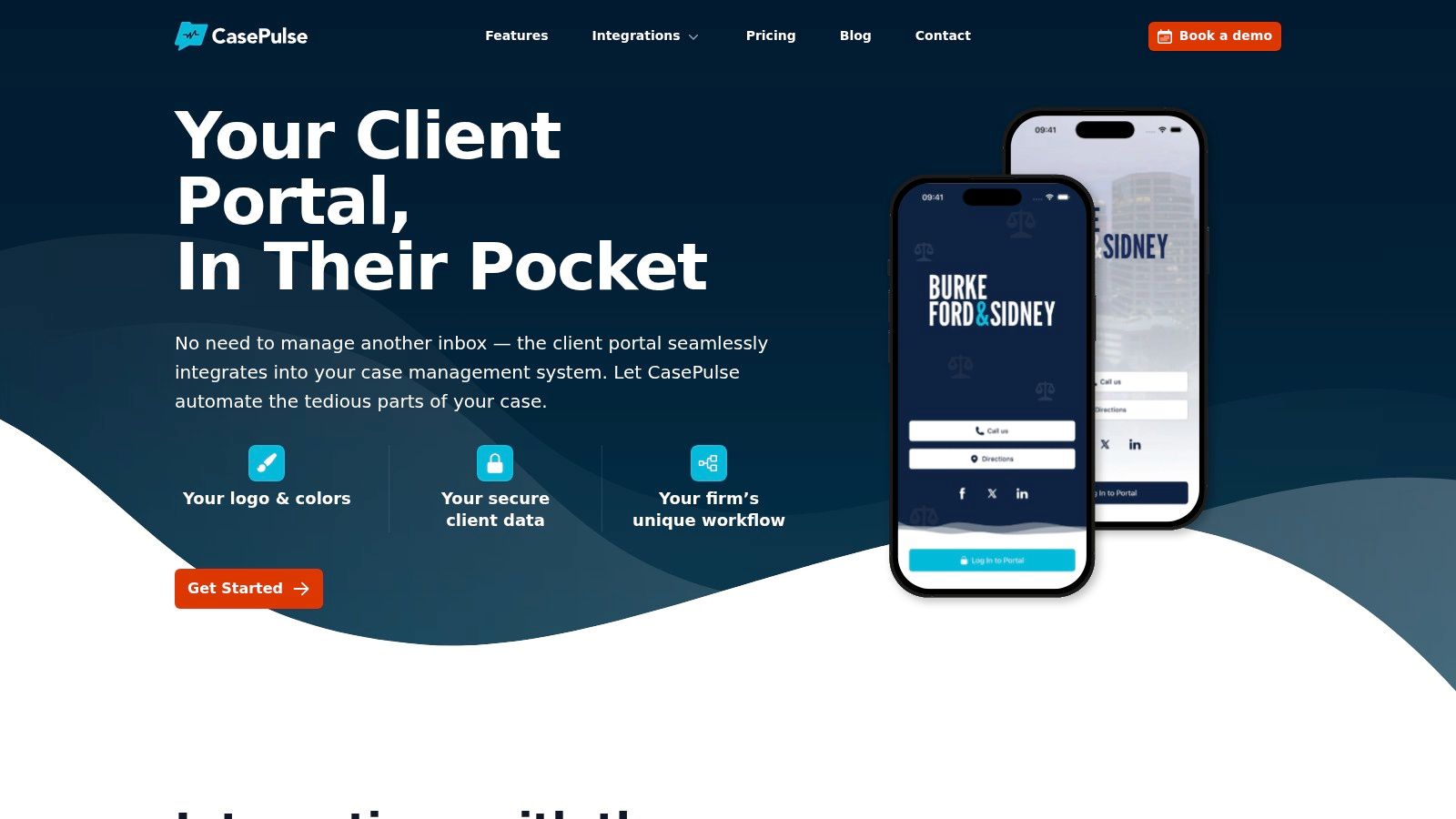
A secure client portal can support that model if it is connected to how the firm already works. For example, CasePulse offers a portal for law firms that integrates with systems such as Needles, Neos, LawBase, and Litify, so clients can check status, send messages, share files, and complete fillable forms while staff continue working in their existing case management environment.
That change has a financial effect. It removes repeat communication from high-cost employees and shortens the gap between client action and staff visibility. Intake becomes cleaner. Follow-up becomes more consistent. Fewer matters stall because someone forgot to return a call or resend a form.
For firms asking how to grow my law firm, this is one of the least appreciated growth decisions. Better communication systems do not just improve client experience. They protect labor capacity, which is what allows a firm to take on more good work without adding headcount too early.
The cultural benefit is real
There is also a staffing consequence that partners sometimes miss.
Good case managers and paralegals want to solve problems. They want to move files, spot issues early, and support legal strategy. If most of their day is spent repeating status updates and chasing incomplete intake details, the job becomes administrative drift. Morale drops, turnover rises, and the firm ends up paying again through hiring, training, and inconsistency.
Modern communication and intake systems help the right people spend time on the right work. That improves response times for clients, but the deeper win is operational discipline. The firm becomes easier to run, easier to scale, and more profitable without asking the team to work harder just to keep up.
Cultivate Your Team and Referral Network
The strongest profit engine is simple to describe and hard to build. Put the right people on the right cases, then keep a steady flow of good work coming in.
A lot of firms miss one side or the other. Some hire ahead of demand and create overstaffing. Others bring in work without enough clarity on which matters deserve scarce attorney and staff time. Neither approach scales well.
Match capacity to profitable work
The top firms have shown what happens when demand and focus line up. In the Am Law 100, collective revenue grew by about 13% while net income rose 16.3%, and litigation demand increased 4.0% according to The American Lawyer's Am Law 100 reporting. The important lesson isn't that every firm should mimic Big Law. It's that profit improves when firms align resources with work clients are actively buying and the firm can deliver efficiently.
That starts with staffing decisions.
If a firm is carrying extra headcount because leaders are afraid to say no to low quality work, profitability suffers twice. First in payroll. Then in diluted attention. People stay busy, but not necessarily productive.
Treat referrals as a system
A referral network can solve part of that problem, but only if you manage it deliberately. Too many firms describe referrals as relationship based and leave it there. That's incomplete. Referral sources should be tracked, categorized, and reviewed by matter quality.
Look at each source through a practical lens:
| Referral source | What to review |
|---|---|
| Other lawyers | Do their matters fit your profitable case types |
| Medical providers | Do referred clients convert cleanly and move efficiently through intake |
| Former clients | Do they send similar matters or one off noise |
| Community partners | Are these relationships producing work your team handles well |
If you're thinking through growth choices at the same time, this guide on how to grow my law firm offers a useful outside perspective on building a more intentional pipeline.
Team quality and pipeline quality reinforce each other
Here is the connection many firms don't make. Better staffing discipline improves referral performance. When your team is not overloaded with the wrong cases or repetitive communication work, they can serve the right clients faster and more consistently. That improves client experience, and client experience shapes referral quality.
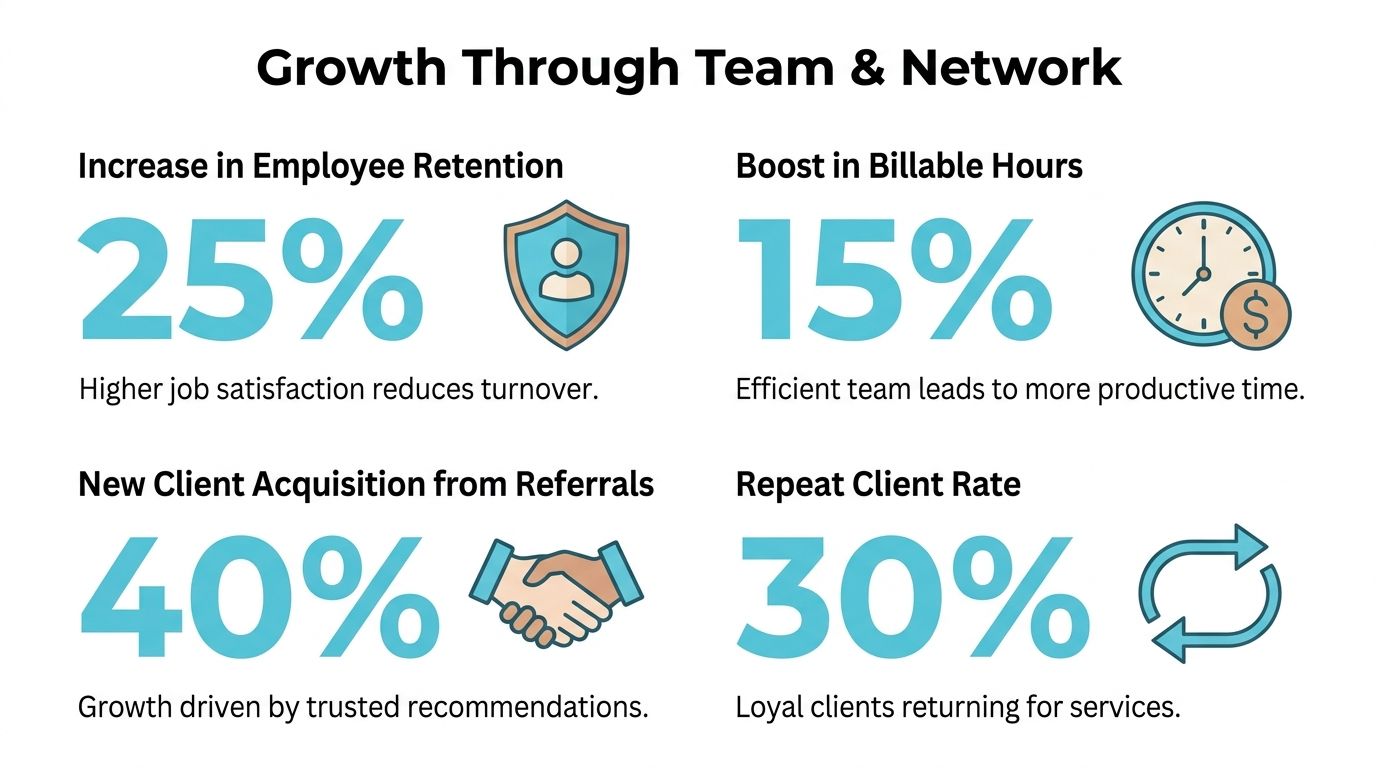
The firms that grow profitably rarely chase growth in the abstract. They build a tighter loop. They understand which matters are worth doing, staff those matters correctly, and develop referral channels that send more of that same work.
That approach is less glamorous than broad expansion. It is also more durable.
Your 90 Day Plan for Better Profitability
Most firms don't need a reinvention. They need a sequence.
A 90 day plan works because it forces decisions into manageable pieces. The first month should focus on visibility. The second should address revenue leakage and workflow friction. The third should test a better communication model and lock in habits.
Days 1 to 30
Start with diagnosis.
- Calculate Profit Per Case for your top matter types, especially if volume has been hiding weak file economics.
- Review net profit margin and revenue per lawyer against your current staffing model.
- Pull a 90 day write down report by partner and matter type.
- List the most common client update requests your staff handles manually every week.
- Map intake from first contact to signed client and note every avoidable handoff.
By the end of this phase, you should know which files make money, where realization slips, and how much staff energy is going into communication that could be structured better.
Days 31 to 60
This is the cleanup phase.
- Set a written discount policy and enforce approval for anything above the threshold already discussed.
- Revise engagement language so scope is explicit.
- Standardize one or two recurring workflows such as intake follow up or case status communication.
- Assign ownership for collections visibility so delays are reviewed, not ignored.
- Choose one communication process to modernize first, usually client updates or intake forms.
Fixing everything at once usually fails. Firms get better results when they remove one recurring source of friction, make it stick, and then move to the next.
Days 61 to 90
Use the final month to pilot and measure.
- Launch a controlled client communication pilot with a defined group of new matters.
- Track staff interruptions qualitatively by asking paralegals and case managers what changed in their daily workload.
- Review early billing and collection discipline after the policy changes.
- Meet with referral sources you want more of and compare incoming matters to your most profitable case types.
- Decide what becomes firmwide policy instead of staying a pilot.
The firms that make progress on how to improve law firm profitability don't wait for a perfect annual plan. They improve the economics of daily work. In practice, that means fewer write downs, fewer unnecessary calls, cleaner intake, and more staff time spent on work that moves a case or produces revenue.
If your firm wants to reduce inbound status calls, simplify intake, and give clients a secure way to check updates, message your team, share files, and complete forms without pulling staff out of their workflow, take a look at CasePulse. It integrates with systems including Needles, Neos, LawBase, and Litify, and it's built around a practical goal. Make client communication less labor intensive so your team can spend more time on case advancing work.