
 CasePulse
The managing partner thinks the firm has a communication problem. The intake team thinks it's a staffing problem. Paralegals think clients just don't read. Clients think nobody is telling them what's happening.
In most personal injury firms, all four are partly right.
You see the symptoms every day. Status calls pile up before lunch. A client sends the same question through email and by phone because they aren't sure anyone saw it. Intake forms come back half finished. Case managers spend chunks of the day repeating updates that were already sent once. The firm feels busy, but nobody can say with confidence whether communication is working.
That's where measurement changes the conversation. If you want to learn how to measure communication effectiveness in a law firm, you have to stop relying on gut feel and start looking at evidence that ties communication to client behavior, staff workload, and business outcomes.
Beyond Gut Feel Why Measuring Communication Matters
A lot of firms confuse activity with effectiveness. Sending an update is an output. A client understanding the next step, feeling reassured, and stopping the repeat calls is an outcome.
That distinction matters in personal injury work because the stakes are emotional as much as operational. Clients are often dealing with treatment, missed work, transportation issues, and insurance pressure. If your firm sends frequent messages but clients still feel lost, the volume of communication isn't helping.
Outputs are easy to count. Outcomes are what matter.
Law firms usually start by tracking what is easiest to see:
- Messages sent: emails, texts, portal notices, reminder sequences
- Tasks completed: appointment reminders, form requests, settlement update notices
- Call handling: inbound call counts, voicemails, callback queues
Those numbers have value. They tell you whether the machine is running. They don't tell you whether the client experience is improving.
A better measurement model asks harder questions. Did clients understand what documents they needed to upload? Did they complete the requested step without calling the office? Did staff spend less time answering avoidable status questions? Did communication make the case move more smoothly?
Practical rule: If a metric doesn't help you decide what to change next, it's probably not the right metric.
Numbers alone won't tell you the whole story
Good measurement combines quantitative data with qualitative feedback. That isn't a preference. It's the only way to separate delivery from understanding. The University of Minnesota Hubbard School notes that communication effectiveness is best gauged by combining quantitative metrics like click through rates with qualitative feedback such as focus groups and face to face interviews, rather than relying on either approach alone.
In a law firm, that means pairing hard data with real conversations:
- Quantitative signals show whether people opened, clicked, completed, or responded.
- Qualitative feedback shows whether they trusted the message, understood it, or found it useful.
- Operational evidence shows whether communication reduced friction for staff.
What this looks like inside a PI firm
A managing partner may say, "Clients are happier lately." That's useful instinct, but it isn't enough to manage by. The firmer version sounds like this:
Clients are completing forms faster, the front desk is fielding fewer case status calls, online reviews mention responsiveness more often, and staff report fewer repetitive update requests.
That is the shift from gut feel to data driven communication. You aren't measuring communication because it sounds impressive. You're measuring it because unmanaged communication creates hidden cost, client anxiety, and preventable workload.
Start with the End in Mind Setting Clear Goals
Most firms start measuring too late. They launch a new update process, add a portal, change intake messaging, then ask whether it worked. By then, the baseline is fuzzy and the debate turns subjective.
The disciplined approach is simpler. Define what success looks like before you change anything.
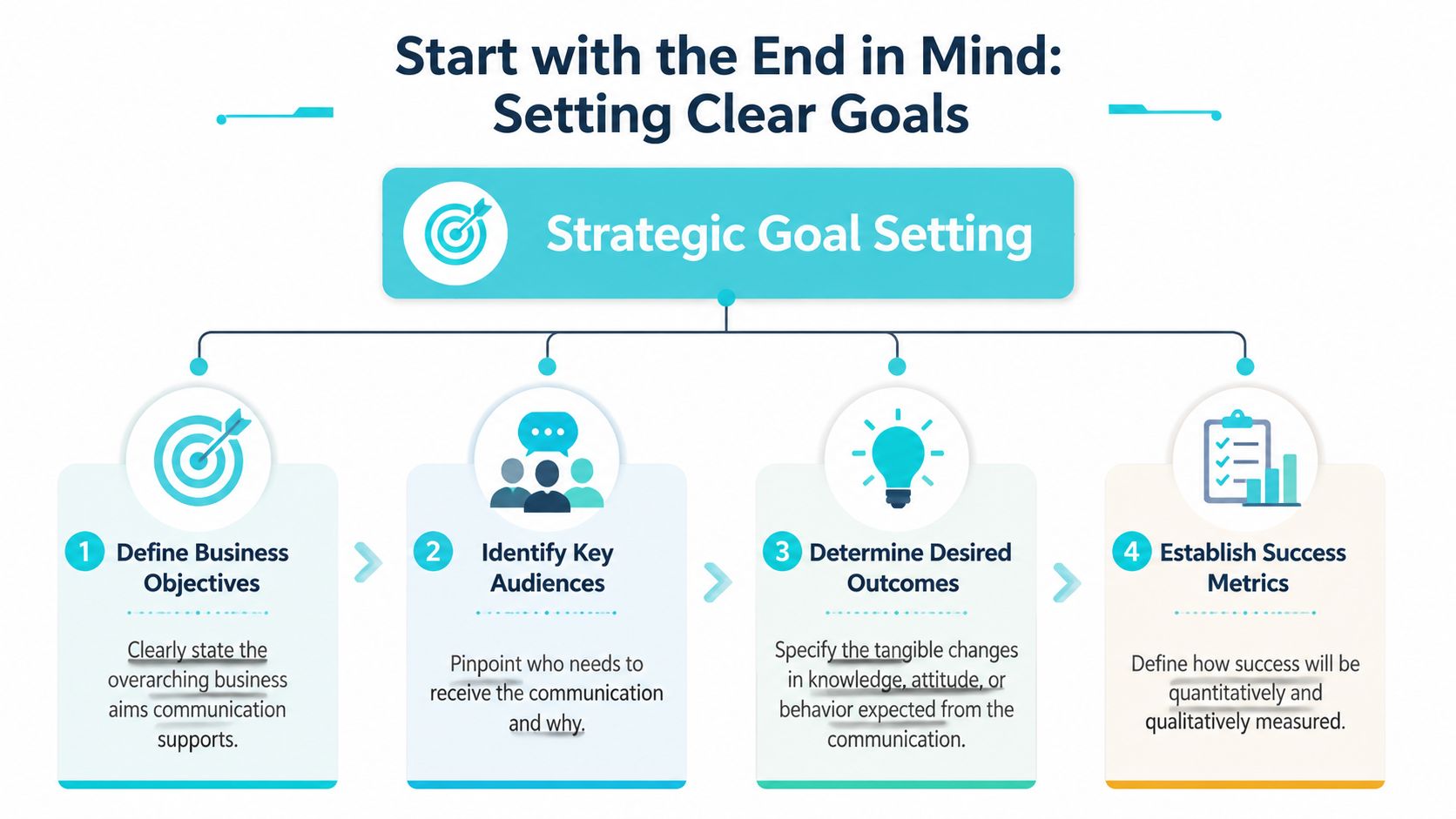
Start with a baseline, not a wish list
Before setting targets, establish what is happening now. The Redefining Comms guidance is right on this point. Organizations need baseline metrics by surveying key stakeholders on current knowledge levels, behavioral patterns, and perceived communication quality before defining measurable goals aligned with business outcomes.
For a law firm, baseline work can include:
- Client communication baseline: review current call reasons, unread messages, incomplete forms, and common confusion points
- Staff workflow baseline: ask intake specialists, case managers, and paralegals where communication breaks down
- Perception baseline: gather short client and staff feedback on clarity, speed, and ease of getting answers
If you don't know your starting point, every future result becomes an argument.
Tie communication goals to firm goals
Communication shouldn't live in its own silo. It needs to support something the firm already cares about. In a plaintiff firm, that usually means some mix of service quality, intake conversion, staff efficiency, and reputation.
Strong goals tend to sound like this:
Reduce avoidable status inquiries
If clients can find updates on their own and understand them, the team should spend less time answering the same questions.Increase completion of client requested actions
Better instructions should lead to more completed forms, signed documents, and uploaded files.Improve consistency during intake
Prospective clients should get the same clear next steps whether they spoke with intake at 9 a.m. or 4 p.m.Raise client confidence during long case cycles
In PI matters, silence often creates anxiety. Communication goals should reduce that uncertainty.
One practical resource for refining channel choices and message structure is Mailadept's Email Strategy Guide, especially if your firm relies heavily on email for document requests, reminders, and case milestones.
Ask one question for every metric
Before you track any number, ask what decision it should help you make.
A few examples:
- If clients aren't completing intake forms, is the problem timing, wording, or too many steps?
- If status calls remain high, are updates too vague or arriving too late?
- If staff say communication is inconsistent, is the issue training, workflow, or tool adoption?
The best goals are specific enough that a partner can look at a result and know what to do next.
Firms get into trouble when they track everything. A shorter list of decision ready metrics beats a crowded spreadsheet nobody trusts.
Choosing the Right Metrics for Your Law Firm
Not every communication metric belongs in a law firm dashboard. Personal injury practices need measures that reflect how clients behave, how staff spend time, and whether the firm's reputation is improving.
I like to organize these metrics into three buckets. Engagement, operations, and satisfaction. That keeps firms from overfocusing on one slice of the picture.
Client engagement metrics
Engagement metrics tell you whether clients are interacting with what you send and whether your messages are structured well enough to prompt action.
For firms that use email heavily, benchmarks can help. The industry benchmark for internal email open rates is 65 to 75 percent and average internal email click through rate is 10 to 15 percent, according to Selerix. While that benchmark comes from internal communications, it still offers a useful reference point for legal operations teams evaluating message reach and action prompts. If your own communication falls well below that range, the issue may be timing, subject lines, or relevance.
What matters in a law firm context is less about vanity and more about usefulness:
- Open behavior: did clients at least see the message?
- Click behavior: did they move toward the requested action?
- Completion behavior: did they finish the form, upload, or acknowledgment?
If you're trying to improve how staff communicate, tools like science-backed communication skill tests can also help identify whether the issue is process, training, or both.
Operational efficiency metrics
This category is where law firms often find the clearest return. Communication either reduces friction or creates more of it.
Look at patterns such as:
- Inbound status calls by case stage
- Repeat inquiries on the same issue
- Time from request to client completion
- Staff time spent on routine follow ups
- Deadline compliance for client actions
For time sensitive communication, deadline compliance is especially useful because it ties messaging directly to an operational result. If clients consistently miss a form or appointment related deadline, the communication likely isn't clear enough or isn't reaching them at the right time.
A helpful framework for choosing metrics that drive improvement is covered in CasePulse's article on the metrics that matter for law firms.
Client satisfaction metrics
Satisfaction metrics tell you whether communication is building trust. For law firms specifically, MyCase identifies client retention rates, client referrals, and the number of positive public client reviews as communication related KPIs because they reflect whether client expectations are being met or exceeded.
That's especially relevant in PI. Clients may not judge the legal work in technical terms, but they know whether they felt informed, respected, and updated.
| Metric | Data Source | What It Tells You |
|---|---|---|
| Email open rate | Email reporting | Whether clients are seeing your messages at all |
| Email click through rate | Email reporting | Whether calls to action are clear and timely |
| Form completion rate | Intake or workflow records | Whether instructions are easy to follow |
| Inbound status call volume | Phone logs | Whether clients can self serve or still need reassurance |
| Repeat question themes | Staff notes and message review | Where your communication is vague or inconsistent |
| Deadline compliance rate | Task and workflow records | Whether clients act on time after being notified |
| Client retention | Firm reporting | Whether the overall experience supports long term trust |
| Client referrals | Intake source tracking | Whether communication leaves clients willing to recommend the firm |
| Positive public reviews | Review platforms | Whether clients publicly connect service quality to communication |
If a firm only tracks satisfaction after the case ends, it misses the chance to fix communication while the case is still active.
How to Ask the Right Questions on Surveys
Surveys fail when they ask broad questions nobody can accurately answer. "Were you satisfied with communication?" is too vague. Clients remember moments, not categories.
Better surveys focus on specific behaviors and specific points in the client journey. They ask about clarity, timeliness, convenience, and confidence.

Ask clients about one experience at a time
Don't send one long annual survey and expect useful data. Short pulse surveys work better, especially after a discrete interaction such as intake, document request, medical record follow up, or settlement communication.
The ContactMonkey article on measuring communications makes a point law firms should borrow directly. To measure true communication effectiveness beyond delivery, organizations should assess comprehension with targeted questions in short pulse surveys to see whether the information was absorbed as intended.
For clients, that means questions like:
- Clarity check: What was the next step we asked you to complete?
- Ease check: How easy was it to find the information you needed about your case?
- Confidence check: After this update, did you feel clear about what happens next?
- Channel preference: Would you rather receive updates through message, phone call, or email for this type of issue?
- Open feedback: What part of this update was confusing, if anything?
Those questions do more than produce scores. They reveal whether your message landed.
Use internal surveys to measure workflow impact
Client surveys only show one side of the problem. Staff can tell you whether communication systems are reducing work or shifting it around.
Useful internal questions include:
Where do clients seem most confused?
This reveals weak spots in the journey, not just weak employees.Which updates generate the most follow up calls?
That tells you where messages need rewriting or better timing.What client task most often requires a reminder?
Patterns matter more than anecdotes.What information do clients still ask for after receiving an update?
This is often the clearest sign that a message sounded complete without being complete.
If you need a structured way to collect this kind of feedback, CasePulse has a useful overview of client survey tools for law firms.
Keep survey design tight
The best survey questions are short, plain, and tied to a recent event. They avoid legal jargon. They don't bundle multiple ideas together.
A good test is whether a client can answer the question without rereading it.
Ask for evidence of understanding, not just satisfaction.
For staff, anonymity matters. Team members are more likely to say where communication is failing if they don't think the answer will be treated as personal criticism.
Building Your Communication Effectiveness Dashboard
A dashboard shouldn't impress anyone. It should help a partner or legal operations manager see what changed, where it changed, and what decision needs to happen next.
Most firms don't need elaborate business intelligence software to start. A simple spreadsheet or reporting view can work if it shows trends over time and separates client communication from staff workload.
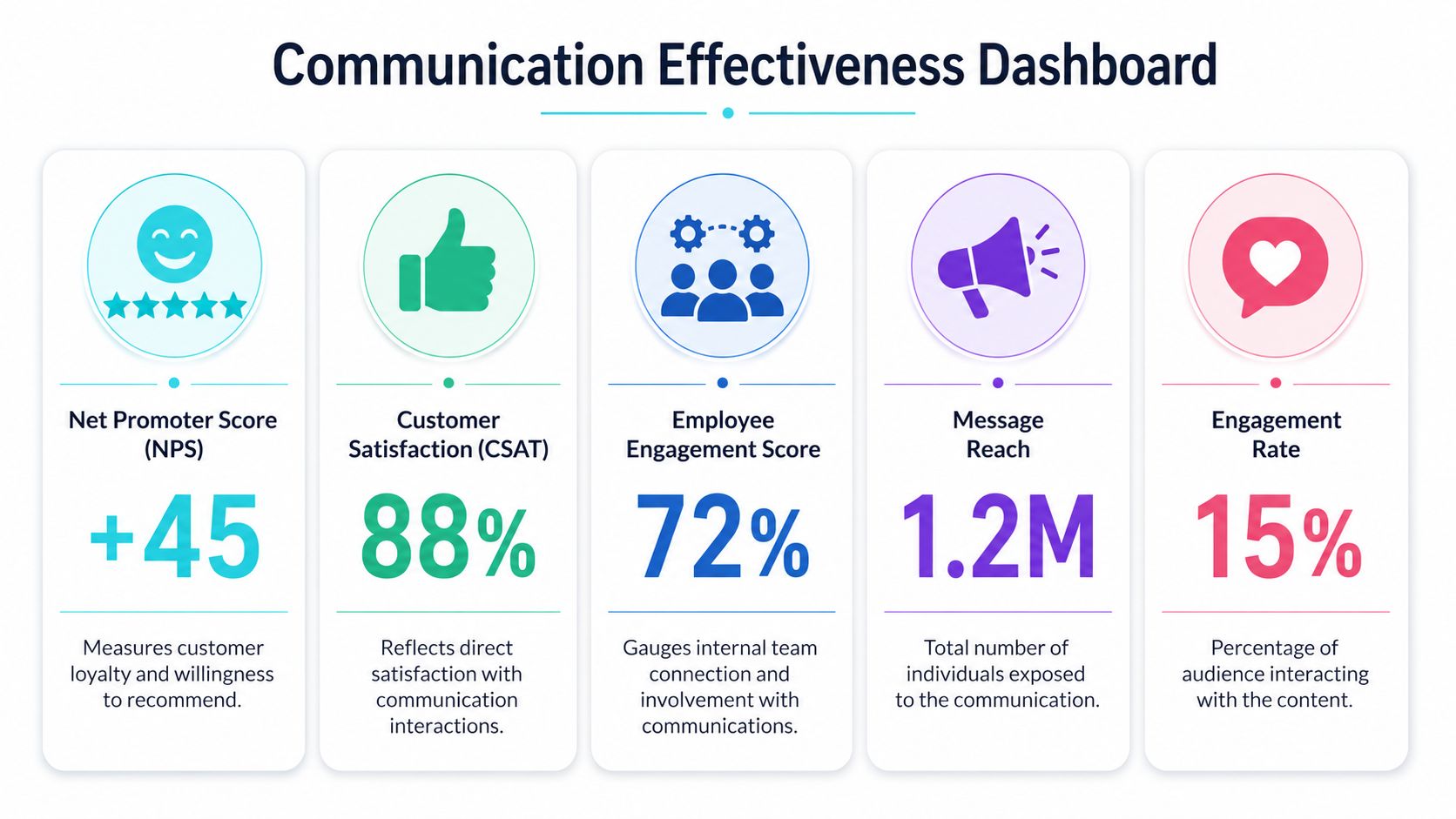
What a managing partner should see at a glance
In a monthly review, I want leadership looking at a short list of indicators, not twenty tabs of exports.
A practical dashboard for a PI firm might include:
Inbound calls versus client messages
This shows whether clients are shifting toward lower friction channels.Completion of requested client actions
Think forms, uploads, acknowledgments, and scheduling steps.Recurring question themes
This reveals what updates still aren't clear.Review and referral trend
These are downstream signals of communication quality.Staff reported communication friction
A simple monthly pulse can show whether the team feels the system is helping.
Show movement, not snapshots
A single month can mislead. One trial setting, one major settlement cycle, or one staff absence can distort the picture. Trends are what matter.
Dashboard projects frequently fail when they collect data but don't present it in a way that helps someone interpret change. If you want ideas on how to structure visuals around business performance, SigOS has useful insights for building revenue dashboards that apply well to communication reporting too.
A strong dashboard answers questions like:
- Are clients completing requested tasks with fewer reminders?
- Are specific case stages generating more confusion than others?
- Is one team or office handling communication better than another?
- Did a process change improve clarity or just move work elsewhere?
One practical example of what firms look for in a communication platform is outlined in CasePulse's page on client communication software for law firms, especially around centralizing messages and keeping staff inside existing workflows.
A dashboard is useful when it shortens the distance between seeing a problem and assigning the next fix.
Keep the reporting cadence consistent
Monthly works well for most firms. Weekly tends to create noise. Quarterly is too slow for frontline communication issues.
A regular monthly review also changes leadership behavior. Instead of asking, "Are clients complaining more lately?" they start asking, "Which case stage generated the most confusion this month, and what are we changing before next month?"
That is a better management conversation.
Turning Insights into Action and Improvement
Measurement only matters if the firm does something with it. Many communication projects stall at this point. The team builds reports, discusses them once, then slides back into old habits.
The better model is simple. Measure, analyze, act. Then repeat.
Run small experiments instead of broad overhauls
If clients aren't engaging with updates, don't rewrite every template in the firm at once. Test one narrow change.
Examples that make sense in a personal injury practice:
- Low form completion: simplify the request language and move the action step higher in the message
- Heavy status call volume: send more specific milestone updates at the case stages that generate the most anxiety
- Missed deadlines: rewrite reminders so the due date and consequence appear earlier
- Repeat confusion after intake: break the next steps into shorter messages rather than one long welcome communication
This approach helps you learn what works without creating avoidable disruption.
Separate channel problems from clarity problems
When a communication underperforms, firms often blame the wrong thing. Sometimes the channel is fine and the wording is poor. Other times the wording is clear, but the client never sees it at the right time.
That distinction matters because the fix is different.
If the issue is reach, adjust timing, delivery method, or audience targeting. If the issue is comprehension, rewrite the message and test a simpler version. If the issue is action, reduce friction in the task itself.
Good firms don't just ask whether a message was sent. They ask whether the client knew what to do next and actually did it.
Build a culture that treats communication as an operational system
The best law firms stop treating communication as a soft skill that can't be measured. They treat it like intake, collections, or case progression. It has inputs, outputs, friction points, and measurable business impact.
Once a firm starts measuring communication this way, a lot of old assumptions fall apart. "Clients never read" becomes "clients respond better to shorter action requests." "The phones are always bad on Mondays" becomes "Friday updates are creating Monday confusion." "That team is just overloaded" becomes "that case stage needs clearer client instructions."
That's the payoff. Better communication isn't luck. It's a managed process.
CasePulse helps law firms turn communication from a constant interruption into a structured client experience. Its secure portal lets clients check case status around the clock, message the team, share files, and complete fillable forms from any device while staff stay inside their existing case management workflow. If your firm wants fewer inbound calls, smoother follow ups, and a more measurable communication process, take a closer look at CasePulse.