
 CasePulse
 Integrated case management software is all about connecting your main legal platform, like Needles, Neos, LawBase, or Litify, with the other essential tools you use every day. It brings everything together into one cohesive system. A great way to think about it is like a smart kitchen, where all your appliances communicate and work in perfect harmony. This kind of setup gets rid of the daily chaos of juggling disconnected apps and drowning in administrative tasks.
What Is Integrated Case Management Software

Let's say your personal injury firm has invested in top tier software. You've got a powerful case management system, a slick app for client messaging, and another platform for secure document sharing. On their own, each tool is fantastic. The problem? They don't talk to each other.
This forces your team to constantly jump between programs, manually copy paste information, and hunt for case details scattered across different silos. It’s inefficient and frustrating.
This is exactly the problem that integrated case management software is built to solve. It serves as the central hub, the connective tissue that links your core system to other critical applications, like a client portal. Instead of your staff wrestling with multiple logins and workflows, they can manage everything from the one interface they already know and trust.
The Problem of Disconnected Systems
When your systems are isolated, even the simplest daily tasks become a drag and a risk. A text from a client has to be manually transcribed into the case notes. A document they upload needs to be downloaded, saved, and then re uploaded into the correct file. These seemingly small, repetitive actions pile up fast, draining time and energy.
For a growing law firm, this manual workload creates some serious headaches:
- Administrative Overload: Your paralegals and case managers get stuck doing low value data entry instead of high value work that actually moves cases forward.
- Constant Client Calls: Without an easy way for clients to check their case status, they’ll call your office for every little update, pulling your team away from focused work.
- Risk of Errors: Every time someone has to manually re enter data, the chance of a typo or mistake creeps in, which can lead to compliance problems or unhappy clients.
An integrated system establishes a single source of truth. When a client sends a message or uploads a document through a connected portal, it instantly and automatically lands in the right case file within your main software. This direct link ensures every piece of information is accurate, secure, and available the moment you need it.
How Integration Creates Harmony
Let’s go back to that smart kitchen analogy. Your case management system is the central island, your command center. An integrated client portal is like the smart fridge that automatically updates your shopping list. When they work together, your whole routine becomes effortless.
This is what integration does for your firm. Your staff can live inside their trusted case management software, while your clients get a simple, user friendly portal to interact with. To get a better handle on these core platforms, you can learn more about what a case management system is and why it’s the backbone of a modern firm.
A unified approach is the secret to building a more efficient and client centric practice. It finally puts an end to the endless cycle of double data entry and gives your team the freedom to deliver outstanding service without the administrative burden.
The Core Benefits of Integrating Your Law Firm Software

Moving to an integrated software setup isn't just about getting new tech; it's a strategic shift that brings real, measurable value to your entire firm. The benefits go far beyond convenience. They hit directly at your team's productivity, the quality of your client relationships, and the overall health of your practice.
When your case management system "talks" to your client portal, you create a single, secure ecosystem where information flows exactly where it needs to. This connection solves some of the most persistent headaches in a modern personal injury firm.
Let's break down how this actually looks in your day to day work.
Radically Improve Firm Efficiency
One of the first things you'll notice with integrated software is a huge jump in efficiency. Just think about all the hours your team sinks into administrative busywork, tasks that are necessary but don't actually move a case forward. This is where integration changes the game.
Automating routine client updates through a portal means your team is no longer fielding constant "just checking in" phone calls. Instead of stopping what they're doing to draft an email or play phone tag, the system keeps clients in the loop. This frees up your staff to focus on high value work, like drafting motions or prepping for a deposition.
When your team can focus on substantive legal work instead of administrative follow up, their productivity soars. This shift not only improves morale but also increases the firm's capacity to handle more cases effectively without adding headcount.
This drive for efficiency is fueling massive growth in the legal tech space. The global case management software market is expected to rocket past USD 19.72 billion by 2033, growing at a 10.49% compound annual rate. Firms are investing because they see the results: some have cut operational costs by as much as 30%. You can dig into the data and clear ROI of these tools by checking out market insights on platforms like sphericalinsights.com.
Create an Elevated Client Experience
In a world where service is everything, the experience you provide your clients can make or break your firm's reputation. An integrated client portal gives them a sense of transparency and control that builds real, lasting trust. It's their own secure, dedicated window into their case.
Giving clients 24/7 access to case status, key documents, and a direct line for secure messaging completely changes the relationship. They no longer feel left in the dark, and that feeling of empowerment is priceless. It shows you respect their time and are genuinely committed to keeping them informed every step of the way.
Ensure Greater Accuracy and Compliance
Finally, integration is your best defense against errors and compliance headaches. When your systems are separate, the risk of a simple typo during manual data entry is always there. That small mistake can lead to miscommunication or, in a worst case scenario, a serious compliance breach.
Integrated software creates a single source of truth. Every message, document, and status update is automatically logged in one central case file. This builds a complete, accurate, and time stamped record of all client communication, which is invaluable for staying compliant and protecting your firm.
Many of these systems also come with powerful enterprise document management solutions that securely capture, store, and organize everything. This level of organization doesn't just reduce risk; it reinforces your firm's reputation for being meticulous and professional.
The Must-Have Features of an Integrated Client Portal
When your firm starts looking for an integrated tool, the goal isn't just to buy software. It's to solve real, day to day headaches for your clients and your team. The right features aren't just bells and whistles; they're the engine that drives a smoother, more efficient practice. A powerful client portal that plugs directly into your case management system is the key.
But what separates a truly game changing portal from a generic one? It all comes down to a handful of core features designed for the unique grind of a busy plaintiff personal injury firm. These are the tools that actually cut down on administrative drag and make your clients feel like they're in good hands.
Let's break down the non negotiable features you should be looking for.
Around-the-Clock Case Status Updates
Think about how much of a paralegal's day is eaten up by answering the same question: "What's happening with my case?" While clients deserve to be in the loop, these constant interruptions shatter concentration and pull your team away from the work that actually moves cases forward.
A secure client portal fixes this with 24/7 case status updates. This simple but powerful feature empowers clients to check in on their case whenever they want, from any device. They see a clear, up to date snapshot, which builds immense trust and transparency. No more phone tag, just peace of mind.
This one feature alone can dramatically improve the client experience. It’s a proactive approach to communication that shows you respect their time and your team's.
Seamless Two-Way Messaging
Let's be honest: email is a terrible way to manage sensitive client communications. It's insecure, messages get buried, and logging those conversations into the right case file is a tedious, manual chore nobody has time for.
This is why an integrated portal must have a two-way messaging system that syncs directly with your case management software. This is the crucial part.
When your team can send and receive client messages without ever leaving their case management dashboard, adoption isn't a problem, it's a relief. There's no separate inbox to check and no more copying and pasting. Every message is automatically filed to the correct case, creating a perfect, compliant record.
This direct pipeline means nothing slips through the cracks. It keeps every conversation organized and accessible, which is not just good for efficiency, it's essential for compliance.
Secure and Simple File Sharing
Emailing sensitive documents like medical records, police reports, or signed retainers is a massive security risk. A truly integrated solution offers a much safer and saner alternative. You need a portal with rock solid secure file sharing, allowing both your team and your clients to upload and download documents in a protected, encrypted space.
This feature completely changes the document collection game. Your team can request files through the portal, and clients can snap a picture with their phone and upload it on the spot. Those files then appear instantly in the right case file inside your CMS.
It puts an end to the insecure back and forth of email attachments and gives everyone confidence that their sensitive information is safe. For a deeper dive, check out our guide on the best client portal software for law firms.
To really see the difference an integrated system makes, let's look at how it transforms a typical workday.
Comparing Manual Workflows to an Integrated Solution
The table below paints a clear picture of the daily grind for your staff before and after implementing an integrated client portal. It highlights just how much time and effort is saved on routine tasks.
| Task | Manual Process (Without Integration) | Integrated Solution (With A Client Portal) |
|---|---|---|
| Client Status Update | Paralegal receives a call, puts the client on hold, pulls up the case file, provides an update, and manually logs the call. | Client logs into the portal, views the real-time case status, and feels informed. No staff time needed. |
| Document Request | Staff emails the client a request. Client prints, signs, scans (or faxes!), and emails the document back. Staff downloads and manually saves it to the case file. | Staff sends a request via the portal. Client uploads the document directly from their phone. It's automatically saved to the correct case file. |
| Sending a Message | Attorney emails the client. The paralegal has to remember to copy and paste that email into the case notes to maintain a record. | Attorney sends a secure message from within the case management system. The entire conversation is automatically logged in the case. |
| New Client Intake | The firm mails or emails a PDF packet. The client prints it, fills it out by hand, and mails or scans it back. Staff then manually enters all the data. | The firm sends a link to a digital form. The client fills it out online, and the data automatically populates the new case file in the CMS. |
As you can see, the "after" column isn't just about convenience; it's about reclaiming dozens of hours of administrative time that can be refocused on higher value legal work.
Custom Fillable Forms
The client intake process is notoriously clunky. It’s a mountain of paperwork that has to be printed, signed, scanned, and then manually typed into your system. This is where custom fillable forms become a lifesaver.
This feature lets you turn your entire intake process digital. You can build custom forms that new clients can fill out and e sign from their computer or phone. The best part? Once they hit "submit," all that information can automatically populate the fields in your case management software.
This isn't just for intake. You can use it to gather updated medical information, collect witness statements, or anything else that requires structured data. It eliminates manual data entry and the costly mistakes that come with it.
Professional Custom Branding
Finally, the portal shouldn't feel like some random third party app. It needs to look and feel like an extension of your law firm. Custom branding is what makes this happen.
This feature allows you to put your firm’s logo, colors, and overall brand identity on the portal interface. Every time a client logs in, they're greeted by your familiar brand, reinforcing their trust and confidence in your firm.
It’s a subtle touch, but it makes a huge difference in how clients perceive your practice. It tells them you're a modern, professional, and organized firm that takes their experience seriously.
How Integration Works With Your Current System
Let's pull back the curtain on how integrated software actually connects with the legal platforms you already use every day. The idea isn't to rip and replace your core system. It’s about building a smart, secure bridge to it. Your firm keeps running on what it knows, whether that's Needles, Neos, LawBase, or Litify, while adding powerful new tools to your arsenal.
Think of it this way: you have a main calendar on your computer, but you use a specialized app on your phone to book appointments. That app syncs instantly and automatically updates your main calendar. You don't have to learn a whole new calendar system; you just get a better, faster way to manage it. An integrated client portal does the exact same thing for your case management software.
Your team stays comfortable working entirely inside their familiar CMS. Meanwhile, your clients get a modern, user friendly portal on their phone or computer, branded with your firm's logo. This approach makes adoption incredibly straightforward and avoids a massive IT headache, getting you up and running in no time. To really get a handle on how this works, it helps to understand the basics of systems integration.
The Secure Bridge, Not a Replacement
At its heart, an integration is simply a two way street for information. When a client sends a message or uploads a document through their portal, the integrated software instantly and automatically pushes that file into the right case in your main system. No more downloading, saving, and re uploading files for your staff.
The street runs both ways. When your team updates a case status inside your CMS, the integration can pull that new information and securely display it to the client in their portal. It's a constant, seamless flow of data that keeps everyone on the same page, working from the most current information. This creates a single source of truth, dramatically cutting down on errors and miscommunication.
For a closer look at how this works with specific platforms, check out our page on CasePulse integrations.
This concept map shows how a client portal becomes the central hub for all client communication, tying together messages, updates, and documents.
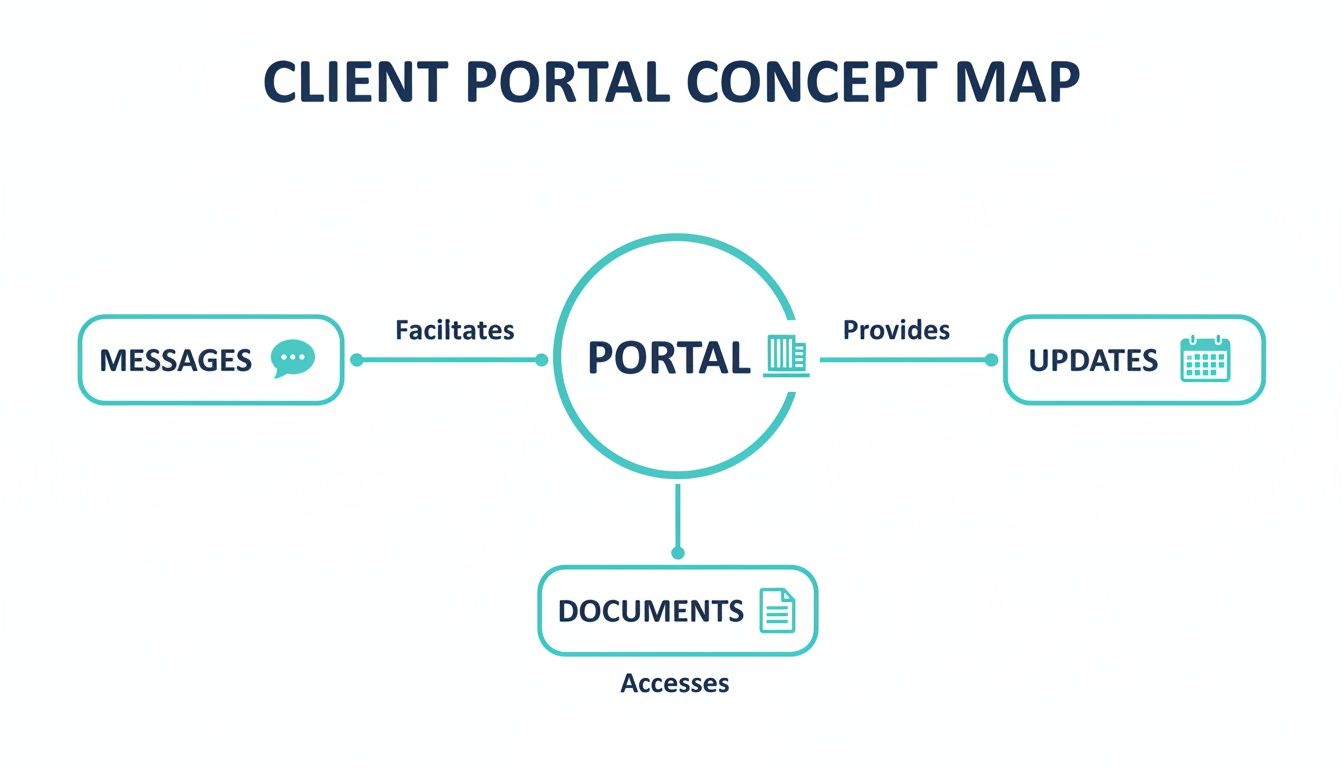
As you can see, features like messaging and document sharing aren't just separate tools; they become direct extensions of your primary system, all managed through the portal.
Built on Modern Cloud Technology
This kind of seamless connection is possible thanks to the industry's shift to cloud based platforms. The cloud is changing legal tech, and for good reason. It offers a level of flexibility and security that was once out of reach for many firms.
The biggest advantage is that you don't have to install or maintain any clunky hardware in your office. Cloud based integrations are designed from the ground up to be flexible, secure, and accessible from anywhere, on any device, which is exactly what today’s clients demand.
This flexibility has fueled incredible growth. Cloud based systems now hold a dominant market share of around 60-61% in the case management software industry. This trend is a major reason the market is projected to grow from USD 7.32 billion in 2023 to USD 15.00 billion by 2030.
The bottom line is that cloud technology allows firms to implement powerful integrated case management software without the huge upfront costs and ongoing maintenance of old school, on premise systems. It makes this kind of efficiency a practical and scalable reality for plaintiff firms of all sizes.
Choosing and Implementing the Right Integrated Software
Picking and launching new software can feel like a massive project, but with the right game plan, it’s a strategic investment, not just another headache. The best integrated software should feel like a natural extension of your firm, plugging right into the systems and workflows your team already uses every day. A structured approach is key to finding a partner that doesn't just check the technical boxes but actually lines up with your firm's goals for running a smarter practice and delivering better client service.
Ultimately, this process is about more than just a list of features. It's about finding a solution that your team and your clients will actually want to use. Success hinges on a thoughtful evaluation followed by a well planned rollout.
Your Essential Software Selection Checklist
Before you sign on the dotted line with any provider, run through this practical checklist. Each point touches on a critical piece of a successful long term partnership, helping you see past the sales pitch and focus on what really matters for your firm’s day to day operations.
Getting this part right prevents a world of frustration down the road and sets you up for a clear return on your investment.
Proven CMS Integration: This is non negotiable. You need to confirm the software has a direct, battle tested integration with your specific case management system, whether that's Needles, Neos, LawBase, or Litify. A true integration means your staff never has to leave their primary screen to get things done.
Intuitive User Experience: Look at the software from two angles. First, is it dead simple for your clients to use on their phone or computer? And second, can your non technical staff manage it without constant hand holding? If it fails on either front, nobody will use it.
Robust Security Protocols: Your client data is your most valuable and vulnerable asset. Dig into the provider’s security measures. Ask them the tough questions about data encryption, access controls, and how they comply with industry standards. You need to be certain confidential information is locked down tight.
Evaluating the Partnership and Pricing Model
Beyond the tech itself, the business relationship you're entering into is just as important. A flexible, supportive partner can make all the difference, especially when you're getting started. Look for transparency and a model that makes sense for your firm.
Responsive Support Model: What happens when you need help? Is support outsourced to a call center, or do you get an in house, US based team? A provider with expert, hands on support is invaluable when you have questions or need to get your team comfortable.
Flexible Pricing Structure: Try to avoid getting locked into a long, rigid contract. Look for providers who offer month to month agreements. This kind of flexibility not only reduces your financial risk but also keeps them motivated to earn your business every single month.
This evaluation is especially critical for firms in the United States. North America dominates the global case management software market, holding a 40.9% revenue share in 2023. While this means U.S. firms have plenty of proven options, it also means you have to be selective. You need a partner who truly gets the specific compliance and workflow demands of the American legal world. You can find more insights on the case management software market at grandviewresearch.com.
A Practical Plan for a Successful Rollout
Once you've picked the right software, a successful launch comes down to your rollout strategy. How you introduce a new tool to your team and clients can make or break it. A gradual, well communicated launch builds buy in and makes sure everyone is on board.
A thoughtful implementation strategy isn't just about technology; it's about people. By focusing on clear communication and demonstrating value early, you can turn potential skeptics into your biggest advocates and ensure the software becomes an indispensable part of your firm.
Follow these steps to pave the way for a smooth transition and get the most out of your new tool from day one.
Designate an Internal Champion: Pick one person on your team to own this project and lead the charge. This champion will be the go to resource for questions and will keep the momentum going internally.
Clearly Communicate the Benefits: Before you even think about launching, sell the "why" to your team. Frame it around how this new tool will make their jobs easier, less time on the phone, automated follow ups, no more tedious data entry. When they see what's in it for them, they'll be eager to get started.
Start with a Pilot Group: Don't flip the switch for all your clients at once. Begin with a small, manageable pilot group, maybe a handful of your most tech savvy clients or even just new cases. This gives you a chance to gather real world feedback, iron out any kinks in your process, and build confidence before a firm wide launch. A phased approach like this minimizes disruption and sets everyone up for success.
A Few Common Questions About Integrated Software
Making the jump to a new integrated system is a big step, so it’s only natural to have a few questions. We get it. Firm leaders need to know they’re making a smart investment that’s going to help their team, their clients, and the bottom line.
Here are some of the most common questions we hear from decision makers when they're thinking about integrated case management software. We’ve laid out some straightforward answers based on our experience helping personal injury firms just like yours.
How Hard Is It to Get Our Team and Clients to Actually Use a New System?
This is probably the biggest and most valid concern we hear. But here’s the thing: the best integrated tools are built from the ground up to be intuitive. The whole point is to find a solution that slides right into your current workflow, not one that forces everyone to start from scratch.
For your staff, a truly integrated system means they keep working inside the case management software they already know. They aren’t learning a whole new platform or juggling yet another inbox for client messages. This approach basically eliminates the learning curve and gets people on board immediately because it genuinely makes their jobs easier.
For your clients, the portal should feel as natural as any app they use on their phone. A clean, simple interface is key. Look for providers who offer real, hands on onboarding to make sure both your team and your clients feel supported from day one.
Is Our Firm's Data Really Secure on a Cloud Platform?
Security is non negotiable. Period. Especially when you're handling sensitive client information. Reputable software providers build their platforms with security measures that are often far more robust than what a single firm could manage on its own. It's their entire business.
Think about it this way: a purpose built client portal is worlds more secure than sending sensitive documents back and forth over email, which is notoriously leaky. Modern cloud platforms use powerful tools like data encryption, both when the data is moving and when it's sitting on a server, to lock down your information from anyone who shouldn't see it.
When you're vetting a provider, ask them direct questions about their security protocols and compliance standards. This isn't the time to be shy. You need to be certain they meet the legal industry's strict requirements for protecting client confidentiality. It’s all about peace of mind.
What’s the Real Return on Investment Here?
The ROI on an integrated client portal shows up in two critical places: hard, measurable time savings and the less tangible but incredibly valuable boost in client happiness. Both feed directly into your firm's growth.
The tangible return is the easy part to see. You'll save dozens, if not hundreds, of staff hours every month by automating things like case status updates and routine document requests. That’s time your paralegals and case managers can spend on billable work that actually moves cases toward settlement.
The intangible return comes from creating clients who feel like they're in the loop and being taken care of. That positive experience turns into great online reviews and, more importantly, word of mouth referrals. In the cutthroat world of personal injury law, your reputation is pure gold.
Are We Going to Be Locked into a Long-Term Contract?
Contract terms can really vary from one vendor to the next, so this is a great question to ask early on. While some old school software companies still demand long, annual commitments, many of the more modern providers offer flexible month to month subscriptions.
This model lowers your financial risk and keeps the software company on its toes. They have to keep earning your business every single month with a great product and solid support. If they don't deliver, you can walk away. A monthly agreement also lets you scale up or down as your firm’s needs change.
It ensures you're never stuck paying for a tool that isn't pulling its weight. As you compare your options, always get clarity on the contract terms and lean toward partners who are confident enough in their product to offer that flexibility.
Ready to see how a truly integrated client portal can change the game for your firm's efficiency and client service? At CasePulse, we offer a secure, user-friendly solution that plugs directly into the case management software you already depend on. Learn more about CasePulse and schedule a demo today.