
 CasePulse
You're waiting outside a courtroom, or maybe sitting at your desk with a hearing on the calendar and a stack of papers that all seem to matter. The motion itself can feel small, just a request on a page, but the hearing can change the direction of the case before anyone gets near a jury. That's why the motion hearing definition matters in practical terms, not just in legal vocabulary.
For attorneys, a motion hearing is often where a case gets narrowed, delayed, redirected, or dismissed. For clients, it's usually the first sign that a judge may decide something important without a full trial. Understanding what happens there, and what kind of hearing it is, helps everyone prepare for the central issue at hand.
Introduction to Motion Hearings
A motion hearing starts with a simple request and a possible turning point. One side asks the court to rule on a specific issue, and the judge decides whether to grant or deny that request. In U.S. practice, motions can ask for dismissal, compel discovery, exclude evidence, or seek summary judgment, and the hearing is where the court decides that request.
That makes motion hearings more than a spot on the calendar. They are part of how courts sort out disputes before trial, often much like a checkpoint that determines which parts of the case can keep moving and which parts stop. A ruling on one motion may change what evidence comes in, what issues remain, or whether the case keeps going at all.
Why the hearing matters to both sides
A client may expect the primary fight to begin at trial. Litigation does not work that way. Motion hearings are one of the main ways judges handle legal and procedural disputes before a jury ever hears the facts.
A motion hearing can be non-evidentiary or evidentiary, and that difference changes the preparation. In a non-evidentiary hearing, the judge usually relies on the papers, the arguments, and the record already before the court. In an evidentiary hearing, the judge may hear live testimony or review additional proof, so the preparation has to account for witnesses, exhibits, and objections as well as argument.
That distinction is easy to miss, but it matters in practice. A non-evidentiary hearing often feels like a focused argument session, while an evidentiary hearing works more like a narrow trial on one issue. Attorneys need to know which setting they are walking into, because the level of preparation, the likely pace, and the way the judge will evaluate the request are not the same.
Practical rule: if the motion could change the evidence, the schedule, or the case itself, the hearing deserves serious preparation.
For attorneys, that means the hearing is about precision as much as persuasion. For clients, it means the hearing may feel shorter and narrower than a trial, but the outcome can still be decisive. Understanding the motion hearing definition helps explain why the court is addressing a single issue first and why that issue may shape everything that follows.
Understanding the Key Concepts
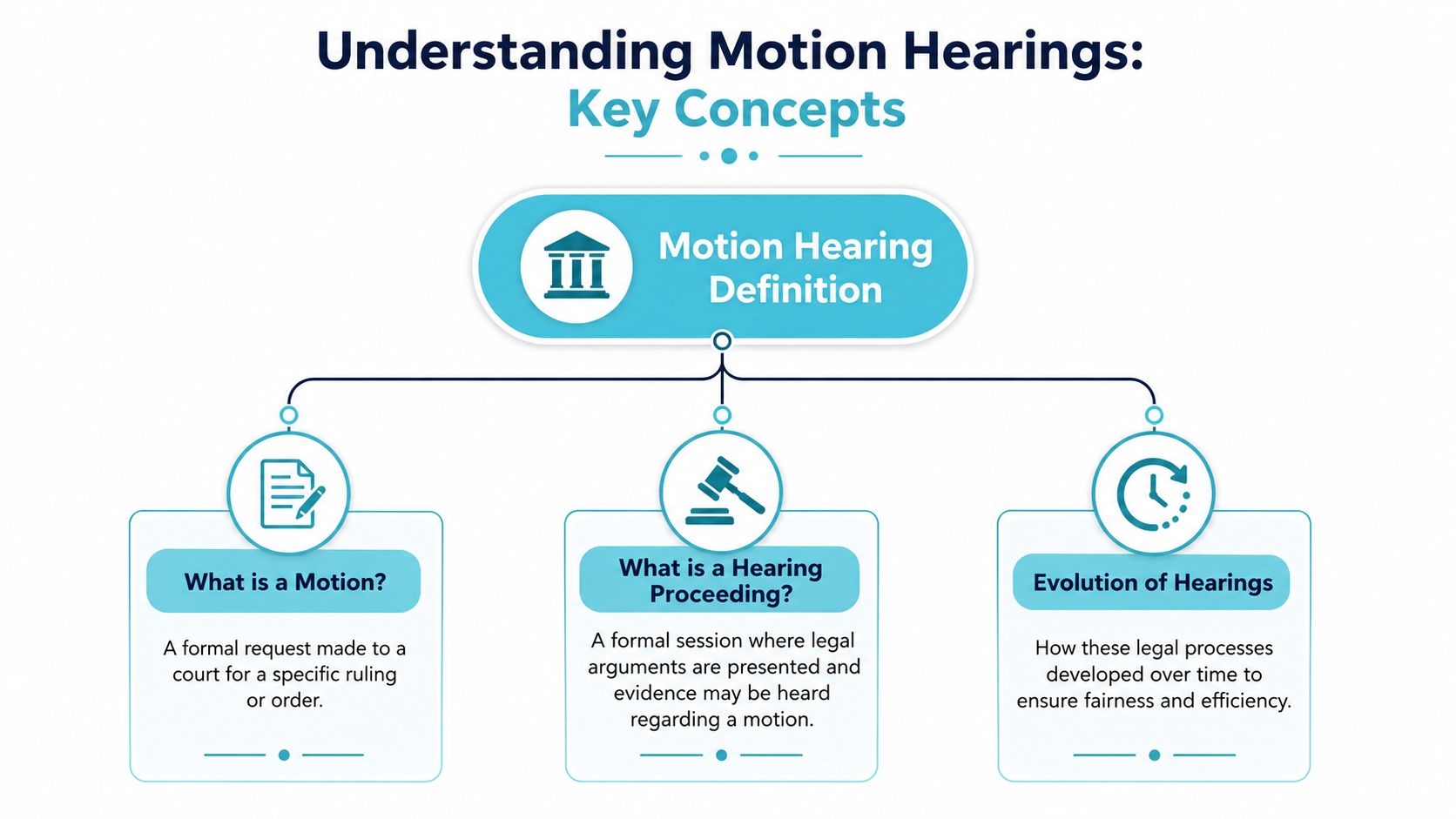
A motion hearing starts with a simple split that often gets blurred in practice. The motion is the formal request asking the court to act. The hearing is the court proceeding where the judge considers that request and decides whether to grant or deny it, which is how Clio describes the process (Clio's legal dictionary entry on motion hearings).
Motion versus hearing
That distinction sounds plain, yet it is where confusion often begins. The motion is the paper or request. The hearing is the courtroom event, or sometimes only the judge's review of the submitted papers. In many cases, judges use motion hearings as a focused case-management tool, one that lets them resolve a limited legal or procedural question before trial and, in some situations, end a case without a full trial.
A motion hearing works like a referee's time-out in sports. Play pauses so the official can decide a specific dispute, then the larger contest continues under the correct rules.
Why courts use them
Courts use motion hearings to keep cases organized before trial. They narrow disputes, reduce unnecessary litigation, and can sometimes resolve a case before a full evidentiary trial begins. That older function still matters now because judges rely on these hearings to decide what moves forward and what does not.
The scope is usually narrow. A motion hearing often focuses on a single question of law or procedure rather than the full merits of the dispute, so it is much narrower than a trial. In practice, the judge may rule right away, take the matter under advisement, or issue a written order later after reviewing the materials.
The part many guides leave out is that not every motion hearing works the same way. Some are purely legal argument, with no live proof at all. Others are evidentiary and resemble a short, targeted hearing with testimony and exhibits, depending on the motion and the facts involved (Defend Youth Rights motion hearing guide). That difference changes preparation, because the motion hearing definition is only complete once you know whether the judge expects argument alone or also evidence.
Common Types of Motion Hearings
A motion hearing often starts with a practical question from the attorney or client, what exactly is the court being asked to decide? The answer matters because the type of motion shapes the kind of preparation that makes sense. Some hearings aim at a final ruling, some settle disputes about information exchange, and some address temporary case-management issues. Courts may hear motions before trial, during trial, or after trial, so the same basic procedure can appear at different points in litigation.
Dispositive, discovery, and preliminary hearings
A dispositive hearing asks the court for a ruling that can end the case or substantially change it. Motions to dismiss and motions for summary judgment belong in this category because they can decide whether the case continues. A discovery hearing focuses on the exchange of information, such as compelling production or resolving objections about what must be turned over. A preliminary hearing handles interim matters like bond changes, continuances, or similar procedural requests.
These categories matter because they change what is at stake in the room. A discovery hearing may turn on a narrow fight over documents, much like checking which records belong in a file. A dispositive hearing can carry the weight of the whole case, because the judge may decide whether the claim survives at all. A preliminary hearing may be shorter, but the ruling can still shape the strategy that follows.
The first step is to identify the hearing's function. Ask whether the motion asks the judge to decide a legal issue, manage information exchange, or fix a temporary problem before trial. Once that question is clear, the attorney can match the argument to the purpose of the hearing instead of treating every motion as if it works the same way.

Where the procedural variability comes in
A motion hearing can be non-evidentiary legal argument or a trial-like evidentiary hearing, depending on the motion and the facts. That distinction is often overlooked in introductory guides, yet it changes the preparation plan from the ground up.
If the hearing is non-evidentiary, the focus stays on the written request, the legal standard, and oral argument. Counsel should expect to explain why the law supports the requested ruling and to answer questions drawn from the papers already filed. If the hearing is evidentiary, the lawyer may need witnesses, exhibits, or both, because the judge may want live proof to resolve a disputed fact. For attorneys, that means preparing as if the hearing were a short courtroom presentation. For clients, it means understanding that one hearing may feel like a legal debate, while another may feel closer to a focused mini-trial.
A practical way to see the difference is to review how motions are framed in real filings. The sample court motions resource helps connect the category of motion to the kind of hearing it may trigger.
Procedural Steps and Timing
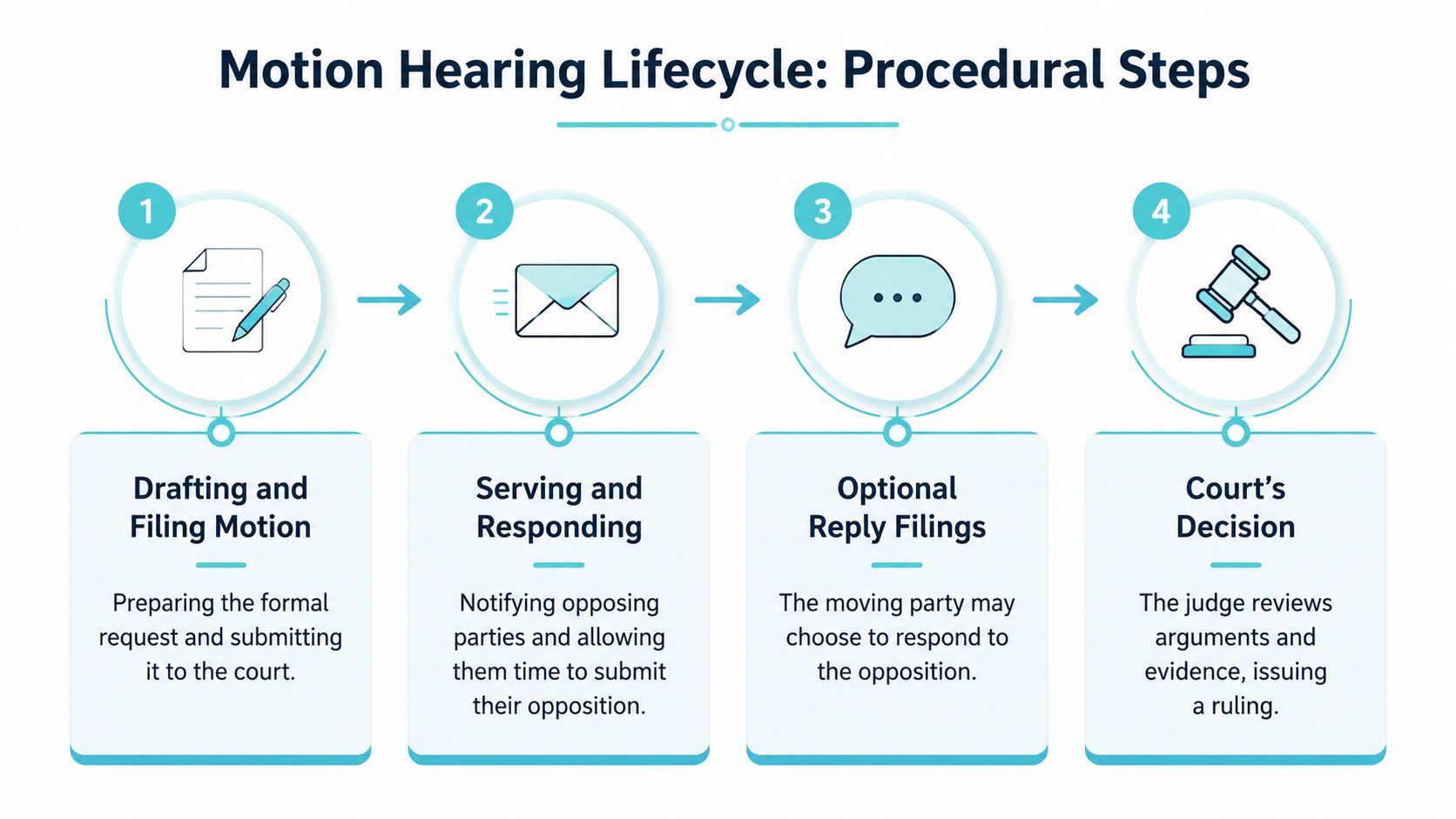
A motion hearing usually follows a familiar path, even though local rules can change the details. First, the request is drafted, filed, and served. Then the other side responds. In some matters there is a reply. After that, the court either sets a hearing or decides the motion on the papers.
The basic sequence
Filing the motion is the starting point. That filing identifies the issue for the court and tells the other side what relief is being requested. The response comes next, often in writing first, which is why motion practice depends so heavily on briefs and careful legal writing.
Practical rule: the strongest oral argument usually starts long before the hearing date, in the written motion and opposition.
Timing also depends on the stage of the case. Motions can be filed before trial, during trial, or after trial. Courts use them to address evidence admissibility, continuances, discovery disputes, and case dismissal. That flexibility makes procedural posture matter. A motion that fits early in a case may be out of place later, and a late filing can miss the moment when it could have made a difference.
A practical way to sort the timeline is to ask one question first. Is the hearing non-evidentiary, or will the judge need live proof? A non-evidentiary hearing moves like a focused legal argument, with the written papers doing most of the work. An evidentiary hearing works more like a narrow mini-trial, because the court may need witnesses or exhibits to resolve a disputed fact.
Deadlines and drafting discipline
Most problems in motion practice come from missed deadlines or weak sequencing. A lawyer who files without checking the court's timetable may lose credibility before the judge even starts reading the brief. When the issue depends heavily on written argument, a solid resource on writing persuasive legal briefs can help sharpen the structure before anyone steps into court.
The court may then set oral argument or decide the issue from the filings alone. In many courts, the judge reviews the motion, the opposition, and any reply, then rules immediately or takes the matter under advisement. That is why the overall timeline often stretches beyond the hearing itself, because the written record carries so much weight.
What to Expect in Court
A motion hearing usually feels narrower than a trial. The judge is not trying to hear the whole dispute at once. Instead, the focus stays on the specific legal question tied to the motion, and both sides respond within that frame.
For attorneys and clients, that difference matters because the hearing can feel more like a targeted discussion than a full courtroom presentation. A non-evidentiary hearing often works like an argument on the page with spoken clarification, while an evidentiary hearing adds witness testimony or exhibits and starts to resemble a limited mini-trial.
The courtroom rhythm
In many hearings, the judge has already reviewed the motion papers before anyone stands up. Oral argument then serves a different purpose from the written filings. It is the place to clarify the weak spots, answer the judge's questions, and keep attention on the strongest legal point. As described in USLegalForms on motion hearings, some courts decide motions on the papers alone, while others set time for argument after the written submissions are in.
Clients often expect witnesses, exhibits, and extended testimony. That expectation is understandable, but it does not match every motion hearing. A hearing on a procedural or legal issue may stay entirely within argument, like a referee stopping play to resolve a rule question before the next possession. If the judge needs facts that are disputed, the format changes and testimony may come in.
A short courtroom example
A defense lawyer stands to argue a motion to exclude evidence. The judge asks whether the objection concerns relevance, foundation, or procedure. The lawyer answers directly, points back to the written motion, and keeps the explanation tight. The opposing lawyer responds, the judge asks a follow-up question, and the court either rules immediately or takes the matter under advisement.
That exchange is common because motion hearings are built for focus and speed. A hearing on legal argument rewards clear issue-framing and concise answers. A hearing that turns evidentiary asks for a different kind of preparation, since testimony and exhibits can change the order of the presentation and the way the judge evaluates the dispute.
For a closer look at how proof questions can shape courtroom strategy, this resource on forensic evidence for Texas attorneys is useful when considering how evidence issues affect litigation planning.
Preparation Checklist and Sample Scripts
Preparation starts with the kind of hearing you're facing. If it's a legal argument hearing, the work centers on law, authorities, and a tight oral presentation. If it's evidentiary, the preparation expands to exhibits, testimony, and the order of proof.
What to verify before the hearing
The first step is always the local rulebook. Different courts handle motion deadlines, page limits, and oral argument differently, and those details can change the outcome if you overlook them. After that, confirm the motion type, the relief requested, and whether the judge expects live testimony or only argument.
A practical checklist looks like this:
- Verify local rules. Confirm filing deadlines, page limits, and whether the court wants a hearing set automatically or only after request.
- Assemble key case citations. Pull the authorities that support your position and make sure you can explain why each one matters.
- Organize exhibits. Keep the documents in the order you plan to use them, especially if the hearing may become evidentiary.
- Prepare attorney scripts. Write a short opening, a few transition lines, and responses to the judge's likely questions.

Sample language for attorneys and clients
An attorney opening might sound like this, “Good morning, Your Honor. We're asking the court to grant the motion because the controlling rule and the facts in the record support that result.” From there, the lawyer should move immediately to the key legal point, not retell the entire case.
A client script should be shorter and calmer. “You probably won't need to speak unless the judge asks a direct question. Listen carefully, stay quiet while counsel argues, and wait for your attorney to guide you.” That kind of coaching helps clients avoid accidental interruptions or nervous side comments.
Keep the oral presentation lean. If the judge asks a question, answer that question first, then return to the main point.
For teams that want ready-made formats for organizing filings and courtroom talking points, this resource on legal brief templates can be a practical starting point. It's most useful when you want to turn a rough outline into something ready for use under deadline pressure.
Jurisdictional Variations and Conclusion
Motion hearings don't look identical in every court. Federal courts tend to be more rule-driven, especially on timing and formatting, while state courts may allow more variation in how evidence or testimony is handled. The underlying idea stays the same, but the procedure can feel noticeably different from one courtroom to the next.
Why local practice matters
One judge may prefer argument only. Another may want a fuller evidentiary presentation. A third may decide the matter from the papers unless counsel asks for oral argument and the rules allow it. That's why local practice matters as much as the general motion hearing definition.
The safest approach is to read the rulebook, check the judge's preferences if they're published, and compare the motion type to the relief requested. If the motion involves venue issues, for example, local procedure can matter a great deal, and this resource on a motion for change of venue is a useful reference point for thinking about how a specific request fits within motion practice.
A hearing is rarely just a formality. Even when the judge decides quickly, the way the motion is framed and argued can affect the next stage of the case. For attorneys, that means precision. For clients, it means asking whether the hearing is legal, evidentiary, or somewhere in between.
The bottom line is simple. A motion hearing is where a judge rules on a formal request, but the exact format depends on the motion and the court. If you know the difference between a paper-only legal argument and a trial-like evidentiary hearing, you can prepare the right way and avoid surprises.
Frequently Asked Questions
What is the difference between a motion and a motion hearing
A motion is the formal request for a ruling. A motion hearing is the court proceeding where the judge considers that request and decides whether to grant or deny it. That difference matters because a client may hear “the motion is set for hearing” and assume the filing itself will decide the issue, when the hearing is the point at which the court acts on the request.
Is a motion hearing always required
No. Some courts decide motions from the written filings alone, especially when the issue is narrow and the papers give the judge enough to rule. In other situations, the court sets oral argument because the judge wants clarification or the issue is easier to resolve after hearing counsel explain the record and the legal standard.
Do witnesses testify at a motion hearing
Sometimes they do, but many motion hearings are focused on legal argument only. The key question is whether the hearing is evidentiary or non-evidentiary. An evidentiary hearing calls for witness testimony and exhibits, while a non-evidentiary hearing usually asks counsel to argue from the papers already filed. That distinction changes preparation in a practical way. If testimony is possible, counsel has to prepare witnesses and exhibits with the same care used for a small trial. If the hearing is argument only, the focus should stay on the governing rule, the strongest facts, and the precise relief requested.
How should an attorney prepare for a summary judgment hearing
Start with the written record, then shape the oral argument around the facts that matter under the governing legal standard. A summary judgment hearing is usually about whether the case can be resolved without trial, so the court needs a clear path through the evidence, the disputed facts, and the law. The attorney should know which facts are material, which points are undisputed, and where the opposing side's theory depends on a weak reading of the record.
That same approach helps with other dispositive motions as well. The argument should follow the standard the judge must apply, not the order in which the lawyer happened to draft the brief. A short, organized explanation often helps more than a long recitation of every filing in the record.
What should clients do at the hearing
Clients should stay attentive, avoid interrupting, and let counsel handle the argument. If the judge asks a direct question, the safest approach is to answer briefly and truthfully, then stop. Clients often expect to explain their side in full, but a motion hearing is usually not the place to tell the whole story.
The client should also be ready for different outcomes. The judge may rule right away, ask for supplemental briefing, or take the matter under advisement. That possibility matters because the hearing can end before either side has said everything they planned to say, so the lawyer's preparation has to account for a quick ruling as well as a fuller discussion.
What if the hearing crosses jurisdictions
Use the local rules for the court where the motion is heard, not the rules from the court you know best. Motion practice varies across jurisdictions, especially on timing, testimony, and oral argument. One court may expect a short legal presentation, while another may allow a broader evidentiary showing. That is why attorneys should check the local procedure before deciding how much time to spend on witnesses, exhibits, and oral advocacy.
When in doubt, coordinate with local counsel and confirm the hearing format before building the prep plan. The safest path is to match the hearing to the court's actual practice, not to assume every courtroom handles motions the same way.