
 CasePulse
 A client signs up after a crash. Intake moves fast. The team opens the file, orders records, answers a flood of calls, and starts talking settlement strategy before anyone notices the engagement letter is still sitting unsigned in an email attachment.
Three months later, the problem shows up as a phone call nobody wants to take. The client says they never agreed to certain costs. They thought the firm would handle issues that were never part of the representation. They're upset about how often they heard from the office, what they were asked to provide, and what happens next. At that point, nobody is arguing about legal theory. The firm is burning staff time trying to reconstruct expectations that should have been fixed on day one.
In plaintiff PI, this happens more often than firms admit. Not because lawyers don't know letters of engagement matter, but because execution breaks down. The document exists. The template exists. The policy exists. What fails is the operational part: getting the right version out quickly, making it easy to review, getting it signed, and storing it where the team can find it later.
The Client Call Every Firm Dreads
The ugliest intake problems rarely begin as big problems. They start small.
A caller is in pain, angry, overwhelmed, and in a hurry. Your team wants to help, so they move the case forward. Someone says the paperwork will go out later. Someone else assumes the signed copy is coming back soon. Meanwhile, the client starts acting like representation is fully underway, because from their point of view, it is.

Weeks pass. Medical providers call. Adjusters send correspondence. Staff members answer questions. Then the friction starts. The client says, “I thought you were also handling the property damage.” A family member wants updates even though no authorization is in place. The client disputes a cost item because nobody explained it in plain English. Now the firm has a relationship problem, a documentation problem, and a training problem all at once.
High volume PI shops feel this more than boutique firms because speed is part of the business model. If your team relies on a busy coordinator or a dedicated intake specialist to keep files moving, the handoff from initial call to signed paperwork has to be tight. If it isn't, the missing signature becomes tomorrow's conflict.
What the client hears versus what the firm means
Clients don't separate intake from representation the way firms do. They hear reassurance and assume commitment. They hear “we'll get started” and assume scope. They hear “we'll keep you updated” and imagine a response time your staff never intended to promise.
A good engagement letter doesn't just protect the firm. It gives the client a stable reference point when memory, stress, and assumptions start pulling in different directions.
That's why the strongest letters of engagement work as both legal documents and operational tools. They tell the client what the firm will do, what the firm won't do, what the client must do, and how the relationship will function when things get busy.
A practical first step is aligning the letter with the same expectations your firm gives clients during early onboarding, especially in the first 24 hours after a personal injury case begins. If those messages don't match, confusion is baked in from the start.
Why Engagement Letters Are More Than a Formality
Too many firms treat the engagement letter like a box to check. Draft it. Send it. Save it. Move on. That approach misses the true purpose of the document.
A letter of engagement is the first real control point in the attorney client relationship. It defines scope, states the fee arrangement, allocates responsibilities, and creates a written record that can be used later when memories change. In PI practice, where clients are often stressed and cases evolve quickly, that record matters.
The risk is not theoretical
The clearest reason to take letters of engagement seriously is simple. Claims get worse when firms skip them. Analysis of professional liability claims against CPA firms, which face similar client relationship risks, found that nearly one-third of all claims stemmed from work with no engagement letter at all, and the average dollar amount of claims rose by 19% to 71% depending on firm size when firms skipped an engagement letter (engagement letter claims analysis).
That data comes from accounting, not law, but the lesson carries over cleanly. Disputes over authority, scope, timing, fees, and expectations don't care about industry labels. They grow in the same places. Unclear starts. Loose documentation. Verbal assumptions.
A signed document does work that staff memory can't
When a complaint lands on a partner's desk, nobody wants to rely on “I'm pretty sure we told the client that.” You want the file to answer the question.
That means the engagement letter should do at least four jobs:
- Define the representation so the client knows what the firm is handling and what stays outside the file.
- Explain money clearly including fees, costs, and how expenses are treated.
- Set communication rules so clients know where updates will come from and how urgent issues should be raised.
- Document consent so the firm can show the client reviewed and accepted the terms.
Practical rule: If a term would matter during a dispute, it belongs in writing before work begins.
Some firms borrow language from generic service contract resources to tighten their drafting process, especially around payment terms and scope boundaries. A business focused guide to Start Right Now service agreement tools can be useful as a drafting reference, but PI firms still need language suited for their jurisdiction and contingency practice.
You also want the engagement letter to fit with the firm's broader financial controls. If trust handling, costs, and disbursement procedures live in one policy and the client letter says something looser, the conflict will surface later. Firms that want those systems aligned should review engagement language alongside their client trust account practices.
Anatomy of a Bulletproof PI Engagement Letter
A strong PI engagement letter is specific without becoming unreadable. The goal isn't to impress another lawyer. The goal is to remove ambiguity before ambiguity turns expensive.

Guidance on effective drafting emphasizes that engagement letters need granular scope language to reduce expectation gaps that drive 70% of client disputes, and that using 12 benchmark clauses such as client responsibilities and withdrawal rights can reduce claim payouts by 60% because the firm has a clear written defense (effective engagement letter guidance).
Start with identity and capacity
The first page should clearly identify who the client is. That sounds obvious, but PI firms still run into trouble when spouses, parents, adult children, or estate representatives are involved.
State the client's full legal name. If representation is through a guardian, personal representative, or other authorized person, say that plainly. Also identify the firm and, where appropriate, the lead attorney or responsible office.
If the file involves multiple potential claimants, don't leave that implied. Name who is and is not the client.
Scope needs hard edges
Most scope clauses fail because they're too soft. They say the firm will represent the client “in connection with injuries arising from the accident” and leave the rest to inference. That is how property damage disputes, PIP confusion, subrogation disputes, lien fights, and appellate misunderstandings begin.
Use language that says what is included and what is excluded. In a PI file, that often means deciding whether the engagement covers pre suit work only, litigation through trial, post judgment enforcement, appeals, property damage assistance, or lien negotiation. Spell it out.
If the firm hasn't agreed to do it, the letter should say so directly. Silence invites assumption.
Fees and costs need separate treatment
Clients often hear “contingency fee” and assume they owe nothing unless money comes in. They may not understand the difference between attorney fees and case costs. If your letter mixes the two, you're creating a future argument.
Break this into separate paragraphs. One for the contingency fee structure. Another for costs and expenses. Another for what happens to advanced costs if there is no recovery, subject to the rules that apply in your jurisdiction.
Responsibilities go both ways
The best letters of engagement don't just list what the client owes the firm. They also tell the client what the firm will do.
Include client duties such as providing truthful information, preserving evidence, attending appointments, updating contact information, and responding to requests. Then include firm duties such as evaluating the claim, communicating material developments, and handling agreed tasks within the defined scope.
A balanced letter reads fairer, and fairer documents are easier for clients to accept and harder to attack later.
Communication and authority clauses prevent daily friction
PI clients want reassurance. Staff want order. A communication clause should bridge both.
Address how updates will be delivered, who the main contact is, whether family members can receive information, and what the client should do in an emergency. Add a clause on settlement authority so the file reflects that the firm cannot accept a settlement without client approval.
Other clauses worth including are:
- Termination and withdrawal for when the relationship ends or the firm must step out
- File retention so clients know what happens to documents after the matter closes
- Dispute resolution if your jurisdiction and firm policy support it
- Acknowledgment and signature confirming the client read and understood the terms
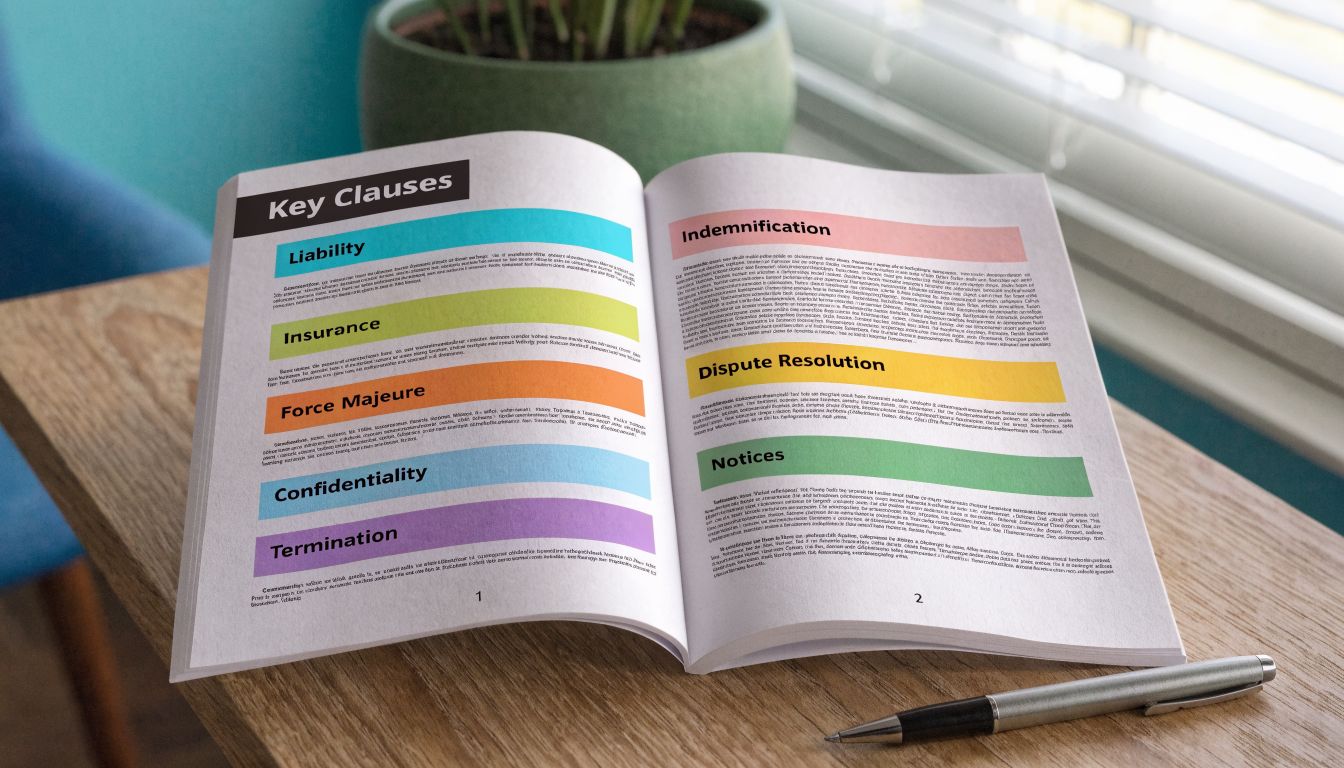
Sample Wording for Key Clauses
Templates save time, but copy and paste language causes trouble when it doesn't match how the firm works. The wording below is intentionally plain. Adjust it for your jurisdiction, fee rules, and firm process.
Scope of representation
At this stage, firms either protect themselves or create a problem for later.
The Firm agrees to represent Client in pursuing claims for personal injuries arising from the incident occurring on or about [date]. This engagement includes investigation, claim development, communication with insurers, settlement negotiations, and related pre litigation work. This engagement does not include filing a lawsuit, handling an appeal, resolving property damage issues, or representing Client in any separate matter unless the Firm and Client agree in writing to expand the scope.
Fees and costs
Keep fees and costs separate. Clients understand better when the concepts are not blended together.
The Firm's fee is contingent on recovery. If there is no recovery, no attorney fee is owed, except as otherwise required by applicable law or agreement. Case costs and expenses are separate from attorney fees and may include charges such as obtaining medical records, filing fees, expert fees, service costs, and similar case related expenses. Those costs will be handled as described in this agreement and under the rules that apply in this jurisdiction.
Communication expectations
This clause does a lot of quiet work. It reduces anger caused by silence and reduces staff time spent answering avoidable complaints.
The Firm will provide updates on material developments in the case. Routine status questions should be directed through the Firm's designated communication channels during business hours. Client agrees to keep the Firm informed of current phone numbers, email addresses, mailing address, and medical treatment providers. Client understands that delays in responding to requests for information or documents may affect the progress of the case.
Client responsibilities
Don't bury this in legal jargon. Put duties in normal language.
Client agrees to provide complete and truthful information, preserve documents and evidence, attend scheduled appointments or proceedings when required, and promptly forward correspondence, insurance information, or legal papers related to the claim. Client agrees not to settle the claim directly with any opposing party or insurer without notifying the Firm.
Clear writing beats impressive writing. If a client can't explain the clause back to a staff member, the clause probably needs revision.
Withdrawal and end of representation
This language matters when the relationship goes sideways.
The Firm may withdraw from representation as permitted by applicable rules of professional conduct and law. Client may terminate representation at any time, subject to any rights the Firm may have regarding fees, costs, or a lien as allowed by law. Representation ends when the matter described in this agreement concludes, or when the Firm and Client otherwise confirm the end of the engagement in writing.
A Practical Checklist for Drafting and Review
The safest letters of engagement aren't produced by talented improvisation. They come from repeatable review. Every PI firm should have a pre send checklist that catches the same errors before the client ever sees the document.
Pre-Send Drafting and Review Checklist
| Step | Check | Notes |
|---|---|---|
| Matter opening | Confirm full legal name of each client | Match intake record, ID, and case file naming |
| Conflict review | Verify the matter has cleared the firm's conflict process | Don't send an engagement letter before clearance |
| Case type selection | Use the correct PI template for the matter | Motor vehicle, premises, wrongful death, and other matters may need different language |
| Scope review | Confirm what the firm is and is not handling | Be explicit about litigation, appeal, liens, and property damage |
| Fee review | Confirm the correct contingency structure | Match the jurisdictional rule and the firm's approved fee arrangement |
| Cost language | Review expense language for clarity | Separate attorney fees from costs |
| Client authority | Confirm who can sign | Individual client, guardian, estate representative, or other authorized person |
| Communication terms | Verify contact methods and authorized recipients | Avoid accidental disclosures to family members or friends |
| Compliance review | Check local rule requirements | Make sure required language and formatting are included |
| Internal approval | Require attorney or supervisor signoff | Use a named owner for final review |
| Delivery prep | Confirm the sending method and follow up path | Decide who sends, who tracks, and when reminders go out |
| File storage setup | Assign storage location before sending | Executed copies should have one obvious home in the digital file |
What usually gets missed
Most drafting errors aren't dramatic. They are small mismatches that create major confusion later.
- Old template language that still mentions services the firm no longer provides
- Wrong client name because staff copied a prior matter
- Missing exclusions for litigation, appeals, or property damage
- Loose cost wording that leaves room for argument
- No clear signer when a representative is involved
Build a two person review habit
For routine PI matters, a two step review is usually enough. One person drafts. A second person checks the variables that cause disputes.
That second reviewer doesn't need to rewrite the letter. They need to verify that the scope, signer, fee terms, and exclusions match the intake facts. That's where quality control earns its keep.
Streamlining Delivery Signing and Storage
Most firms don't fail on content. They fail on execution.
That gap shows up in high volume PI practice more than anywhere else. Guidance on engagement letters usually explains what belongs in the document, but it rarely addresses why firms struggle to get letters delivered, understood, signed, and filed consistently. For busy PI teams, that friction across dozens of files is a major reason best practices break down in real life (client engagement execution gap).

Why old delivery methods keep failing
Mail is slow. Email attachments are easy to ignore. In person signing is hard to coordinate when the client is injured, working odd hours, or juggling treatment.
Even worse, each method creates a separate tracking burden. Someone has to ask whether the document was sent, whether it was opened, whether the client had questions, whether the signature came back, and where the final version was saved. That's not legal work. That's administrative drag.
A useful way to think about this is the same way other service businesses think about improving client experience with intake forms. The industry is different, but the operational lesson is familiar. If the form is hard to access, confusing to complete, or easy to postpone, completion rates suffer.
What a clean workflow looks like
The best process is simple enough that staff follow it every time:
- Generate the right letter from the approved template tied to the matter type.
- Send it through one channel the client can access easily from any device.
- Require signature before substantive work begins except for urgent steps your firm permits.
- Automate reminders for unsigned documents so staff don't chase manually.
- Store the executed version automatically in the client file where everyone can find it.
Firms get into trouble when the signed copy lives in three places at once, and in none of the places the trial team checks first.
Storage is part of risk management
A signed letter that can't be found is only slightly better than no letter at all. Storage should be standardized by matter, naming convention, and location. Every person on the team should know exactly where the executed agreement sits in the file.
For electronic signing, firms should also make sure their process aligns with current guidance on enforceability and recordkeeping. A practical reference is this overview of electronic signature legality, especially for firms that still hesitate to rely on digital execution.
The operational standard is straightforward. One approved template set. One delivery path. One reminder process. One storage destination. Once firms lock that down, letters of engagement stop slipping through the cracks.
Managing the Client Relationship Beyond the Intake
Most firms still treat letters of engagement as one time documents. Signed at intake. Filed away. Forgotten until a dispute shows up.
That approach doesn't fit long PI cases. Existing guidance leaves a real gap here. It often treats engagement letters as static documents and gives little attention to refresh intervals, scope changes, or the use of technology to manage updated terms during long running matters (engagement letters in long term relationships).
When the original letter stops being enough
A pre suit matter turns into filed litigation. A straightforward injury case develops lien complexity. A client asks the firm to handle a related issue that wasn't in the original agreement. Those aren't minor developments. They change the relationship.
When that happens, don't rely on phone calls or internal notes. Issue an updated letter or addendum that confirms the new scope, any revised responsibilities, and any changes to the fee or cost structure that are permitted and required in your jurisdiction.
Keep the paper trail chronological
The best practice is simple. Treat the engagement record like a timeline.
- Original engagement at intake
- Written amendment or addendum when scope changes
- Written confirmation when representation ends
Clients rarely object to updated terms when the change is explained early and tied to a clear event in the case.
That habit protects the firm and helps the client understand what changed and why. It also gives the next attorney, paralegal, or administrator who touches the file a clean record instead of a pile of assumptions.
If your firm wants a cleaner way to handle client communication, document delivery, and signed intake paperwork inside the systems you already use, CasePulse is built for that workflow. It gives PI firms a secure client portal that connects with platforms like Needles, Neos, LawBase, and Litify, so clients can complete forms, share files, review updates, and manage documents without forcing staff into another inbox.