
 CasePulse
A personal injury practice doesn't have a marketing problem. It usually has a measurement problem.
The market itself is too large, too competitive, and too expensive for loose reporting. The personal injury lawyers and attorneys market was estimated at $61.7 billion in 2025 and grew at a 2.5% CAGR from 2020 to 2025, according to IBISWorld's market size data for personal injury lawyers and attorneys. In a market at that scale, small improvements in signed-case volume can change a firm's economics fast.
That's why smart personal injury law marketing starts with one hard question. Which efforts produce signed cases, and which ones just produce activity?
Why Your Firm's Growth Now Depends on Marketing
Many plaintiff firms still talk about marketing like it's a support function. It isn't. In personal injury, marketing is part of operations, intake, finance, and client service all at once.
A large market creates opportunity, but it also attracts aggressive competition. Firms aren't just competing on trial skill or referral reputation anymore. They're competing on search visibility, ad placement, local presence, intake responsiveness, and how quickly they move a prospective client from first contact to signed retainer.
Visibility alone doesn't pay for growth
A managing partner can no longer look at website traffic or call volume and assume the business is healthy. Those numbers may tell you whether people noticed your firm. They don't tell you whether your process turned attention into revenue.
That distinction matters because personal injury prospects usually aren't browsing casually. They often have immediate legal needs, and they're comparing multiple firms at once. If your firm shows up late, responds slowly, or creates friction after the first call, another firm gets the case.
Practical rule: Treat marketing as a signed-case production system, not a lead generation department.
The firms growing consistently usually have one thing in common. They don't isolate marketing from intake and follow-up. They build one connected path from search to consultation to signed client.
The old playbook is too thin
A single-channel strategy used to carry more weight. Some firms could lean on referrals, billboards, or one strong SEO position and still keep the pipeline full. That's much harder now.
Today, growth comes from coordinated execution. Search, paid ads, local visibility, reviews, call handling, and follow-up all influence whether a prospect hires you. If you want a useful outside perspective on how teams are starting to coordinate those moving parts, this overview of Autonomous AI agents in marketing is worth reading because it frames marketing as an operating system rather than a collection of disconnected campaigns.
The central shift is simple. Stop asking how many leads marketing produced. Start asking how many profitable cases the firm signed, how efficiently it signed them, and where the handoff breaks.
The Core Channels for Attracting Injury Clients
Search still sits at the center of personal injury law marketing. 96% of people start with a search engine when looking for legal help, law firms now allocate about 65% of marketing budgets to online strategies, and some legal keywords can cost up to $1,000 per click, according to Andava's legal marketing statistics roundup. That combination changes how you should think about channel strategy. Every click is expensive enough that weak coordination becomes costly fast.
A useful way to think about channels is a fishing fleet. One boat targets immediate demand. Another builds long-term visibility. Another keeps you present in local waters where buying intent is highest. You need more than one boat, and each has a different job.
What each channel is supposed to do
SEO captures people already searching for answers and representation. It compounds over time, but it needs strong location pages, practice area pages, and content built around the exact questions injured people ask before they call. If you want a deeper breakdown of that work, this guide on SEO for personal injury lawyers is a practical starting point.
Local search is where map visibility, reviews, and geographic relevance do heavy lifting. For many firms, this is the closest thing to storefront traffic online. If your local presence is weak, you can lose high-intent prospects before they ever visit your website.
PPC gives you immediate exposure for urgent searches. That speed is valuable, but the trade-off is obvious. If the click is expensive and your intake team misses the call, delays the callback, or mishandles screening, the campaign becomes a tax on poor process.
Content marketing supports both SEO and trust. A good article, FAQ, or case-process explainer doesn't just attract traffic. It answers pre-hire objections and helps prospects decide whether your firm sounds clear, credible, and prepared.
Referral networks still matter. Medical partners, former clients, and non-competing attorneys can send excellent cases. But referral growth works best when it's managed deliberately, not treated like luck.
Comparing Personal Injury Marketing Channels
| Channel | Typical Cost | Time to Results | Best For |
|---|---|---|---|
| SEO | Ongoing investment | Longer-term | Sustainable search visibility and high-intent discovery |
| Local search | Ongoing investment | Medium-term | Map visibility, nearby prospects, trust signals |
| PPC | High | Immediate | Urgent demand capture and testing search intent |
| Content marketing | Ongoing investment | Longer-term | Education, authority, SEO support |
| Referral networks | Relationship-driven | Variable | High-trust case opportunities |
What works together and what doesn't
The best results usually come from combinations, not isolated tactics:
- SEO plus local search: Strong for firms that want durable visibility in specific cities and practice niches.
- PPC plus disciplined intake: Useful when the firm can respond fast and qualify aggressively.
- Content plus referrals: Helpful when lawyers want prospects and partners to understand case types and process before the first conversation.
What usually doesn't work is overfunding traffic while underfunding response capacity. If your front desk, intake staff, or after-hours coverage is inconsistent, your ad budget leaks. That's why many firms should review options for efficient legal call handling before increasing paid spend.
More channels don't fix a weak handoff. They just send more opportunities into the same bottleneck.
Beyond Leads to Signed Cases Measuring What Matters
Most law firm reporting still revolves around lead counts, form fills, and cost per lead. Those numbers are easy to collect, easy to present, and easy to misunderstand.
A campaign can produce a pile of inquiries and still fail the business. Wrong case types. Poor contact rates. Low consultation attendance. Weak conversion. Bad fit. Duplicate leads. Shoppers who never intended to hire anyone. If you manage by lead volume alone, you can spend more while learning less.

Lead reports often flatter weak campaigns
That's the gap many firms are finally confronting. Case Status's guidance on personal injury lawyer marketing points out that many guides focus on inquiries, while the more useful question is which channels produce signed cases. That same guidance also notes that vendors increasingly recommend tracking cost per signed case, because lead-based reporting can overstate performance and hide inefficiencies.
That's exactly right. A cheap lead that never signs is expensive. An expensive channel that repeatedly produces retainers may be the better buy.
A better scoreboard for managing partners
If you want cleaner decisions, track the funnel with business logic:
- Lead quality: Are the inquiries aligned with your target case mix?
- Contact rate: How many prospects does your team reach?
- Consultation attendance: Which channels produce people who show up ready to talk?
- Signed-case conversion: Which sources produce retainers, not just conversations?
- Cost per signed case: What did you spend to acquire a signed client?
A firm that tracks those numbers can answer harder questions. Which intake staff convert best. Which campaigns send the wrong case types. Which landing pages attract volume but not fit. Which referral partners send cases that close cleanly.
For firms trying to build that measurement discipline, this article on the metrics that matter for law firms is useful because it pushes beyond surface reporting.
Signed-case thinking changes budget decisions
When you adopt signed-case reporting, channel strategy gets sharper. You stop arguing about top-of-funnel activity and start reallocating budget based on what closes. You also expose operational problems that marketing reports usually hide.
If the firm can't tell you which channels produce retainers, the firm doesn't know which marketing is working.
That single shift often changes everything. It improves accountability, clarifies case selection, and puts profitability back at the center of personal injury law marketing.
Integrating Technology for a Better Client Experience
Many firms lose return after the lead is won.
The website worked. The ad worked. The referral source did its job. The prospect called, signed, and then the experience turned uneven. Updates became inconsistent. Clients started calling for routine status checks. Staff spent time repeating the same information. Friction crept in, and the value of your acquisition spend started to erode.
Marketing keeps working after intake
A client's experience after hire affects reviews, referrals, and the firm's overall efficiency. That makes post-intake communication part of marketing performance, whether lawyers label it that way or not.
If your team handles every update manually through phone calls and scattered messages, the system gets expensive. Clients feel uncertain, staff gets interrupted, and the firm burns time on preventable back-and-forth.
Where a client portal fits
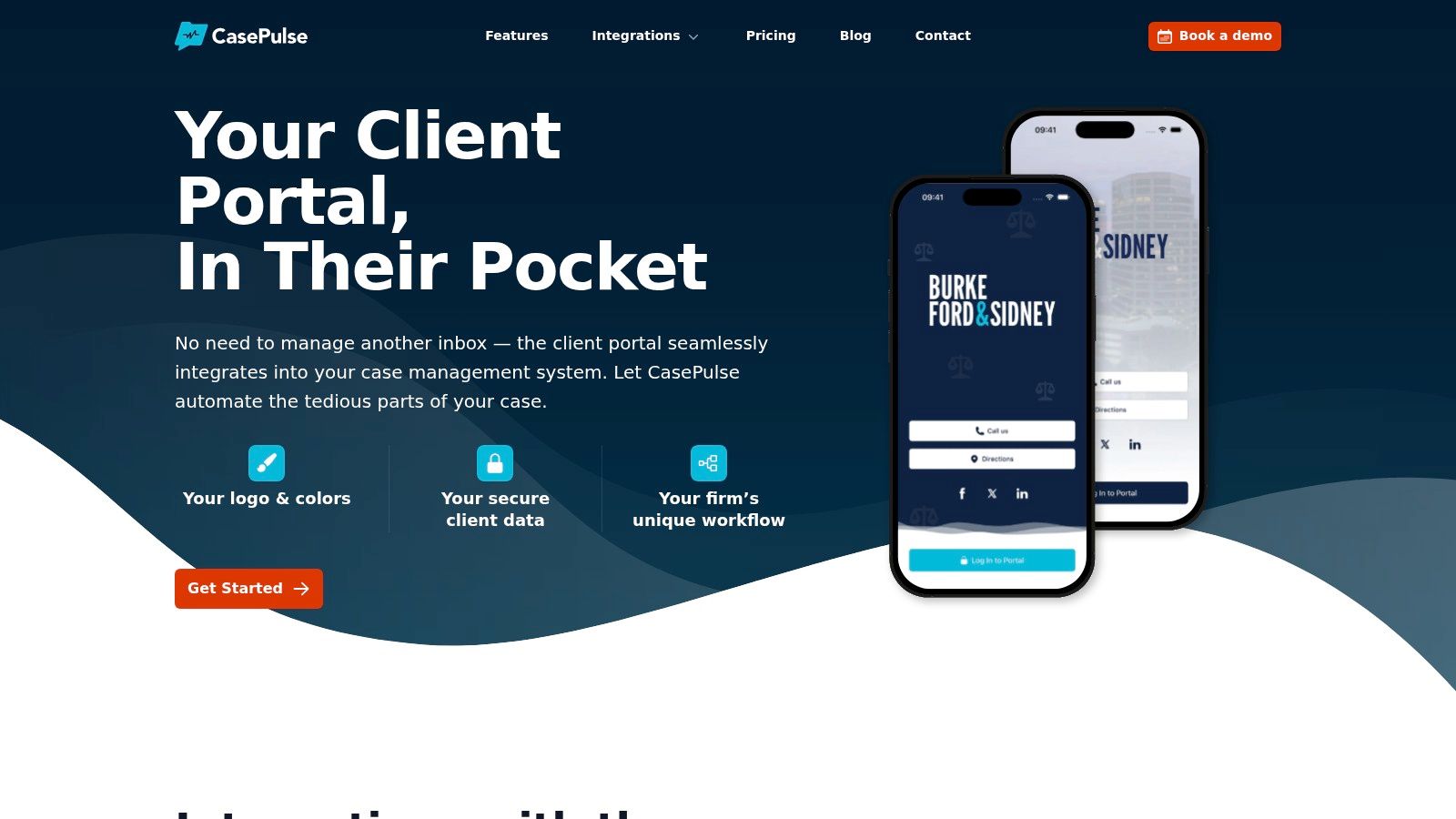
A secure portal changes the operating model. Clients can check case status, message the team, share files, and complete forms from their device instead of relying on repeated phone calls. That reduces routine interruptions while giving clients a clearer sense of progress.
For firms evaluating this category, client portals for law firms outlines the practical use case. One option in that category is CasePulse, which is built as a secure client portal for law firms and integrates with systems such as Needles, Neos, LawBase, and Litify so staff can work inside existing workflows while clients access updates, messages, files, and forms through the portal.
Better experience, cleaner operations
Managing partners should think beyond software features and focus on process outcomes.
- Fewer routine status calls: Staff spends less time answering the same question in different ways.
- More consistent communication: Clients know where to look for updates and forms.
- Less workflow sprawl: Teams don't have to manage communication in disconnected places.
- Stronger impression after hire: The firm looks organized when the client experience feels structured.
A signed case is not the finish line for marketing spend. It's the point where the firm has to prove the client made the right choice.
That's why technology belongs in the marketing conversation. Not because it generates clicks, but because it protects the value of the clicks you already paid for.
Staying Compliant in Legal Marketing
Aggressive marketing and ethical marketing aren't opposites. A strong plaintiff firm can market assertively without drifting into claims that create risk.
The problem is usually sloppy wording, not strategy. Firms get into trouble when ads imply guaranteed results, testimonials sound like promises, or intake staff say more than the rules allow.

The practical compliance checks
Start with your state bar rules and review them as an operating document, not a one-time legal memo. Then apply that guidance to every public-facing touchpoint: website copy, landing pages, PPC ads, intake scripts, social posts, review requests, and testimonial use.
A few simple guardrails prevent most mistakes:
- Avoid guarantees: Don't promise outcomes, timelines, or payout expectations.
- Use testimonials carefully: Make sure they're permitted, accurate, and not presented as typical results unless your rules clearly allow that framing.
- Check comparative claims: “Best,” “top,” or similar language can become a problem if it implies unverifiable superiority.
- Train intake staff: The first phone conversation is part of your marketing in the client's eyes, but it still needs discipline.
- Keep disclosures consistent: If disclaimers are required, they need to appear where the claim appears.
Compliance should support trust
Some firms treat ethics review as a brake on growth. It's better to treat it as message control.
When your advertising is clear, specific, and disciplined, prospects trust it more. When your intake team knows what not to say, your process gets cleaner. When your testimonials and case stories are used properly, they support credibility instead of creating avoidable exposure.
Clear marketing copy usually performs better than risky copy because injured people want confidence, not hype.
A good rule for plaintiff firms is simple. If a claim would make your trial team uncomfortable under scrutiny, rewrite it before it goes live.
A Tactical Framework for Your Firm's Marketing Plan
Most personal injury firms don't need more ideas. They need sequence.
When firms struggle with marketing, the issue is often misordered investment. They buy paid traffic before fixing intake. They publish content before tightening local visibility. They review lead counts before building signed-case reporting. A better framework puts the foundation first and scale second.
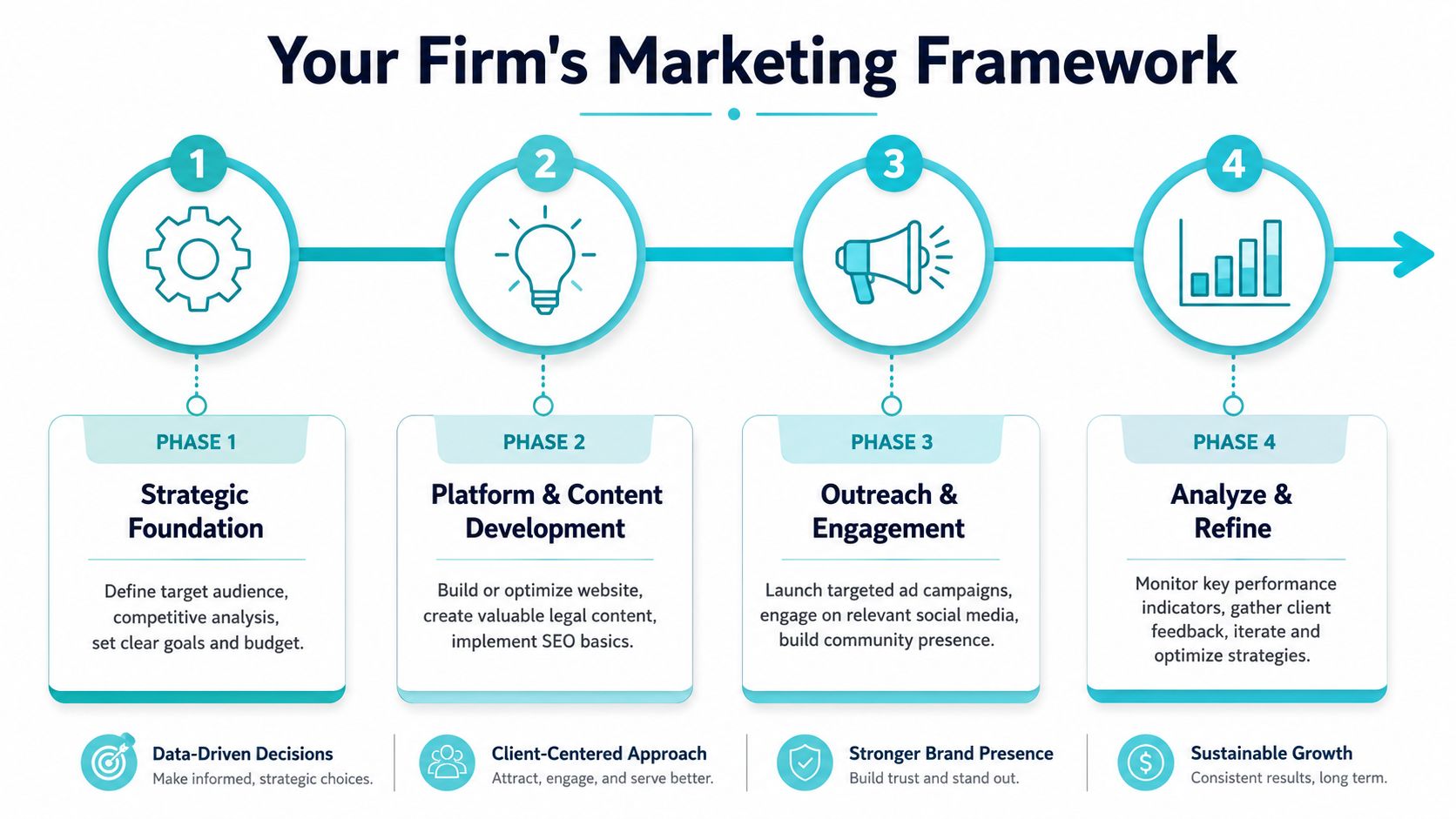
Phase 1 builds discipline
Start with business choices, not channel choices.
Define the case mix you want more of. Clarify your geographic priorities. Audit current intake responsiveness. Decide who owns follow-up. Establish one dashboard that reports signed cases by source. If that discipline is missing, every later investment gets harder to evaluate.
A useful financial guardrail belongs here too. Profitable personal injury law marketing campaigns need a minimum 3:1 return ratio, and many successful firms allocate 15 to 20% of gross annual revenue to marketing to support growth. Those numbers matter because they force budget conversations to center on return, not activity.
Phase 2 fixes the platform
Before you expand demand generation, tighten the places prospects encounter your firm.
That means your website, local search presence, intake workflow, and core content need to be aligned. The website should make contact easy. Intake should know how to respond consistently. Local profiles should reflect the right market positioning. Core pages should answer the questions serious prospects ask before they hire.
Use this phase to remove friction, not add complexity.
Phase 3 scales the channels that earn their keep
Once the foundation is stable, scale what produces retainers.
- Invest in SEO when you want durable visibility and you can support content and local authority work over time.
- Expand PPC when intake is fast, screening is consistent, and you can evaluate signed-case outcomes instead of just lead cost.
- Strengthen referral outreach when your client experience is reliable enough to generate confidence and repeat mentions.
For firms comparing tactical approaches, Raven SEO's guide to modern law firm growth is a worthwhile reference because it lays out how different channels fit together in a current law firm marketing program.
Phase 4 reallocates without sentimentality
Many firms demonstrate a common deficiency. They keep funding channels because they've always funded them.
Review performance by signed-case output, case quality, and operational burden. If one source sends many inquiries but few retainers, cut or reshape it. If another source produces fewer leads but better cases, protect it. If staff can't support the lead volume a campaign creates, slow the spend until the handoff improves.
The strongest firms aren't loyal to channels. They're loyal to profitable, repeatable growth.
Your Next Steps to Sustainable Growth
Personal injury law marketing works when the whole system is connected. Search visibility brings prospects in. Intake turns interest into real conversations. Reporting tells you which sources deserve more budget. Client communication protects the value of the case after signing.
That's the shift managing partners need to make. Stop judging marketing by motion. Judge it by retained clients, operational efficiency, and whether the experience supports future reviews and referrals.
A practical next move is to audit three things this quarter:
- Your source reporting: Can you identify signed cases by channel?
- Your intake handoff: What happens in the first hours after a lead comes in?
- Your post-signing communication: Where do clients get updates, forms, and answers?
Fix those three areas before chasing another tactic. Firms that do that usually make better budget decisions, waste less spend, and build a growth model that's easier to manage under pressure.
If your firm wants a more structured post-intake experience, CasePulse provides a secure client portal for law firms that lets clients check case status, message the team, share files, and complete forms while staff continue working in their existing case management workflow.